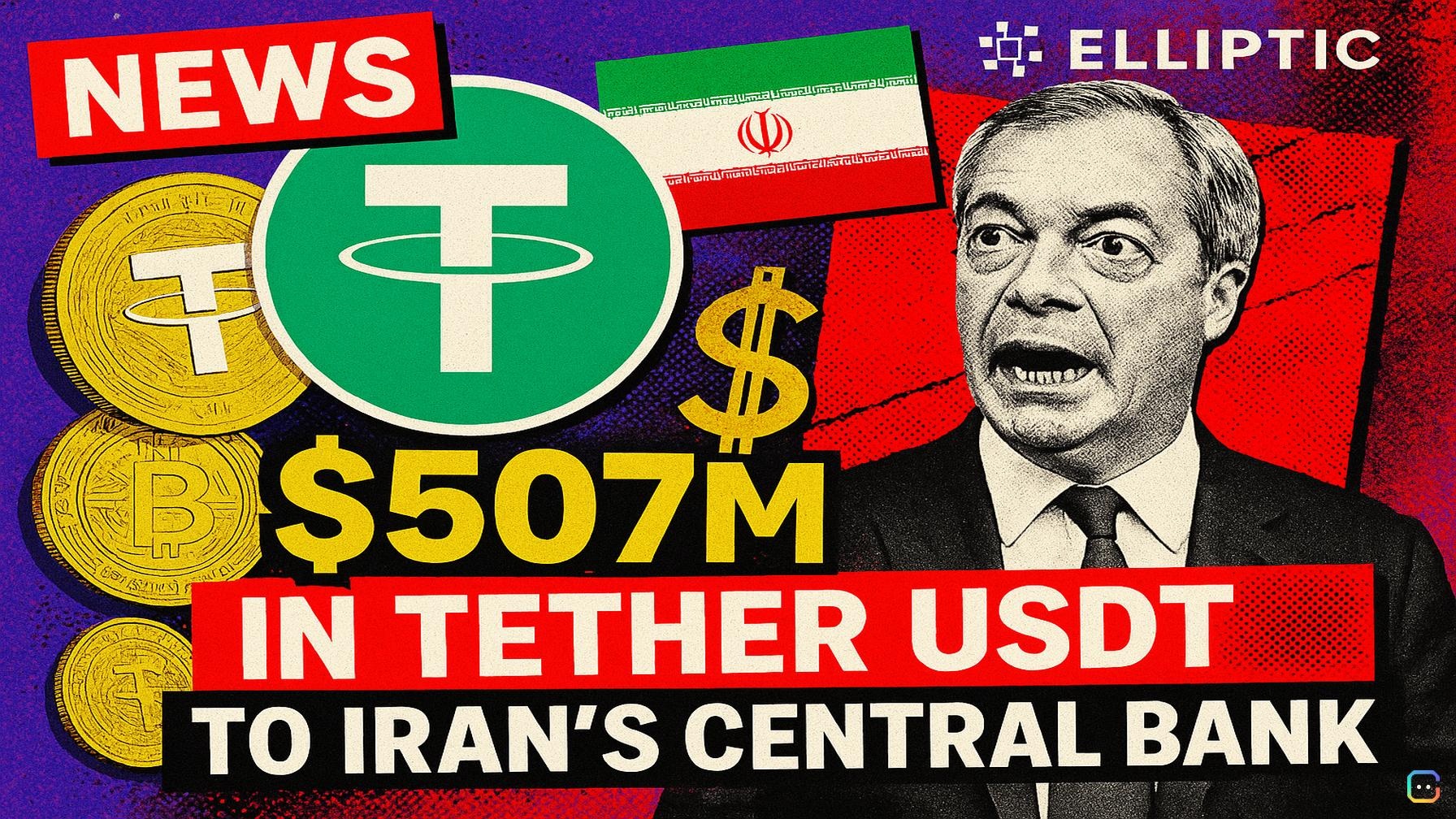
New analysis from crypto forensics firm Elliptic suggests Iran’s central bank has been moving substantial sums of Tether’s USDT stablecoin through accounts the company believes are under Tehran’s control — a finding that complicates the public profile of one of Tether’s most vocal UK advocates, Nigel Farage.
What Elliptic found
- Elliptic traced at least $507 million (about £377m) in Tether-issued USDT flowing through a network of roughly 50 addresses that its researchers say, with “a high level of confidence,” are controlled by Iran’s central bank.
- The pattern looks like a systematic accumulation of USDT, which Elliptic interprets as part of “a sophisticated strategy to bypass the global banking system” — potentially to facilitate foreign trade or to support the rial, Iran’s currency.
Why USDT matters here
USDT is a dollar-pegged stablecoin designed to make moving value between fiat and crypto fast and cheap. That same property makes it attractive in jurisdictions facing international financial restrictions: when traditional correspondent banking is limited by sanctions, dollar-linked stablecoins can be used to access foreign currency and move funds across borders more easily.
Context and corroborating signals
Elliptic’s tracing work was partly prompted by public disclosures earlier this year, including an Israeli report about crypto accounts linked to Iran’s Revolutionary Guards and a social-media post by an Iranian businessman that included two crypto account numbers he claimed were used by the central bank. Those leads helped Elliptic map links between accounts and build its case.
Political fallout and connections
The Elliptic findings put a spotlight on Nigel Farage, who has publicly championed Tether and stablecoins. In September he told LBC that “Tether is a stablecoin… Tether is about to be valued as a $500bn company,” and urged the UK to embrace stablecoins and make London a trading centre under clear regulation. The story also calls attention to Christopher Harborne, a major Tether shareholder and Reform UK’s largest donor; his lawyers say he holds no executive role at Tether and denied any responsibility for illicit uses of the token. Reform UK said donations comply with electoral law and stressed its support for the Iranian people.
Tether’s response and enforcement claims
Tether did not directly answer questions about the specific addresses Elliptic identified. A company spokesperson reiterated a “zero-tolerance policy toward the criminal use of our financial products,” saying Tether follows US sanctions guidance, works with law enforcement globally, and has frozen assets linked to illicit activity. Tether says it has cooperated with more than 310 agencies across 62 countries and frozen over $3.4 billion tied to criminal activity. The company has frozen the accounts Israel identified for the Revolutionary Guards, but Elliptic reports that most of the addresses it linked to the central bank appear to remain active.
Wider implications
Elliptic’s report underscores continuing debates about stablecoins’ role in the global financial system: they can provide liquidity and innovation, but they also present a novel channel for evading sanctions and moving capital outside traditional banking rails. The findings are likely to fuel calls for tighter oversight of stablecoins, renewed scrutiny of Tether’s governance and reserves, and more aggressive monitoring by regulators and law enforcement — particularly where state actors may be involved.
Sources: Elliptic report; public statements from Nigel Farage and Reform UK; Tether company statements; reporting on Israeli disclosures and related social-media posts.
Read more AI-generated news on: undefined/news