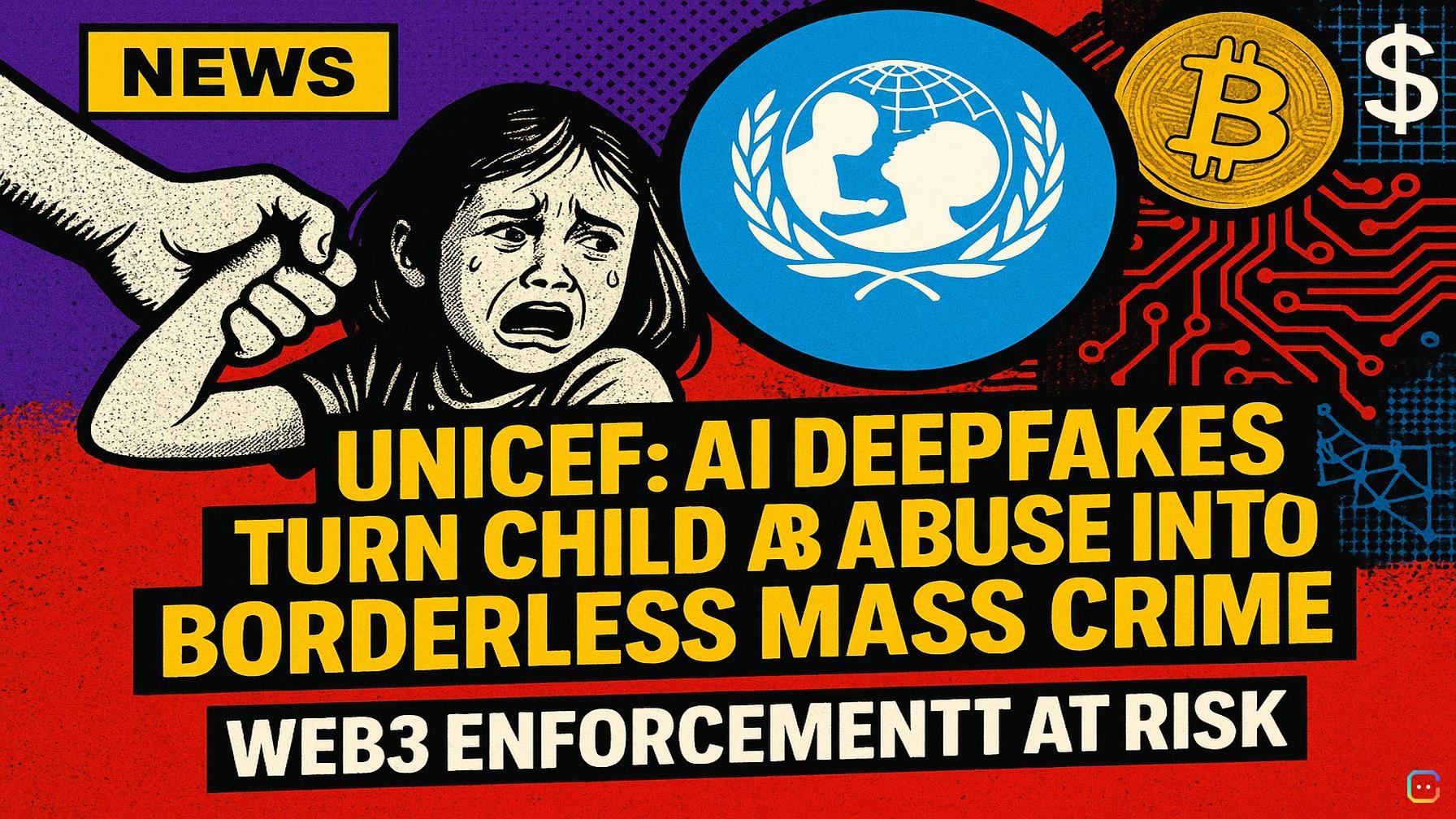
UNICEF issues urgent warning: AI deepfakes have transformed child sexual abuse into a mass, borderless problem — and governments must act now.
New research from UNICEF’s Disrupting Harm Phase 2, produced with ECPAT International and INTERPOL, estimates that at least 1.2 million children worldwide had their images manipulated into sexually explicit AI deepfakes in the past year. In some countries that equals one in 25 children — roughly the number of kids in a typical classroom. The findings come from a nationally representative household survey of about 11,000 children across 11 countries and show that perpetrators can now create realistic sexual imagery of children without the child’s awareness or involvement. In some places up to two-thirds of young people said they worry AI could be used to fabricate sexual images or videos of them.
“We must be clear. Sexualised images of children generated or manipulated using AI tools are child sexual abuse material (CSAM),” UNICEF said. “Deepfake abuse is abuse, and there is nothing fake about the harm it causes.”
The report arrives amid growing legal and regulatory scrutiny of AI platforms. French authorities raided X’s Paris offices this week as part of a probe into alleged child pornography tied to the company’s AI chatbot Grok; prosecutors have summoned Elon Musk and several executives for questioning. A recent Center for Countering Digital Hate (CCDH) analysis claimed Grok produced 23,338 sexualized images of children over an 11-day window. The Internet Watch Foundation flagged nearly 14,000 suspected AI-generated images on a single dark-web forum in one month, with about a third confirmed as criminal. South Korea has reported a tenfold rise in AI- and deepfake-related sexual offenses from 2022 to 2024, with many suspects identified as teenagers.
UNICEF is calling for immediate policy changes and technical safeguards: expand legal definitions of CSAM to explicitly cover AI-generated content and criminalize its creation, procurement, possession and distribution; require AI developers to adopt safety-by-design practices; and obligate digital companies to prevent circulation of AI-generated sexual material. The brief also urges mandatory child-rights due diligence and pre-release safety testing — including for open-source models.
“The harm from deepfake abuse is real and urgent,” UNICEF warned. “Children cannot wait for the law to catch up.”
Regulators are already moving: the European Commission has opened a formal investigation into whether X violated EU digital rules by failing to stop Grok from generating illegal content, and the Philippines, Indonesia and Malaysia have banned Grok while UK and Australian authorities probe the matter.
Why this matters to crypto and Web3: many AI models and distribution chains are open-source or decentralized, complicating enforcement and takedown. The report’s push for pre-release testing, supply-chain accountability, and industry-wide safety standards will be especially relevant to developers, node operators and platforms in the crypto ecosystem as regulators demand clearer responsibilities across the AI value chain.
Read more AI-generated news on: undefined/news