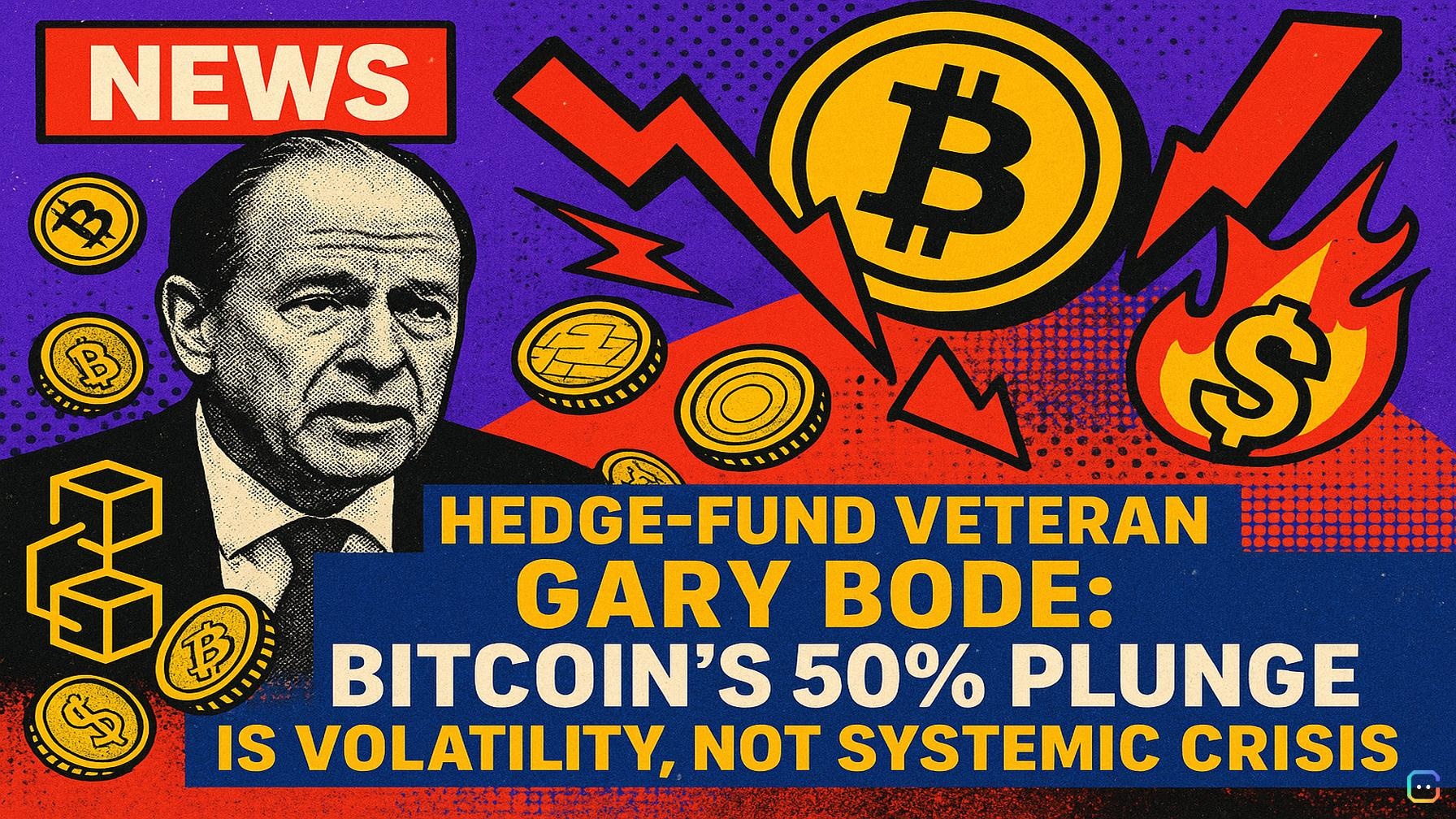
Bitcoin’s 50% swoon isn’t a systemic crisis, says hedge-fund veteran Gary Bode
Bitcoin’s recent plunge—roughly 50% off the all-time highs set just months ago—has revived debates about the crypto’s durability. But veteran hedge-fund manager Gary Bode argues the rout is not evidence of a structural collapse; it’s the product of Bitcoin’s native volatility and market psychology.
What Bode said
In a post on X, Bode called the selloff “unpleasant and jarring” but not unusual, noting that “80%–90% drawdowns are common” in bitcoin’s history. He argues that investors who tolerate these cyclical busts have historically been rewarded with strong long-term returns.
Why prices fell (and why Bode thinks the market overreacted)
- Fed nominee fears: Bode traces much of the turbulence to investor reaction to President Trump’s nomination of Kevin Warsh to replace Jerome Powell as Fed chair. Markets read the move as a bet on a hawkish Fed—and higher interest rates tend to make zero-yield assets like bitcoin, gold and silver less attractive. That expectation triggered margin calls and forced liquidations that amplified the selloff.
- Bode disputes that narrative. He points to Warsh’s public comments favoring lower rates and cites notes suggesting Warsh had promised lower fed funds rates. Coupled with persistent, multi-trillion-dollar Congressional deficits, Bode says the Fed’s ability to control long-term Treasury yields is limited—and that perceptions, not fundamentals, drove much of the recent selling. “I think the market got this one wrong,” he wrote.
Other factors—and why they don’t prove doom
- Whales and profit-taking: Large wallet activity is real, Bode acknowledges, but he frames much of it as profit-taking by early adopters and miners rather than a signal of permanent weakness. Their sales don’t necessarily predict bitcoin’s future path.
- MicroStrategy (MSTR) risk: The stock of MicroStrategy fell after bitcoin fell below the price at which the company bought many of its coins, stoking fears that CEO Michael Saylor might sell. Bode says that is a genuine short-term pressure point—but limited—and likens it to investor worries when a big, respected shareholder later sells into strength.
- “Paper bitcoin”: ETFs and derivatives that track bitcoin without requiring ownership increase the effective supply available for trading, Bode notes, but they don’t change bitcoin’s hard cap of 21 million coins. He compares the dynamic to silver, where paper trading can suppress prices until physical demand reasserts itself.
- Mining and energy concerns: Some analysts warn that rising energy costs could hurt mining profitability and the network hash rate. Bode calls that overblown: historical data shows hash rate declines don’t consistently follow price drops and typically lag by months. He also points to emerging low-cost energy options—small modular reactors and solar-powered AI data centers—as potential future mining power sources.
On the “store of value” critique
Bode rejects the argument that volatility disqualifies bitcoin as a store of value. He stresses that nearly every asset carries risk—including fiat currencies issued by heavily indebted governments—and reminds readers that bitcoin is permissionless and does not require trust in counterparties. “Paper Bitcoin can influence the short-term price, but long-term, there are 21MM coins that will be issued and if you want to own Bitcoin, that’s the real asset,” he wrote. He also quipped that gold “does require energy to secure unless you’re comfortable leaving it on your front porch.”
Bottom line
Bode frames the 50% drop as a natural consequence of bitcoin’s design and market structure: volatility is inherent, and dramatic swings are part of the asset’s DNA. For him, the selloff is not a sign of systemic failure—just another chapter in a history of deep drawdowns followed by outsized long-term gains for those who can stomach the ride. Investors should therefore view headline-grabbing drops as volatility-driven events rather than automatic indicators of existential risk.
Read more AI-generated news on: undefined/news