When Binance dialed back services for European users in July, regulators expected a neat migration: shutter one venue, and traders would queue up at the next regulated exchange. Instead, the exit door revealed a different story.
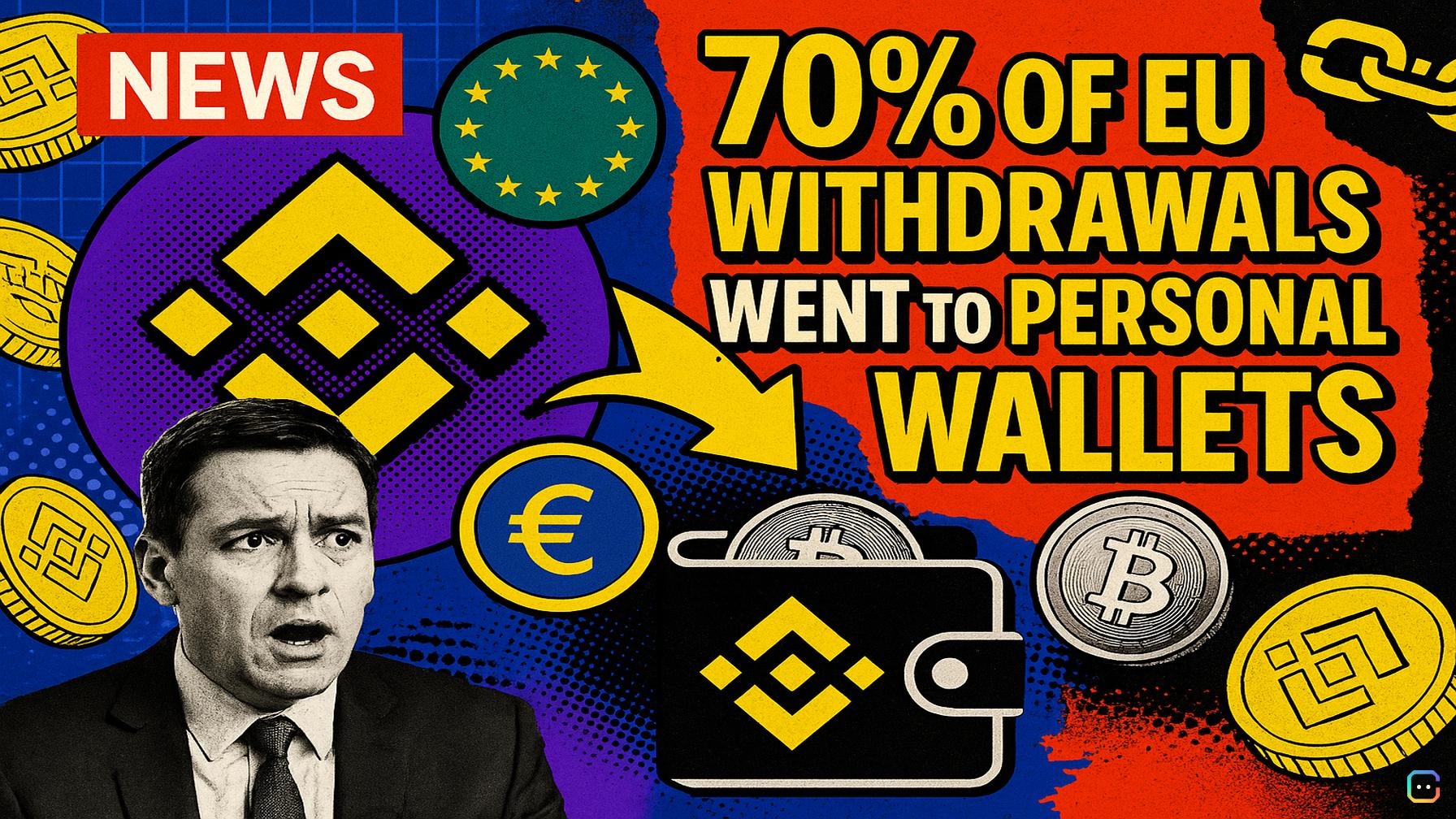
Binance reports that roughly 70% of the funds withdrawn after the changes moved into personal wallets rather than to rival exchanges — with only about 30% going to other regulated platforms. These figures are provided by Binance and remain unaudited, so allow for some margin of error. Even so, the takeaway is clear: many users chose self-custody over simply hopping to another centralized exchange.
Why the shift? The landscape that once made exchanges the only practical gateway to crypto has changed. In the early days, buying Bitcoin or swapping assets across chains typically required a centralized platform to hold funds and handle the technical heavy lifting. That made exchanges the de facto custody and trading solution for many users.
But wallets and protocols have matured. User-friendly self-custody options such as MetaMask have demystified “be your own bank,” putting wallet control a few taps away. Hardware wallets have made cold storage simple and reliable. And protocols like THORChain now enable native cross-chain swaps without ever handing custody to a centralized party. Put together, these tools let people trade and manage assets directly from their own wallets — removing much of the historical dependence on centralized exchanges.
That doesn’t make self-custody risk-free. Personal control brings real responsibilities: lost recovery phrases are irreversible and there’s no customer support hotline to restore access. For many, the custodial trade-off — convenience and support in exchange for putting someone else in charge of keys — remains attractive.
Still, the European withdrawals suggest the balance is shifting for a substantial cohort. Faced with re-registering and repeating compliance checks, a large number of users quietly voted with their keys and chose to keep custody of their assets. This wasn’t a grand protest against regulation as much as a pragmatic response: the tools they needed to go it alone are now available in ways they weren’t when they first signed up.
For exchanges, the message is uncomfortable but actionable: users are less “sticky” than assumed. Platforms that once relied on convenience to retain deposits may need to rethink custody products, user experience, and the services that make keeping funds on-platform worthwhile.
Disclosure: This article is for informational purposes only and does not constitute investment advice. The data cited are from Binance and unaudited. This content is provided by a third party; neither crypto.news nor the author endorses any product mentioned. Do your own research before taking action.
Read more AI-generated news on: undefined/news