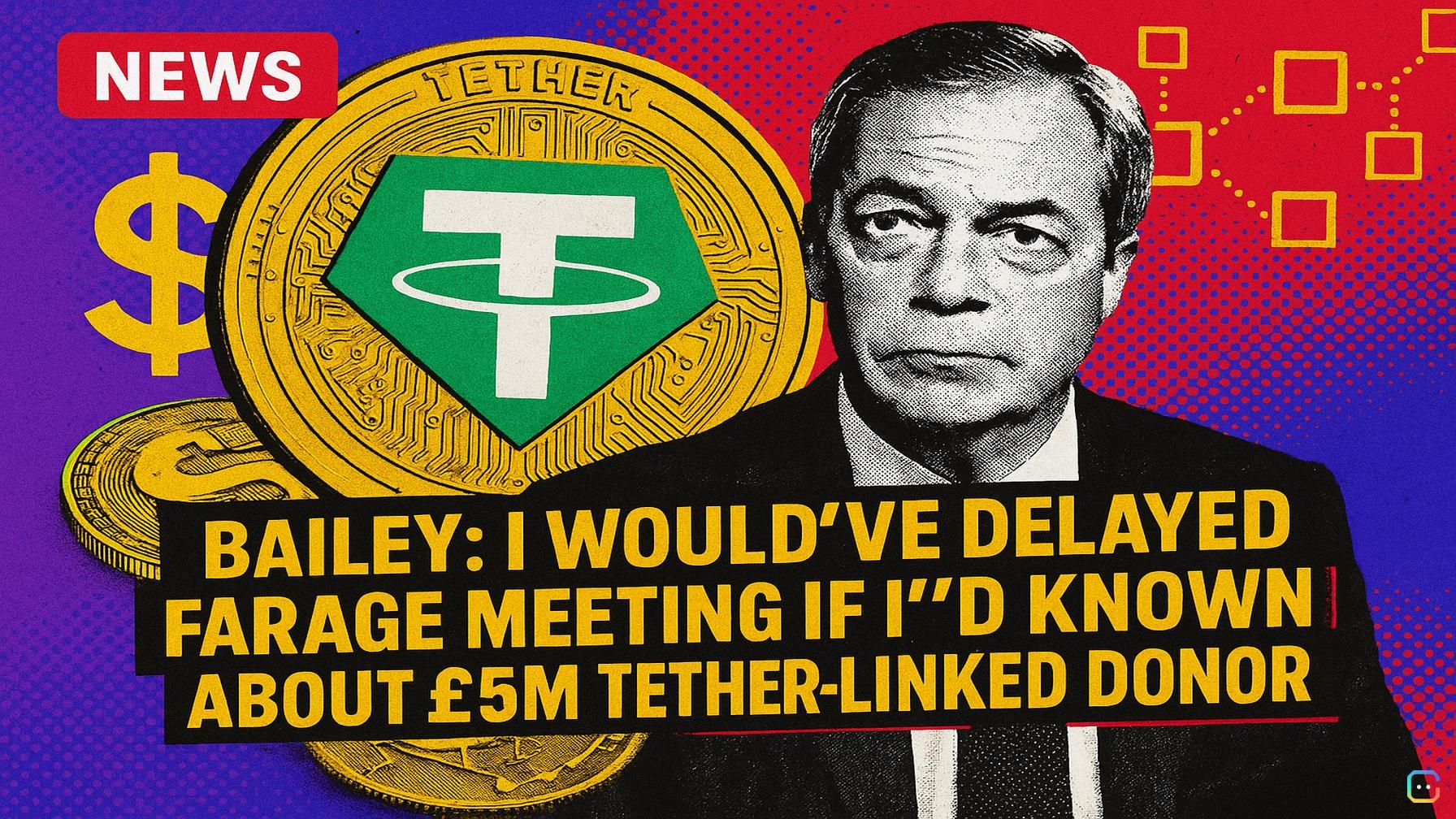
Bank of England governor Andrew Bailey says he would have delayed last autumn’s meeting with Nigel Farage if he had known at the time that a later parliamentary inquiry would focus on a £5m donation from a crypto billionaire.
The encounter in September — arranged to discuss the Bank’s emerging approach to cryptocurrency regulation — took place months before the Guardian revealed in April that Reform UK had received a £5m gift from Thailand-based investor Christopher Harborne. Harborne, who has provided roughly two‑thirds of Reform UK’s funding, has made a large slice of his estimated £18bn fortune from crypto and reportedly earns as much as £1bn a year from his Tether shareholding.
Bailey, who also chairs the international Financial Stability Board, told the Guardian he does not regret meeting Farage but conceded that, with hindsight, the undisclosed donation and the subsequent inquiry would have been a “material fact” that could have justified postponing the meeting. “Whether I would have then said: ‘…we’d better wait until the investigation is done…’ — I think that would have been a judgment we would have taken at the time,” he said.
What was discussed
Farage has said he pressed Bailey to abandon the Bank’s plans for a state-issued rival to a Tether-like stablecoin and to drop plans for caps on how many stablecoins individual UK residents could hold. The Bank ultimately scrapped the individual‑holding cap after consultation, arguing it was more practical to limit the total supply of regulated stablecoins than to police personal holdings.
Bailey defended the Bank’s policymaking, saying the exchange with Farage was “a perfectly polite exchange of views” and that he was “able to spot” and resist lobbying. He denied discussing the Bank’s final stablecoin rules with Farage and noted he had not been lobbied into changing policy. “I haven’t talked to him about it,” Bailey said of the new rules.
Regulatory context and accountability
The episode has sparked scrutiny: Farage has been reported to the parliamentary standards commissioner over whether his meeting crossed lobbying rules. Bailey insisted the controversy would not change how the Bank logs and conducts meetings with political figures. He argued the Bank must remain accessible to party leaders and maintain confidentiality when people bring market‑sensitive information to the institution — even if that policy can appear awkward in politically charged situations.
Why it matters for crypto
The case highlights how political funding from crypto-linked billionaires can intersect with regulatory debates over stablecoins — token types typically pegged to fiat currencies and used as a bridge between traditional money and crypto. With Tether among the most prominent stablecoins and its backers holding significant financial influence, regulators are under pressure to balance market integrity, financial stability and innovation. Bailey said he believes the Bank is “encouraging innovation” while setting the right boundaries for stablecoin issuance.
Bottom line: the meeting has raised questions about transparency and influence in crypto policymaking, but the Bank of England maintains its procedures for political engagement and insists its regulatory direction on stablecoins is driven by prudential and market considerations rather than outside pressure.
Read more AI-generated news on: undefined/news