Christopher Nolan: young viewers are already saying “no” to generative AI — and filmmakers are paying attention
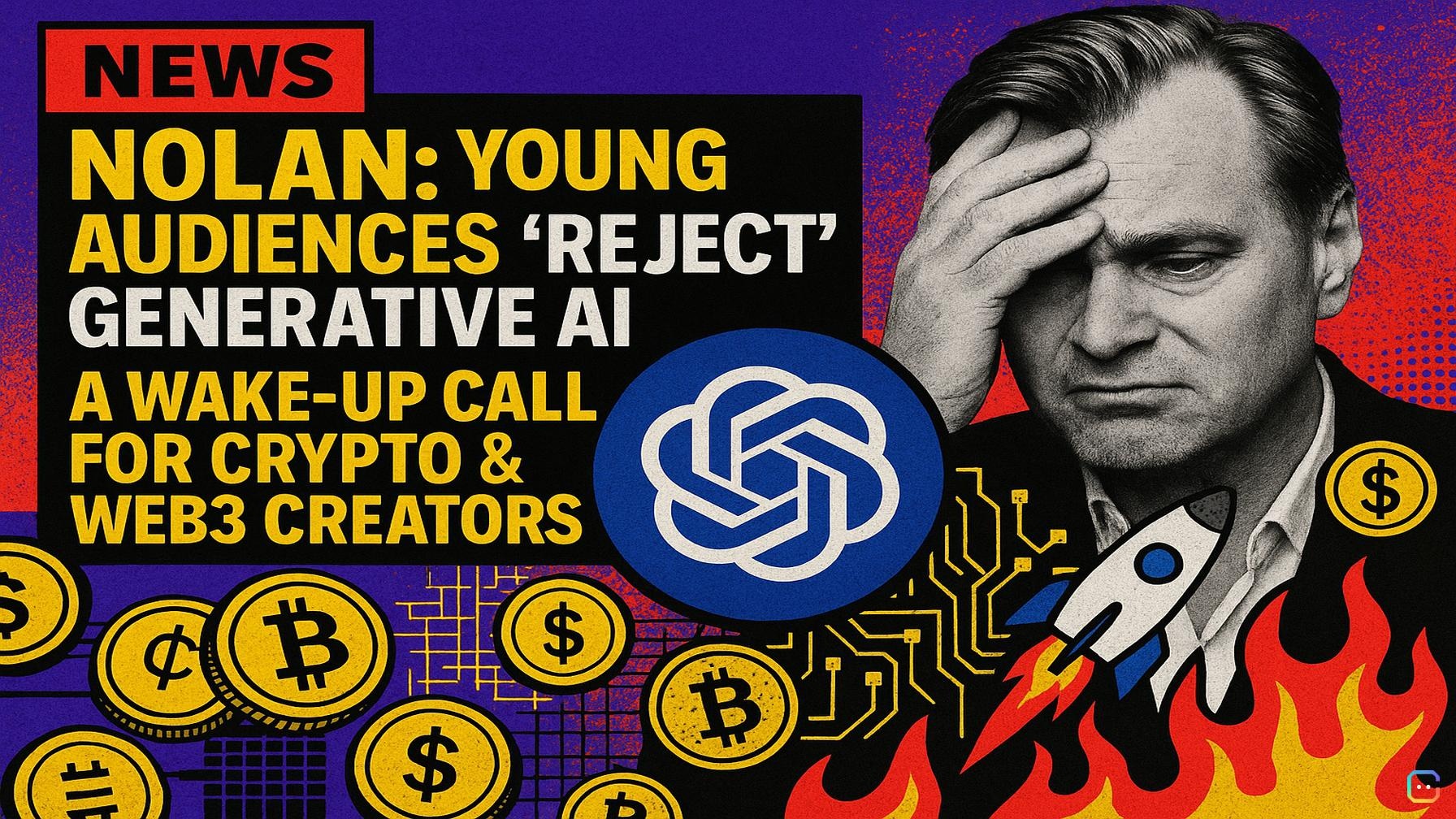
Christopher Nolan — the director known as much for shunning smartphones as for blockbuster spectacle — has a blunt take on generative AI: young audiences are “utterly rejecting” it. Speaking to The Telegraph on the press tour for The Odyssey, Nolan said he’s “never seen a more rapid wholesale dismissal of a supposedly foundational jump in technology in my lifetime.” He added that his four children, in their late teens and early 20s, “see [AI] for what it is very quickly…Their judgment of AI slop has been immediate and harsh.”
Nolan argues that AI arrives at a bad moment for cinema. After years of films awash in virtual environments, he sees a “renewed interest in more tactile, more real forms of storytelling,” and believes audiences — especially those raised in an online-native world — can spot when effects or creative choices feel artificial. That perspective aligns with Nolan’s career-long affection for in-camera methods: his teams have crashed a 747 into a building for Tenet, landed a Spitfire on a beach for Dunkirk, and planted real corn for a chase in Interstellar. He’s not categorically anti-digital effects — Nolan acknowledged CGI’s role in creations such as Two-Face’s scarred face in The Dark Knight — and conceded that “not every aspect of generative AI is necessarily ‘useless or meaningless.’ ”
The debate over AI in filmmaking has split the industry. Vocal opponents include Guillermo del Toro, who has shouted “fuck AI” on stage, and Steven Spielberg, who dismissed generative systems as “an empty chair with a laptop on it.” But some heavyweight directors have embraced the technology: Martin Scorsese is advising AI firm Black Forest Labs, and James Cameron sits on the board of Stability AI. Actors and creators have shifted positions too — Ben Affleck, once skeptical that AI could “write anything meaningful,” sold his startup InterPositive to Netflix.
Meanwhile, AI companies are accelerating development of video tools that aim to overcome creative limitations. Utopia’s PAI, for instance, targets consistency of output across cuts and scenes — a feature that could make AI-generated video more usable for long-form storytelling.
Why it matters for crypto audiences
For crypto and Web3 creators—where NFTs, virtual worlds, and tokenized media increasingly intersect with AI-generated content—this cinematic reckoning is consequential. If younger viewers demand tactile, authentic experiences, that preference will shape how projects are minted, marketed, and monetized in the metaverse. At the same time, advances like PAI could lower the cost of producing high-fidelity video assets, influencing everything from virtual film festivals to on-chain content economies.
The conversation is far from settled: creatives are weighing artistic risks and technical possibilities, while startups push ahead with tools that might change the economics of media production. Nolan’s pronouncement captures one side of a broader clash between a generation raised on immediacy and a film establishment grappling with what “real” storytelling should look like in an era of synthetic art.
Read more AI-generated news on: undefined/news