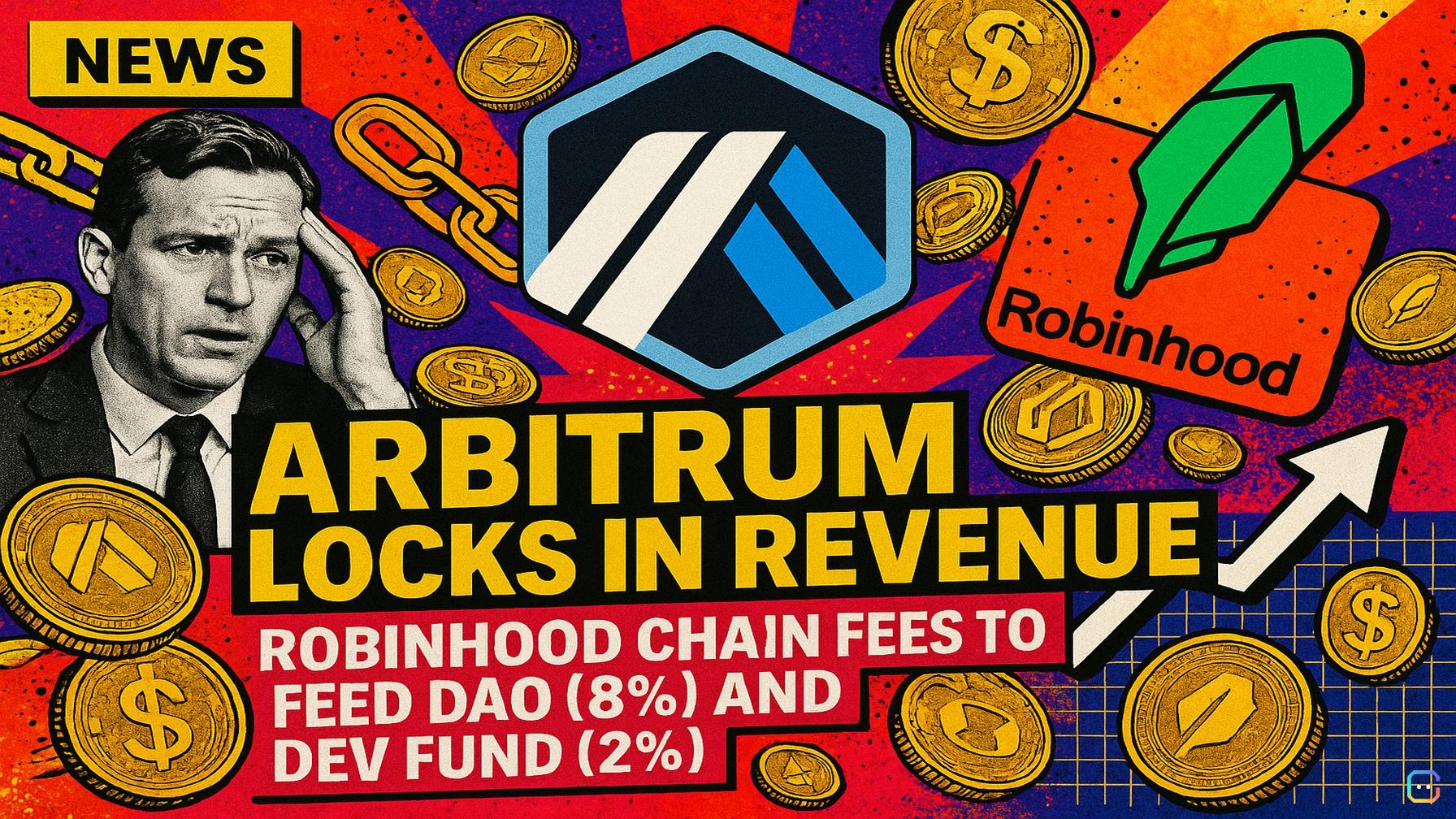
Arbitrum just locked in a new revenue lane as the Layer 2 (L2) race intensifies: fees from Robinhood Chain — and any other chains built on Arbitrum under its Expansion Program — will divert a cut of protocol revenue back into the Arbitrum ecosystem.
Offchain Labs co‑founder Steven Goldfeder confirmed the split: 10% of net protocol revenue from external Arbitrum L2s will flow to the ecosystem, with 8% going to the tokenholder‑controlled Arbitrum DAO treasury and 2% earmarked for developer funding (the Arbitrum Developer Guild). Goldfeder also reiterated that 100% of fees collected on Arbitrum One itself will go to the Arbitrum treasury. “As enterprise adoption accelerates, Arbitrum is ready to capture revenue,” he said.
Key details and what this means
- The fee share is calculated on “protocol net revenue,” meaning it’s measured after network costs rather than as a raw slice of every user payment. That should give the DAO a clearer picture of real, recurring revenue from partner chains.
- The revenue split applies to chains launched outside Arbitrum One under the Arbitrum Expansion Program, giving the DAO a direct economic link to enterprise and branded L2s that use Arbitrum’s stack.
- If partner chains like Robinhood Chain sustain real trading, swaps and lending activity, the Arbitrum treasury and developer fund could gain a consistent income stream to support governance and infrastructure.
Robinhood Chain: live, anchored, and active
Robinhood Chain — built with Arbitrum technology and designed to host tokenized stocks, real‑world assets and DeFi tooling — went live as a dedicated Arbitrum chain that settles to Ethereum on July 1. The chain is already accessible in Robinhood Wallet, where users can bridge assets from Solana, Ethereum, Arbitrum and other networks and trade or swap directly inside the app.
The rollout follows months of development and a busy testnet phase: the first testnet week processed more than 4 million transactions while developers trialed tokenized stock assets and finance tools. Robinhood has positioned tokenized equities as a cornerstone product for the chain, making them available to eligible users in over 120 countries. The company has also launched related products such as perpetual futures for eligible European users, Stock Tokens, Robinhood Earn, and plans for AI‑linked trading accounts.
Ecosystem partners and churn
Robinhood Chain’s launch comes with an early ecosystem: Uniswap supports a dedicated automated market maker on the chain, and other infrastructure partners provide data, custody and on‑chain routing. That initial activity across trading, lending and liquidity venues will be the practical test of whether the chain can deliver sustained volume and, by extension, steady fee flows back to Arbitrum’s treasury and developer fund.
Broader context
Robinhood Chain is part of a broader trend of corporate or branded L2s — such as Base and others — using established tech stacks to launch specialized networks. For Arbitrum, the fee‑sharing model effectively ties enterprise adoption to on‑chain funding for tokenholders and builders, creating an incentive for both the protocol and its commercial partners to see those chains succeed.
What to watch next
- Real user activity and volume on Robinhood Chain: sustained trading, swaps and lending will determine if the promised revenue becomes material.
- Transparency in reporting: how partner chains report “protocol net revenue” will affect how the DAO evaluates and compares income from different deployments.
- New enterprise partners: more branded L2s adopting Arbitrum tech could expand the DAO’s revenue base and deepen the protocol’s role in the L2 market.
If Robinhood Chain maintains momentum, Arbitrum’s new fee routing could turn these enterprise chains into a reliable funding source for governance and ecosystem development — a meaningful step as L2s compete to host the next wave of crypto activity.
Read more AI-generated news on: undefined/news