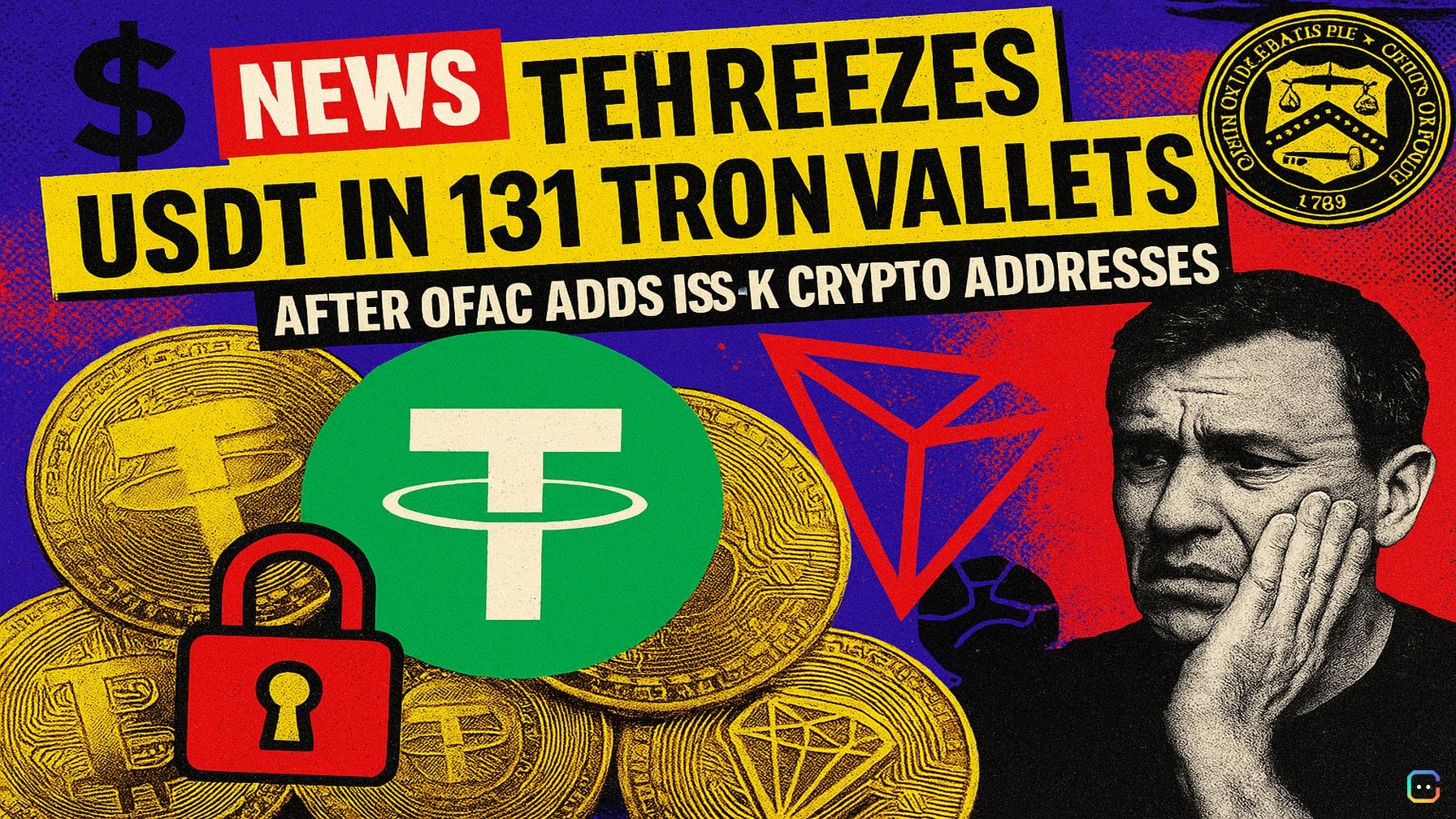
Tether has frozen USDT held in 131 TRON wallets linked to ISIS-K after the U.S. Treasury’s sanctions arm added a batch of crypto identifiers to the militant group’s designation, Chainalysis says — a move that puts stablecoin issuer controls squarely in the spotlight of a new terrorism-financing enforcement action that also touches TRON and Monero addresses.
What happened
- On July 1 the U.S. Treasury’s Office of Foreign Assets Control (OFAC) updated its ISIS-K (ISIL Khorasan) designation to include 134 cryptocurrency wallet identifiers: 131 TRON addresses and three Monero addresses. OFAC had previously designated ISIS-K as a terrorist organization; this action adds specific crypto addresses to that listing.
- Chainalysis reports that Tether has frozen the balances on all 131 TRON addresses flagged by OFAC.
Blockchain activity and links
- According to Chainalysis, the 131 TRON addresses received more than $1.4 million since 2023 and sent out over $880,000 during the same period.
- Several of the listed wallets showed exposure to mainstream crypto services and reportedly forwarded funds to Syria-based crypto exchangers.
- The analytics firm also noted that ISIS-K’s media wing, the al-Azaim Media Foundation, has solicited crypto donations via websites and messaging apps, and that past donation addresses have been observed on TRON, Monero and Bitcoin. Chainalysis added that earlier terror-funding campaigns often relied on many small donations rather than a handful of large transfers.
Wider enforcement context
- OFAC’s update came alongside a separate action targeting individuals tied to the PCC criminal group in Latin America for crypto-based money laundering.
- The ISIS-K freeze is part of a broader increase in issuer-level intervention around USDT. Tether’s T3 Financial Crime Unit — backed by Tether, TRON and TRM Labs — has frozen over $450 million in suspected illicit assets since launching in 2024 and focuses on USDT activity on TRON.
- Earlier this year Tether froze more than $514 million across 370 addresses in a single 30-day stretch, largely on TRON. BlockSec data cited in that reporting showed Tether blacklisted 4,163 addresses in 2025, freezing about $1.26 billion across Ethereum and TRON.
Legal and compliance implications
- The action comes amid litigation over frozen stablecoins: victims with U.S. terrorism judgments have asked a New York court to compel Tether to hand over 344,149,759 USDT held in two OFAC-blocked TRON wallets linked to Iran’s IRGC, raising questions about whether frozen tokens can be transferred to judgment creditors.
- Chainalysis said the July 1 designations require virtual asset service providers and financial institutions to update sanctions screening and transaction monitoring; it has labeled the newly listed addresses in its products to help compliance teams detect exposure.
Why it matters
The episode underscores how issuer-level controls (like Tether’s freezes) and regulatory sanctions are increasingly shaping the crypto ecosystem, especially on the TRON network and in cases involving privacy-focused assets such as Monero. Compliance teams and exchanges will need to adapt quickly to the expanded OFAC identifiers to avoid exposure.
Read more AI-generated news on: undefined/news