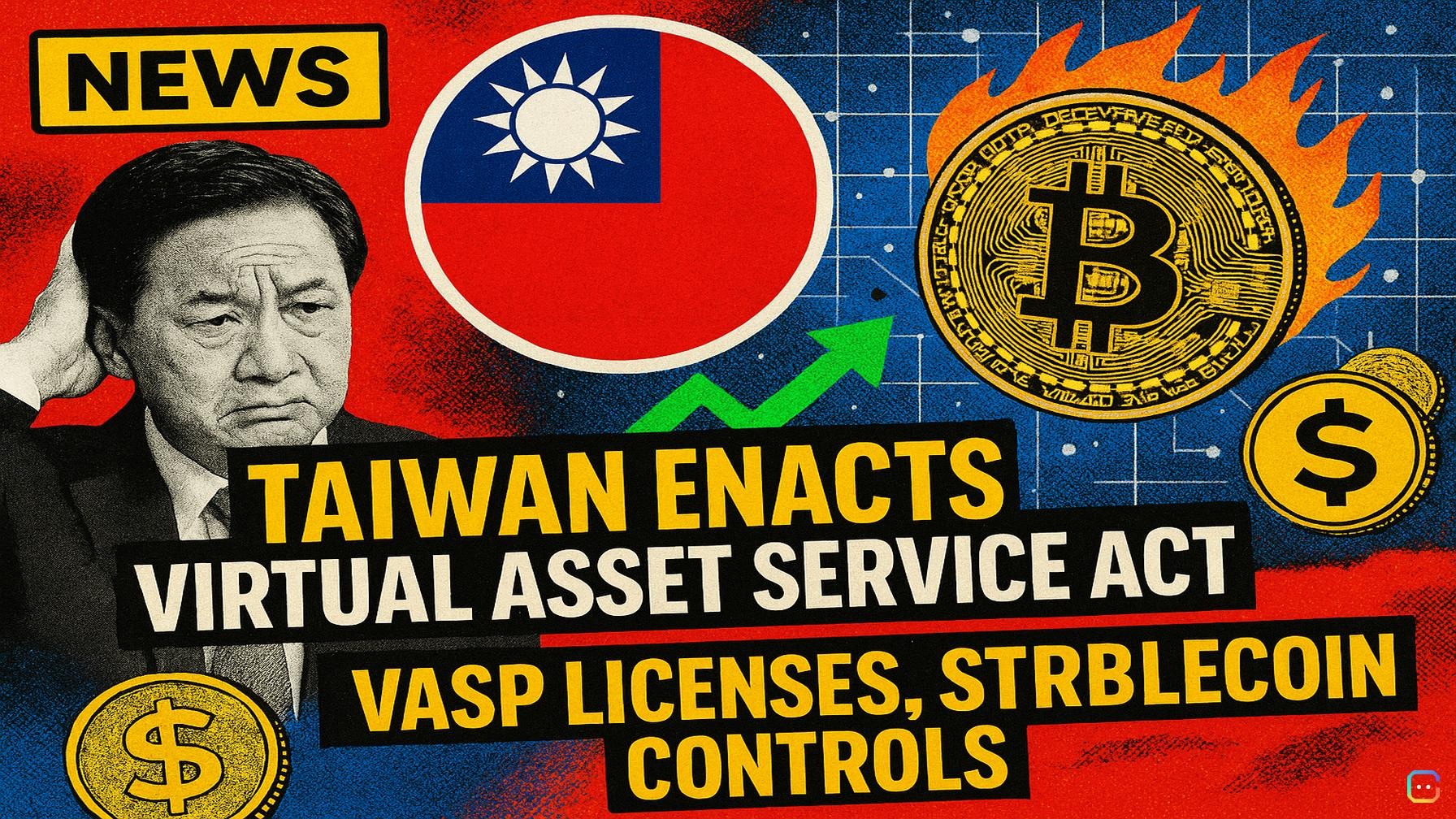
Taiwan’s legislature has given the country’s crypto industry its clearest regulatory framework yet. On June 30 the Legislative Yuan passed the Virtual Asset Service Act in its third reading and sent the bill to President Lai Ching‑te for promulgation, marking a shift from narrow anti‑money‑laundering oversight to comprehensive regulation of digital‑asset activity.
The Financial Supervisory Commission (FSC) says the law expands supervision to cover operational conduct, market order and customer protection. It creates licensing and conduct rules for seven categories of virtual asset service providers — including exchanges, trading platforms, transfer firms, custodians, underwriters and lending service providers — and sets requirements for internal controls, cybersecurity, asset‑listing reviews, segregation of customer assets, outsourcing, civil liability and financial reporting.
Under the new regime, any crypto business must obtain FSC approval before operating in Taiwan. Firms that completed anti‑money‑laundering registration before the law takes effect are given a transition window: 12 months to file for approval and 21 months to secure a full license. The FSC may grant a single three‑month extension; failure to meet the deadline will bar a firm from continuing virtual asset business in Taiwan.
Stablecoin issuance will face particularly strict rules. Issuers must receive green lights from both the central bank and the FSC, back tokens with full reserves, place those reserves in trust, and undergo regular audits and public disclosures. These measures reflect earlier policy direction that contemplated bank‑issued New Taiwan dollar stablecoins and placed the central bank at the center of stablecoin oversight.
The act also adds criminal penalties for unlicensed operations and market abuse. According to reports, running an illegal VASP or issuing stablecoins without authorization can carry up to seven years in prison and fines up to NT$100 million (about US$3.14 million). Fraud and market manipulation are penalized more harshly — three to ten years behind bars and fines ranging from NT$10 million to NT$200 million.
Regulators say the law provides a formal legal base after years in which many firms relied only on AML registration. The stated goals are customer protection, support for sector development and closer alignment with global regulatory standards seen in the EU, Japan and South Korea. The FSC first published a draft of the Virtual Asset Service Act in March 2025; this vote turns that draft direction into law pending cabinet promulgation and the announcement of an effective date.
The FSC has signaled it will continue to flesh out authorized sub‑rules and consult industry stakeholders. The next rulemaking phase will define practical licensing standards, personnel and internal control requirements, and detailed stablecoin procedures — the rules that will determine how Taiwan’s crypto market operates in practice.
Read more AI-generated news on: undefined/news