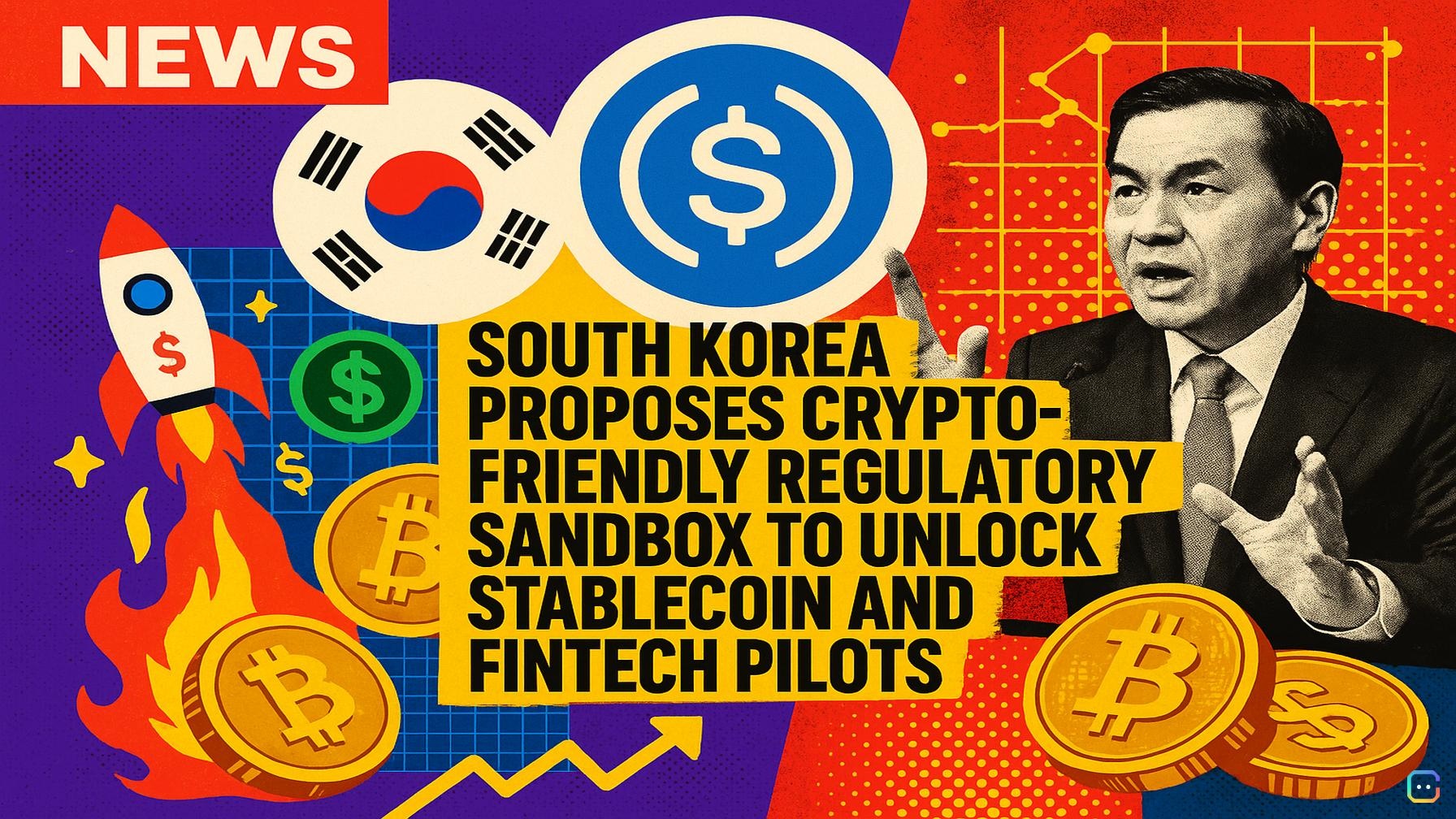
South Korea is moving to make its financial regulatory sandbox significantly more crypto- and fintech-friendly, potentially opening the door for a broader range of blockchain services and experimental payment systems.
What changed
- On June 19, the Financial Services Commission (FSC), chaired by Kim Byoung-hwan, revealed a proposal to expand the list of laws eligible for regulatory-sandbox treatment. That list would now include digital-asset legislation such as the Virtual Asset User Protection Act, plus other laws linked to new financial infrastructure like the Internet-Only Bank Act.
- The move is part of a wider overhaul of the financial innovation framework intended to give regulators more flexibility in authorizing and supervising new services as technology and market conditions evolve.
Why it matters
- Currently, the sandbox’s limited legislative scope restricts which services can seek temporary regulatory exemptions. Expanding the eligible laws would let more blockchain, fintech and hybrid services pilot products under regulatory oversight without being immediately subject to full regulation.
- The proposal aims to boost participation in the sandbox, protect innovative business concepts, and smooth the transition of fintechs into the regulated financial system.
Key operational changes proposed
- The FSC plans to pursue amendments to the Enforcement Decree of the Financial Innovation Support Act in Q3 to enable the expanded framework.
- Applications that raise little regulatory disagreement could get faster approvals; an expert committee would perform additional reviews before cases reach formal decision-making bodies.
- The agency will broaden “planned sandboxes” — regulator-designed pilot projects used to test services before pursuing permanent rule changes — targeting areas such as AI-driven financial systems, fintech-based financial inclusion efforts, and potentially lifting network separation requirements for qualified institutions.
- Startups would receive stronger support: exclusive operating rights could begin from the point of designation (not only after full authorization), and the FSC would offer package-based funding for commercialization costs.
- The FSC will coordinate with other government ministries and industry groups to identify where regulatory flexibility is needed and continue consultations as reforms progress.
Wider policy context
- The sandbox expansion dovetails with other regulatory moves affecting crypto. In June, the government amended the Foreign Exchange Transactions Act to create a licensing regime for cross-border virtual asset transfers that takes effect in December. Under that regime, businesses offering international virtual asset transfer services must register with the Ministry of Economy and Finance and report transactions to the Bank of Korea’s foreign-exchange monitoring system.
- Officials are weighing whether the new cross-border regime should cover only existing virtual asset service providers (VASPs) or also fintech firms that support such transfers.
Industry signal: private pilots underway
- Interest in blockchain-based payment rails is already growing. On June 22, Toss Bank signed an MOU with the Solana Foundation to test stablecoin-based remittances and settlement services, evaluating blockchain infrastructure for overseas transfers, payments, and future digital-asset financial services.
Bottom line
If adopted, the FSC’s plan would make South Korea’s sandbox a more flexible testing ground for crypto and fintech innovation — accelerating pilots for everything from stablecoin remittances to AI-driven finance — while setting clearer paths for commercialization and regulatory compliance. Officials still need to formalize the changes through Q3 legal amendments and ongoing interagency consultations.
Read more AI-generated news on: undefined/news