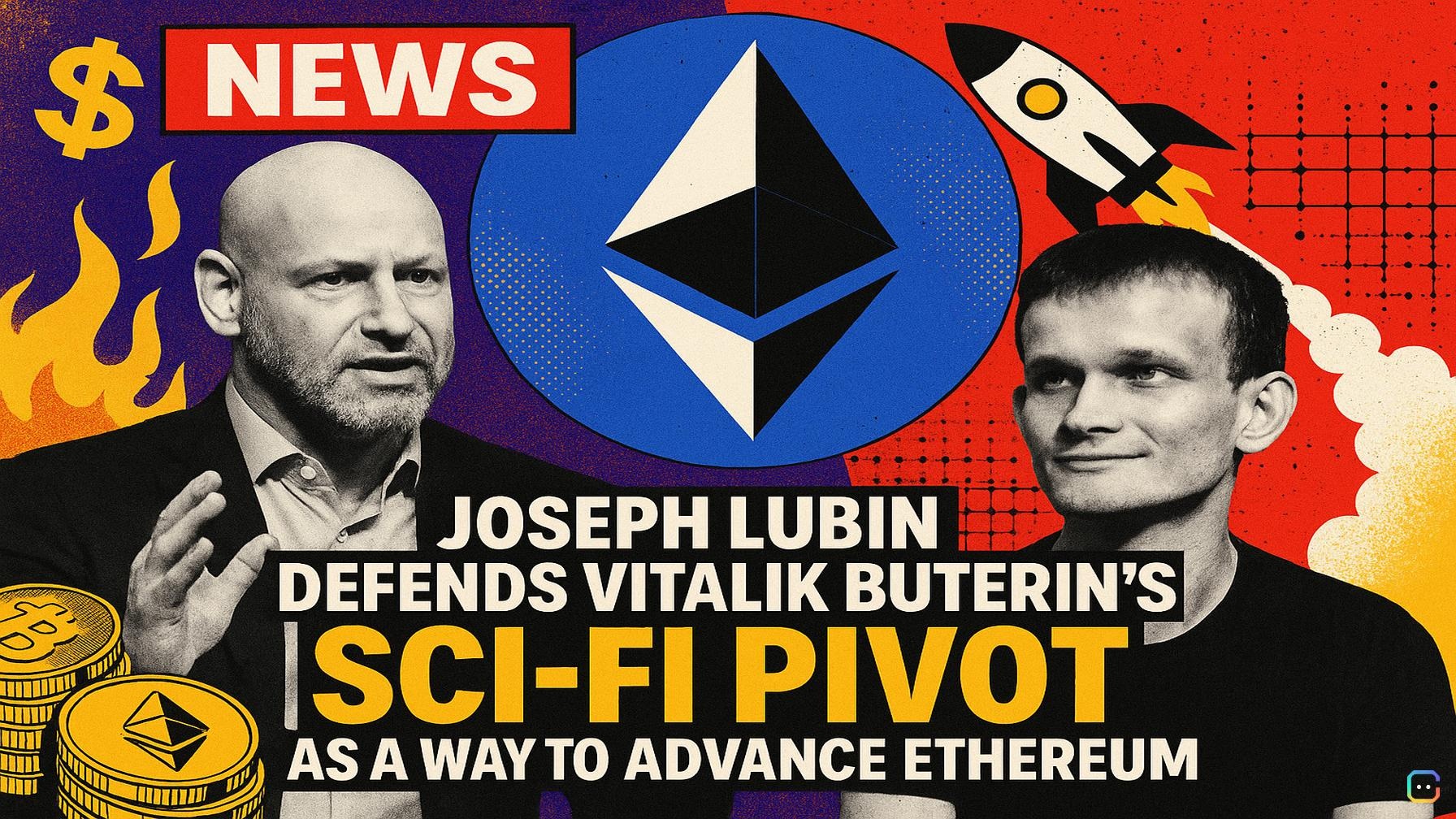
Joseph Lubin steps in to defend Vitalik Buterin’s turn to sci‑fi, arguing the project advances Ethereum’s goals
Joseph Lubin, co‑founder of Ethereum and a leading figure in the ecosystem, has publicly defended Vitalik Buterin after some community members questioned the value of the Ethereum co‑founder writing science fiction about decentralized governance.
Speaking on X, Lubin called Buterin “an enormously effective communicator” and “the most important contributor to and steward of the Ethereum ecosystem.” He pushed back on critics who see fiction as a distraction, writing: “Anyone who thinks that by writing fiction Vitalik isn't choosing the most effective way he can think of to further the growth and adoption of Ethereum is missing the point.”
Why Lubin thinks fiction matters
Lubin argued that storytelling can communicate Ethereum’s core values—open source, privacy, censorship resistance and credible neutrality—in ways technical essays sometimes cannot. He suggested that a cypherpunk tale showing people navigating a dark digital future while relying on Ethereum‑related tech could make complex ideas more accessible, comparing the potential impact to the influence of Cory Doctorow’s Little Brother series.
What Buterin is doing
As previously reported, Buterin said in May that he would pause regular long‑form research posts and experiment with science fiction focused on decentralized governance. He has posted the first two chapters of a draft to his personal website. The story explores governance mechanisms in a fictional setting rather than a conventional research essay, touching on themes such as quadratic voting, AI‑assisted decision‑making and the limitations of decentralized autonomous organizations (DAOs).
Community reaction: mixed but meaningful
Responses have been split. Some longed for Buterin’s technical essays, which have often steered public debate around Ethereum, and questioned the timing amid price weakness and concerns over the Ethereum Foundation’s direction. Others welcomed the novel as a way to demystify governance and privacy issues for a broader audience.
One community member posting as “12” noted that the early chapters already incorporate Ethereum themes like open source and privacy—pointing to a fictional “Veridian Privacy Robe” and suggesting “HOOD UP = Privacy” as a possible community signal to show solidarity. Privacy has been a recurring topic in Ethereum development: builders have reportedly been working on privacy tools ahead of the network’s 10‑year mark, and Buterin has urged developers to prioritize private money, identity, voting and messaging.
What it means for Ethereum
Lubin framed Buterin’s fiction as part of Ethereum’s broader communications and cultural strategy, not a retreat from technical work. The writing project does not alter Ethereum’s technical roadmap, but it changes the medium through which governance and privacy debates are staged—and it has made Buterin’s public role a fresh topic for discussion.
With ETH price action muted and calls for clearer progress continuing, the debate over whether fiction is a clever outreach tool or mistimed sidestep is likely to persist. For now, Buterin’s novel has moved key conversations into a new format—and earned a notable public defense from one of Ethereum’s most influential voices.
Read more AI-generated news on: undefined/news