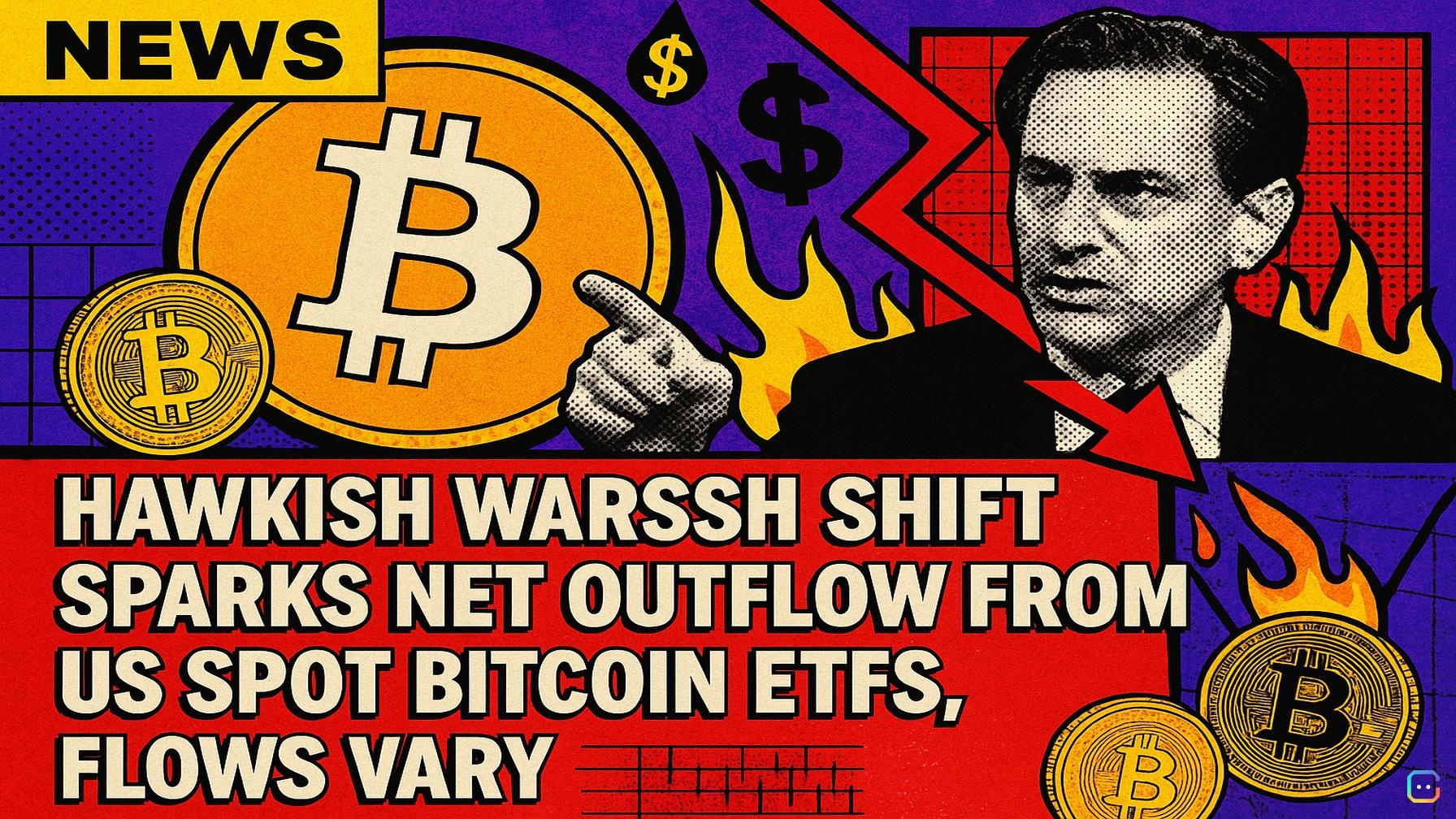
US spot Bitcoin ETF flows snapped back into the spotlight after a shift in the macro outlook appeared to spook some investors.
Farside Investors’ flow data showed a reported net outflow from US spot Bitcoin ETFs on June 18. That reading arrived as market commentary around new Federal Reserve Chair Kevin Warsh tilted hawkish — Axios and Reuters noted a shorter Fed communication style and renewed talk that rate hikes could re-enter the conversation. The takeaway: ETF demand can pivot fast when macro expectations change.
Spot Bitcoin ETFs remain one of the cleanest real-time proxies for institutional appetite in BTC. Positive flows typically mean allocators are buying regulated exposure; negative flows can matter even if the dollar amounts are modest, because ETF selling can dent sentiment and amplify short-term price moves.
Bitcoin’s sensitivity to liquidity and macro shocks is why this matters. If yields rise and markets price in tighter policy, risk assets — including BTC — can come under pressure even if the long-term bull case for crypto is intact.
But the headline outflow shouldn’t be overread. The aggregated net figure masks dispersion across issuers: not every fund bled assets. That pattern suggests some allocators may be rotating between ETFs or pausing new buys, rather than exiting the category wholesale. Large outflows from a single fund can skew daily totals, while smaller inflows elsewhere show that some buyers remain active.
That nuance is important for coverage. The headline number grabs attention, but the distribution of flows across issuers often tells the deeper story. One down day can be noise — especially after a macro event — while a sustained run of outflows would be a clearer sign institutions are pulling back.
Traders will be watching how ETF flows line up with spot price action. If BTC holds key technical levels while ETF demand weakens, it implies other sources of demand are absorbing the pressure. If price drops alongside persistent outflows, the macro link becomes harder to ignore.
Bottom line: ETFs are a major barometer for Bitcoin demand, but they don’t trade in a vacuum. Fed policy, yields, dollar moves and broader risk appetite all feed into allocation decisions — and can rapidly reshuffle ETF flows.
This article was written by the News Desk and edited by Samuel Rae. Report based on information from Farside Investors.
Read more AI-generated news on: undefined/news