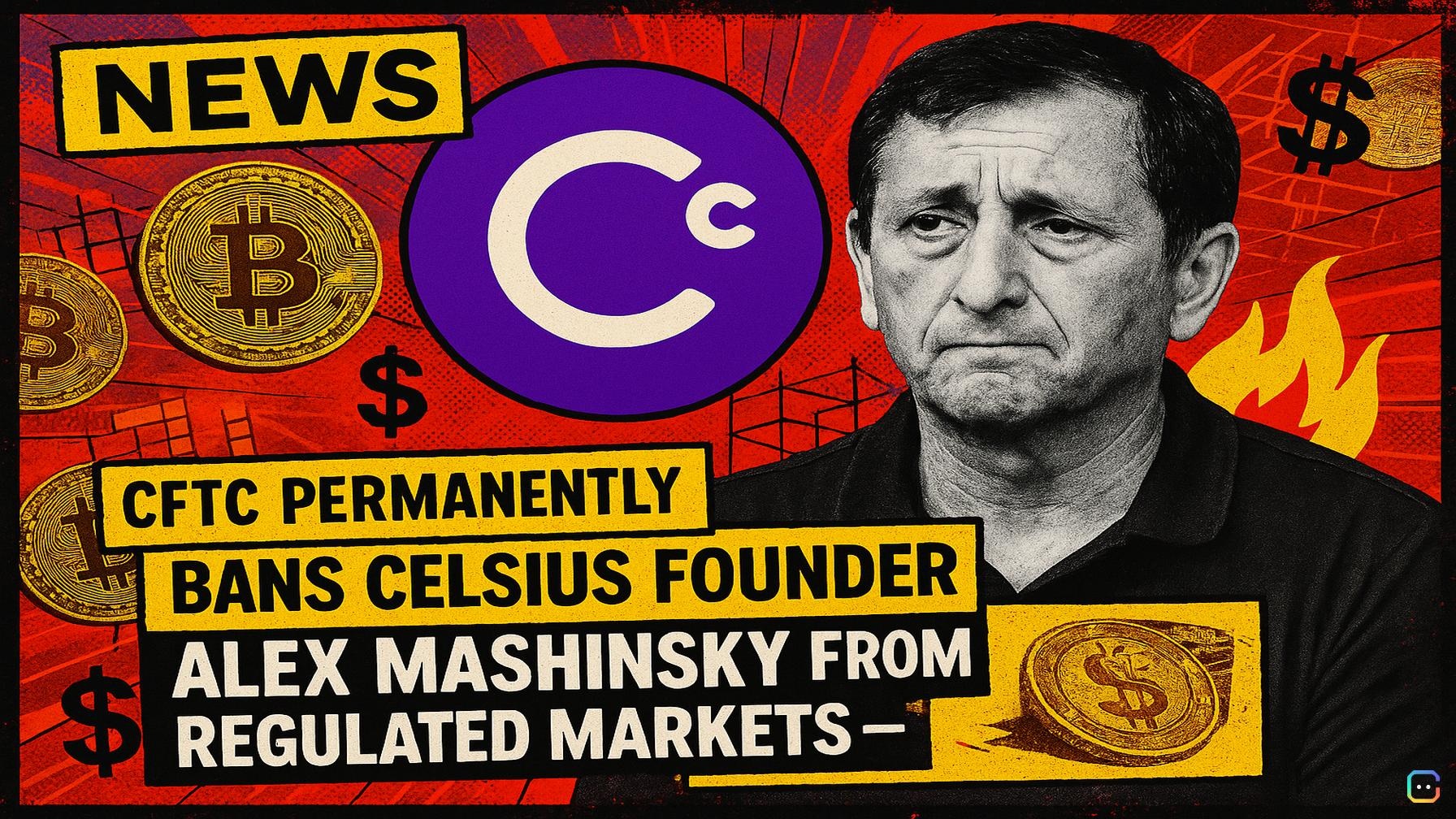
The Commodity Futures Trading Commission has formally closed its civil enforcement case against Celsius founder Alex Mashinsky, issuing a consent order in the U.S. District Court for the Southern District of New York that permanently bars him from trading in CFTC-regulated markets and from registering with the agency in any capacity.
Key points
- The SDNY entered a consent order against Mashinsky at the CFTC’s request, permanently banning him from participating in regulated derivatives markets and from any future registration with the agency.
- The order resolves the CFTC’s personal civil case against Mashinsky but does not affect other ongoing legal matters tied to Celsius — notably his prior criminal conviction and forfeiture obligations.
- The CFTC did not impose a new civil monetary penalty on Mashinsky in this settlement; the agency said the decision reflects his criminal conviction and existing forfeiture commitments.
- This action closes the CFTC’s civil enforcement avenue against Mashinsky personally but should not be conflated with criminal prosecutions or other civil claims related to Celsius.
Background
The CFTC’s original complaint, filed in July 2023, alleged that Celsius and Mashinsky defrauded customers by misstating the platform’s safety, profitability and regulatory standing. Celsius, which promoted itself as a place to earn yield on crypto assets, collapsed in 2022 after a liquidity crisis revealed significant flaws in its business model. For many customers, Celsius became emblematic of the last cycle’s misplaced assurances — bank-like language and yield promises without comparable protections.
Why this matters
- For Mashinsky: the practical consequence from the CFTC’s side is a permanent ban from regulated derivatives markets and agency registration rather than an additional civil fine. Monetary penalties tied to Mashinsky stem from his criminal case and forfeiture orders.
- For regulators and the industry: the action follows a broader enforcement trend in the U.S. targeting yield products, lending services and synthetic exposure. The CFTC, SEC, state regulators and criminal authorities have all scrutinized firms that marketed returns without adequately disclosing risks.
- For users and executives: the case reinforces that personal accountability can continue after a company fails. Regulators will pursue bans, penalties, forfeiture and criminal charges where they find misrepresentation of risk or customer protections. Consumers should evaluate yield platforms by their disclosures, liquidity and legal structure — not just headline rates.
Though Celsius no longer looms as a market player, its legal fallout continues to shape how regulators and the industry approach crypto lending and yield offerings. The CFTC’s resolution is another reminder that the last cycle’s failures still carry enforcement consequences as the ecosystem pivots to ETFs, stablecoin rules and institutional infrastructure.
This report is based on information from the CFTC. Written by the News Desk; edited by Samuel Rae.
Read more AI-generated news on: undefined/news