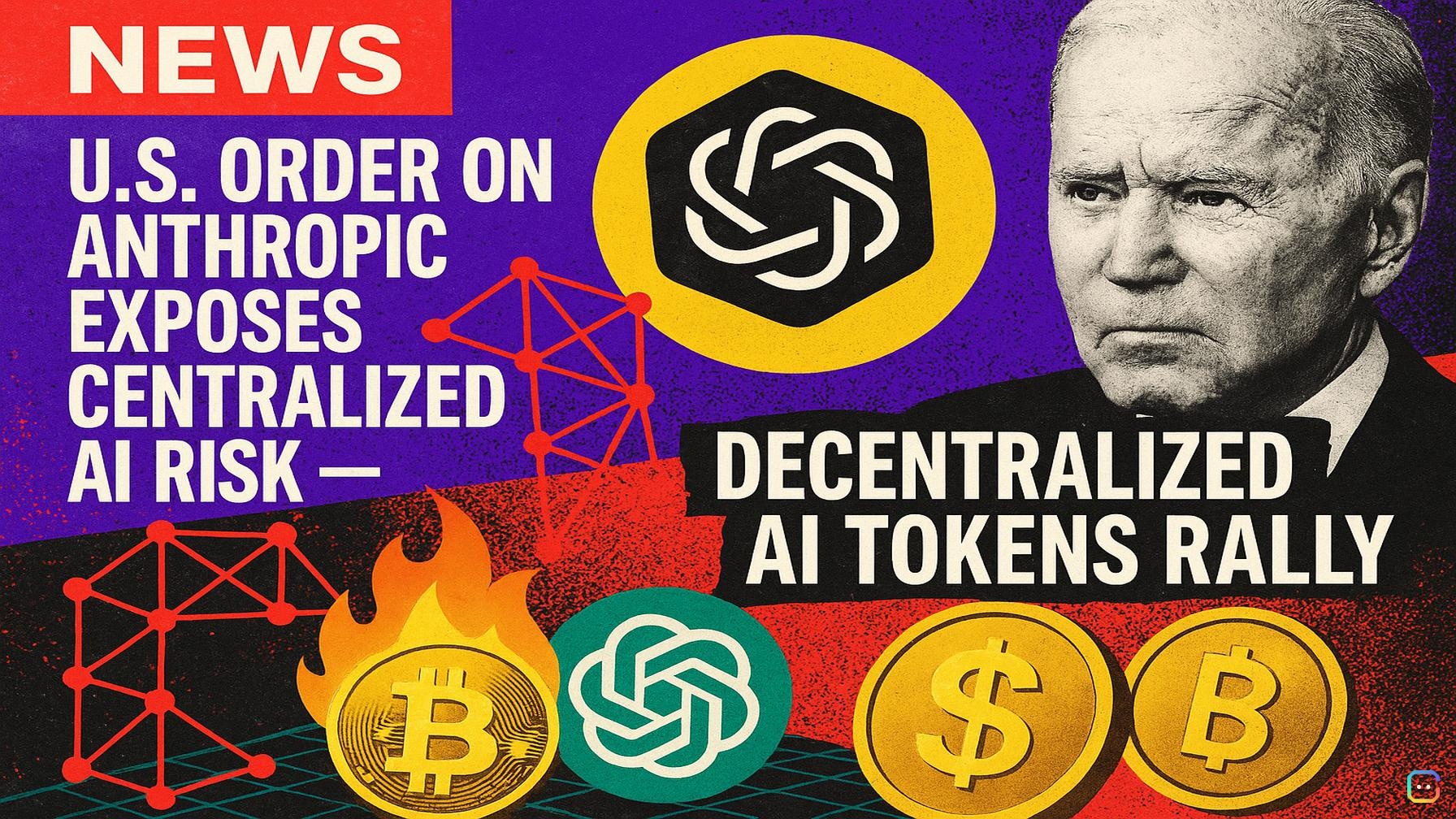
U.S. order that pulled Anthropic’s top models offline spotlights single‑point risk — and sent decentralized AI tokens higher.
Former central banker Mark Carney sounded the alarm Sunday that recent U.S. restrictions on Anthropic’s most advanced models illustrate the danger of depending on a small number of American AI providers. Speaking in Ireland ahead of the G7 summit, Carney warned that the shutdown of Anthropic’s frontier models is “something that can happen with overreliance on certain models.” He added that “nobody has done anything wrong,” but urged policymakers and industry to learn from the episode and “build out and diversify,” noting: “It is never a good idea to have one option.”
What happened
- On Friday the U.S. ordered Anthropic to cut access to its Fable 5 and Mythos 5 models for foreign nationals, citing national security concerns. Anthropic complied and disabled the systems for all customers, while disputing the rationale. The company said the cited jailbreak is already replicable on public models such as OpenAI’s GPT‑5.5.
- Reports suggested the order was motivated in part by suspicion that a China‑linked actor had accessed Mythos; media outlets cited a Commerce Department communication to Anthropic’s leadership. Anthropic is reportedly approaching a near‑$1 trillion valuation after generating more than $47 billion in annualized revenue. Decrypt has contacted Anthropic for comment.
Why this matters to crypto and AI
- The incident highlights centralized AI as a single point of failure: when a model and its controls sit inside one company, a government order can effectively cut access worldwide. Decentralized AI aims to spread model hosting, governance and operation across independent nodes coordinated by blockchain systems — reducing a single “kill switch.”
- Markets reacted quickly. Data from CoinGecko showed decentralized‑AI tokens and projects rallied after the Anthropic ban: the sector’s market cap hit $24.3 billion, up about 6% on the day and 12% over the week. Smaller compute and data networks led gains — ChainOpera AI, io.net, Grass and NOVA all climbed more than 30% over the past week, while larger names NEAR Protocol and Bittensor rose roughly 15.9% and 27.9% week‑over‑week, respectively.
Expert context and caveats
- Dan Dadybayo, strategy lead at Horizontal Systems, told Decrypt the U.S. action illustrates “a risk that is largely unique to centralized AI,” likening reliance on a few U.S. providers to the systemic vulnerabilities exposed in finance during 2008.
- But decentralization isn’t a silver bullet. Peter Anthony, founder and CEO of Perceptron Network, argues the real chokepoint may be concentrated compute and data resources: “If decentralized AI still runs on chips and GPUs controlled by a handful of cloud giants, you’ve rebranded the risk, not removed it.” Rising compute and data costs are pushing many projects toward the same suppliers, he said — and Anthropic’s troubles “didn’t create that problem, it just made it impossible to look away from.”
Bottom line
The Anthropic order has accelerated interest — and token flows — into decentralized AI as traders and builders look for alternatives to centralized providers. But experts warn the move only shifts where the strategic vulnerabilities lie unless compute and infrastructure are also diversified.
Read more AI-generated news on: undefined/news