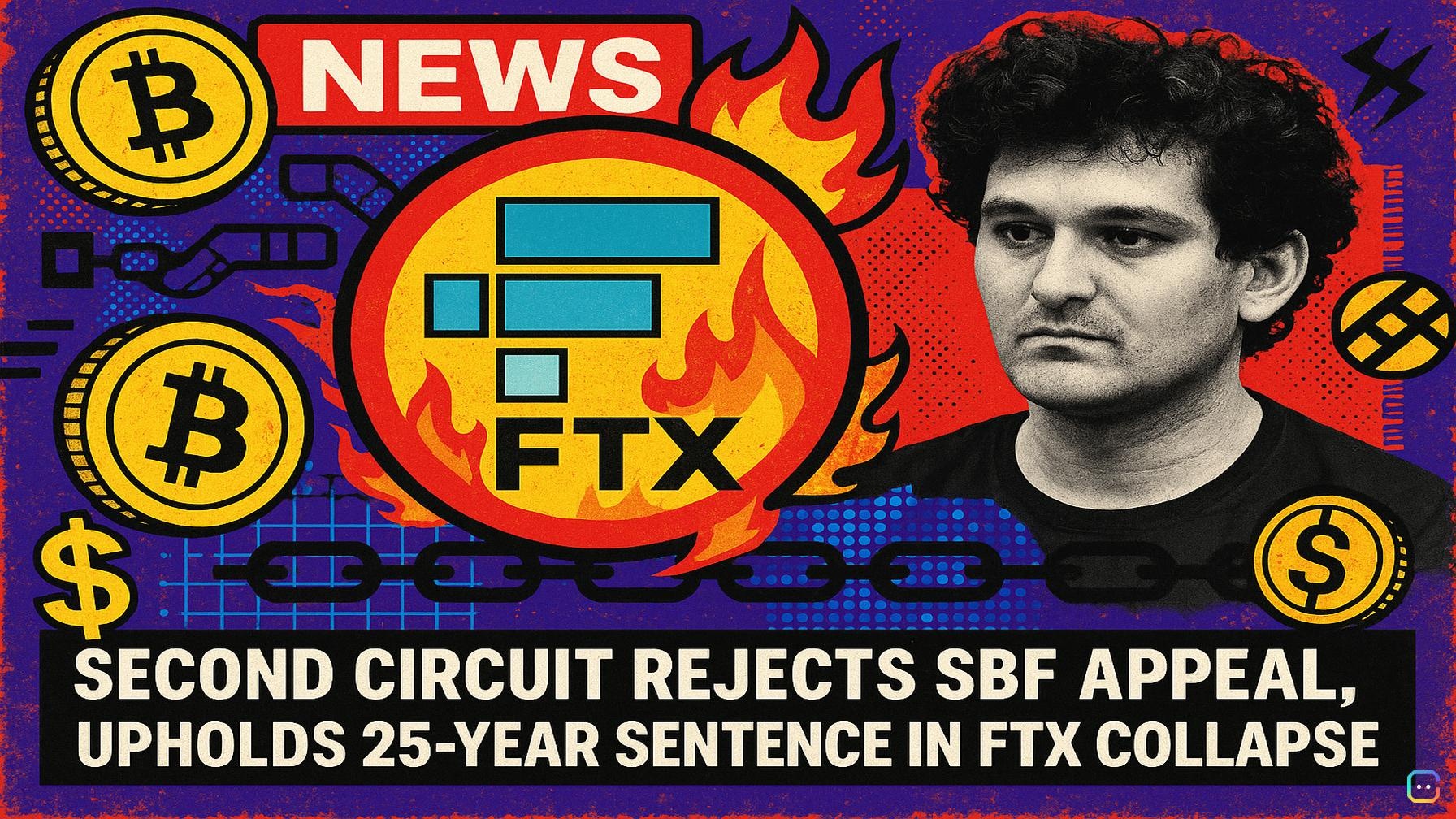
Sam Bankman‑Fried’s last major appellate bid has failed, narrowing the ex‑FTX CEO’s legal options as a separate bid for clemency remains pending.
A three‑judge panel of the U.S. Court of Appeals for the Second Circuit on Friday unanimously rejected Bankman‑Fried’s challenge to his 2023 fraud conviction and the 25‑year prison sentence that followed. Writing for the panel, Circuit Judge Barrington Parker described the government’s case as “robust,” finding ample evidence to support the jury’s verdict tied to the collapse of the FTX exchange.
What the court found
- Prosecutors had accused Bankman‑Fried of diverting roughly $8 billion in customer funds from FTX to Alameda Research, the trading firm he founded, in what they characterized at trial as a “fraud of epic proportions.” A federal jury convicted him in 2023 on seven counts, including fraud and conspiracy.
- The appeals court agreed with prosecutors’ theory: while Bankman‑Fried publicly assured customers, investors and regulators that assets were safe, he was simultaneously using FTX funds for personal spending, political donations, investments and real estate purchases.
- The panel rejected the defense’s claim that U.S. District Judge Lewis Kaplan improperly kept out evidence that would have supported Bankman‑Fried’s belief FTX could cover withdrawals. Citing established precedent, the court held that fraud occurs when money is obtained by deception — meaning customers were defrauded once their funds were transferred to Alameda, regardless of later intentions or beliefs about repayment.
Procedural history and failed relief attempts
- Bankman‑Fried has long maintained his innocence, acknowledging managerial errors at FTX but denying he stole customer funds. Earlier efforts to secure a new trial failed: he filed, then withdrew, a Rule 33 motion claiming new evidence; Judge Kaplan later rejected a retrial request, finding the witnesses were not newly discovered.
- Prosecutors also disputed defense claims that FTX remained solvent before the collapse, noting the exchange reportedly held only 105 Bitcoin against customer claims approaching roughly 100,000 Bitcoin.
Clemency bid and political response
- Separately, Bankman‑Fried has submitted an application for a presidential pardon — classified in filings as a “pardon after completion of sentence.” Public support for clemency appears limited. President Donald Trump told The New York Times earlier this year he did not plan to pardon Bankman‑Fried; the White House has referred reporters to those remarks. Senator Cynthia Lummis publicly said she hoped Trump would not grant clemency because of the harm done to customers.
Where he is now and what’s next
- Now 34, Bankman‑Fried is serving his sentence at a low‑security federal prison near Santa Barbara, California; Bureau of Prisons records list his current release eligibility as 2044. His attorneys did not immediately respond to requests for comment on the appeals ruling.
- Remaining legal avenues include asking the full Second Circuit to rehear the case en banc or petitioning the U.S. Supreme Court to take up the appeal, but Friday’s ruling removes a major path to overturning the conviction.
Why it matters for crypto
The decision cements a high-profile criminal accountability milestone from one of crypto’s biggest collapses. Beyond the legal fate of one founder, the ruling underscores persistent regulatory and criminal exposure risks for exchanges and executives — a reminder to the industry that deceptive commingling of customer assets can carry severe consequences.
Read more AI-generated news on: undefined/news