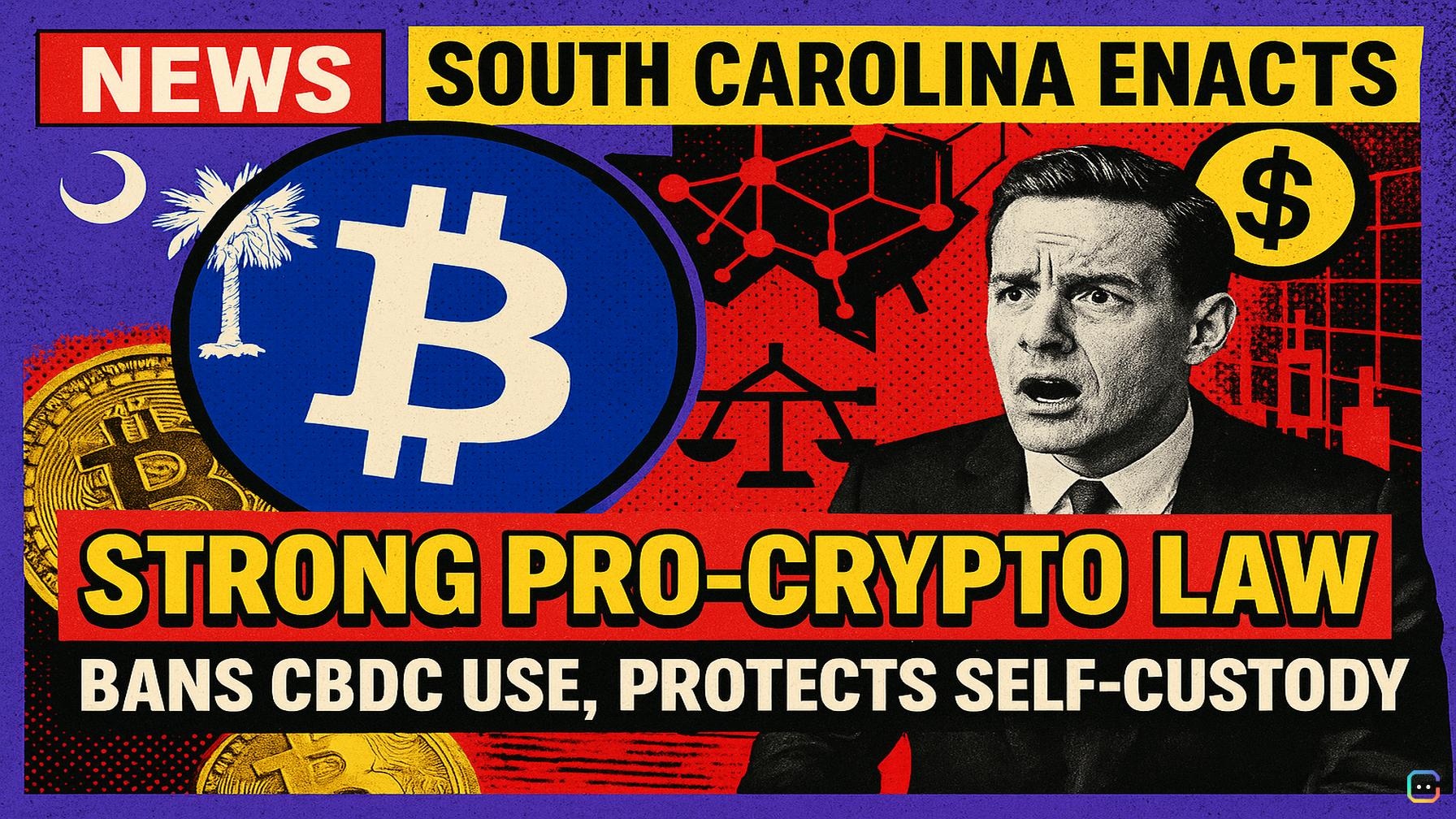
South Carolina has enacted one of the more robust state-level pro-crypto bills to date, strengthening self-custody rights, curbing state involvement with central bank digital currencies (CBDCs), and loosening several licensing requirements tied to blockchain activity.
Governor Henry McMaster signed Senate Bill 163 on Tuesday, updating the state’s legal framework for digital assets and adding a string of protections for crypto users, miners and blockchain businesses. Key measures in the law include:
- Payment and custody protections: Businesses and individuals cannot be prohibited from accepting cryptocurrencies as payment. The law explicitly protects the right to hold assets in self-hosted and hardware wallets, blocking restrictions on self-custody. It also bars state and local governments from imposing additional taxes, fees or assessments on crypto used for payments.
- CBDC restrictions: State agencies, commissions, departments and political subdivisions are forbidden from accepting payments in a CBDC or taking part in any Federal Reserve pilot program tied to a government-issued digital currency. The carve-out echoes growing Republican opposition in Washington to potential U.S. CBDC deployments.
- Mining and noise rules: Local governments are prevented from imposing mining-specific sound restrictions in industrial zones beyond existing noise regulations that apply to those areas.
- Licensing exemptions and definitions: Several blockchain activities are exempted from money transmitter licensing requirements, including crypto mining, node operation, blockchain application development, staking-related infrastructure and crypto-to-crypto trading. The bill also adds formal definitions for blockchain, digital assets, wallets, nodes, mining and staking to the South Carolina Code of Laws.
The CBDC language arrives amid a broader national debate. House Republicans have recently moved to remove what some lawmakers described as a “backdoor green light for a CBDC” from federal legislation, and figures such as Rep. Warren Davidson and House Majority Whip Tom Emmer have promoted measures to block or limit a U.S. digital dollar rollout. Critics of CBDCs warn of surveillance and privacy risks, though organizations like the Human Rights Foundation acknowledge CBDCs could expand financial access while highlighting the attendant dangers of government control over payments.
Globally, a small number of countries have already launched CBDCs—Nigeria, Jamaica and the Bahamas among them—while dozens remain in testing or research phases, according to the Atlantic Council.
South Carolina’s new law is part of a growing wave of state-level crypto policy changes. In March 2025, Kentucky passed House Bill 701, which similarly protected the use of self-hosted wallets and barred local governments from discriminatory restrictions on crypto mining businesses. South Carolina’s measure is likely to be watched by industry participants and other states weighing how to balance innovation, privacy and regulatory oversight.
Read more AI-generated news on: undefined/news