Headline: Jerusalem victims’ families ask US court to force Tether to hand over $344M in frozen USDT — a potential test of stablecoin liability
A Jerusalem family whose relatives were killed in a 1997 Hamas suicide bombing is part of a group of plaintiffs asking a US federal court to compel Tether to turn over hundreds of millions of dollars in frozen USDT. The Manhattan lawsuit, filed Thursday in the US District Court for the Southern District of New York by attorney Charles Gerstein, could create an important legal precedent for how courts treat centralized stablecoin issuers.
What the plaintiffs say
- The plaintiffs are survivors and family members of victims from Iran-linked terrorist attacks who hold long-standing, unpaid court judgments against Iran.
- They claim a legal right to two Tron blockchain wallet addresses that hold roughly 344 million USDT (about $344 million).
- Those wallets were frozen earlier this year by the US Treasury Department’s Office of Foreign Assets Control (OFAC), which identified them as linked to Iran’s Islamic Revolutionary Guard Corps (IRGC).
What they’re asking the court to do
- Instead of demanding that Tether unfreeze the specific wallets, the plaintiffs want a court order directing Tether to transfer an equivalent amount of USDT to a wallet controlled by their legal team so they can satisfy their judgments.
Why Tether’s structure matters
- Unlike decentralized tokens such as Bitcoin or Ethereum, USDT is issued and operationally controlled by a central company, Tether. That company can freeze wallets, block transactions, and move funds when ordered to do so.
- Gerstein’s argument hinges on that central control: because OFAC and other authorities were able to freeze the wallets (an action only possible because Tether can intervene), the court can likewise order Tether to move the funds to the plaintiffs.
- He further points out that OFAC has already identified the wallets as IRGC-controlled assets, which he says clears a path for seizure under US terrorism statutes.
Broader legal push
- This filing is part of a broader, coordinated legal strategy testing whether US courts can compel centralized crypto platforms to act on frozen or sanctioned assets. Gerstein has pursued similar actions involving North Korea-linked cyber operations and the Arbitrum platform, and he’s also involved in a separate case targeting Railgun DAO, a privacy-focused protocol.
Why it matters for crypto
- A ruling requiring Tether to transfer frozen USDT to satisfy private judgments could reshape how centralized stablecoin issuers are treated in US courts and influence how victims and creditors pursue claims against sanctioned crypto holdings. It also underlines the practical consequences of centralization in stablecoins: operational control gives companies and regulators real-world levers that don’t exist for fully decentralized cryptocurrencies.
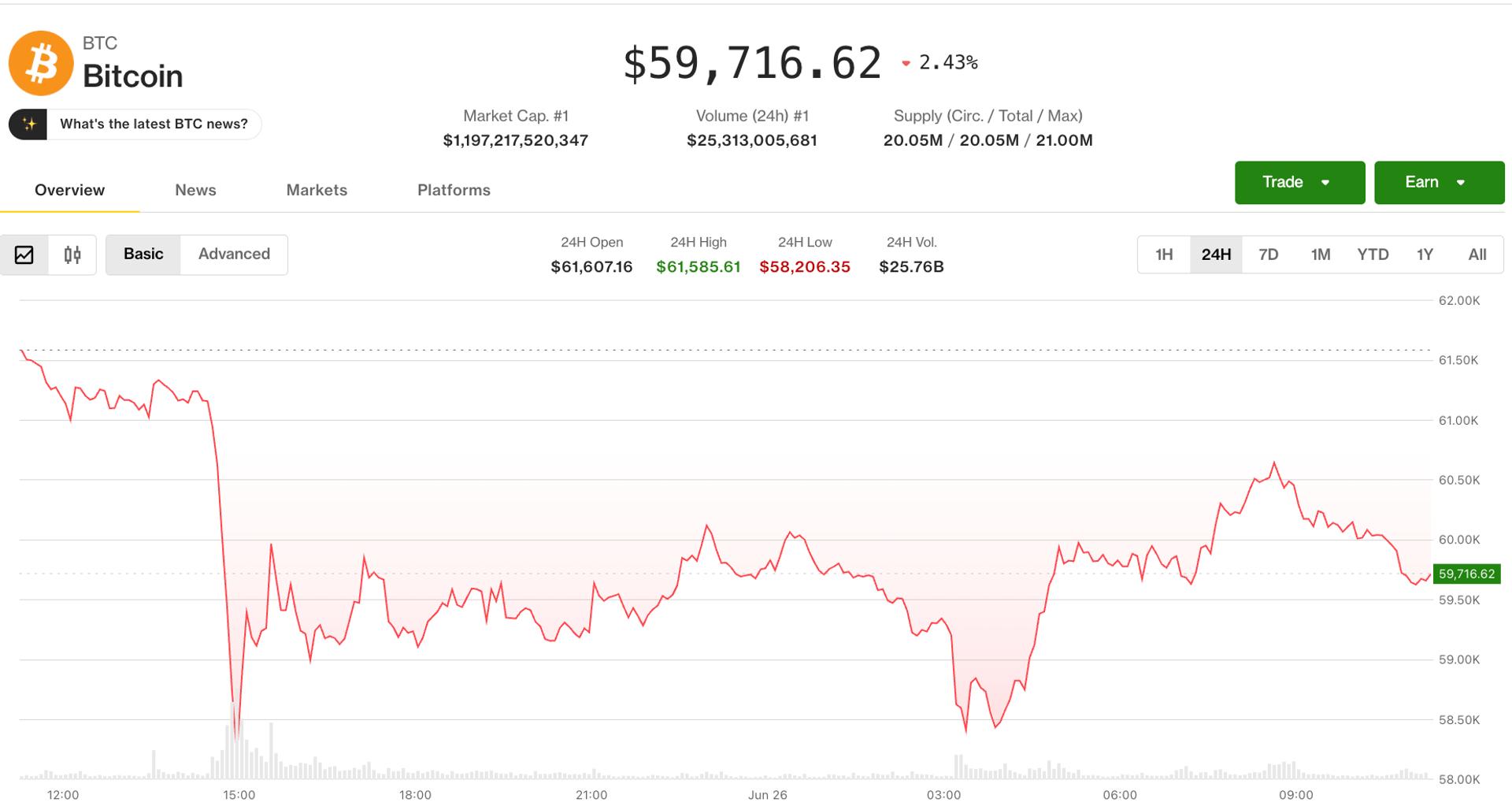
(Note: featured image from CEPA; chart from TradingView.)
Read more AI-generated news on: undefined/news