Tether’s freeze tool is proving to be more permanent than temporary — and it’s reshaping how compliance plays out on-chain.
Key findings
- Only 3.6% of addresses Tether placed on its blacklist in 2025 were later removed, according to BlockSec.
- Over half of the funds tied to blacklisted wallets were permanently destroyed using the contracts’ destroyBlackFunds function — underscoring how final these actions can be.
- In the past 30 days alone, Tether froze more than $514 million in USDT across 370 addresses on Ethereum and Tron.
- Tron: 328 addresses ≈ $506 million
- Ethereum: 42 addresses ≈ $8.73 million
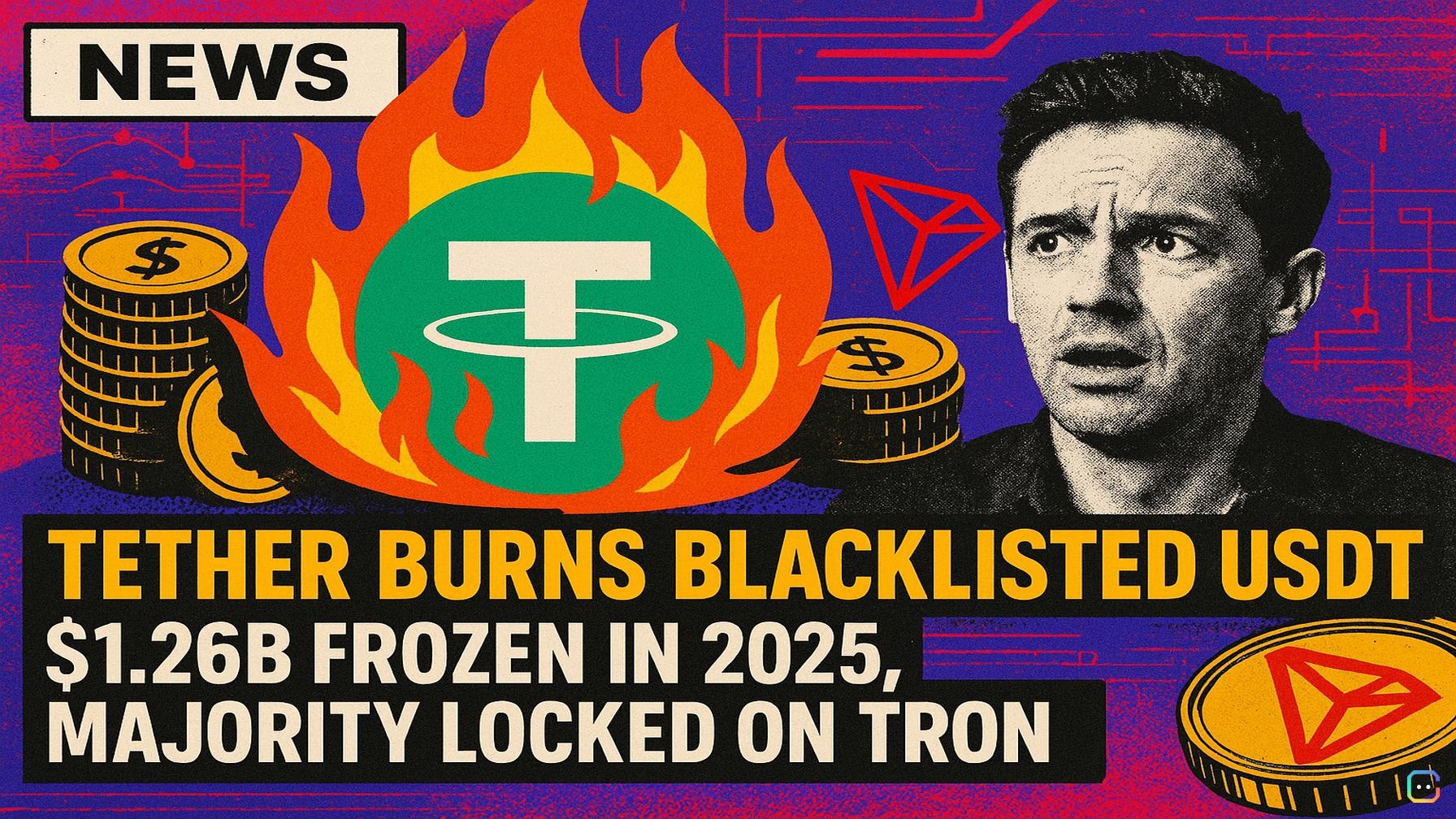
- For all of 2025 so far, Tether blacklisted 4,163 addresses and froze about $1.26 billion in USDT — a pace that could push the year’s total well beyond that before December.
- Looking at 2023–2025, BlockSec found roughly $3.3 billion frozen across 7,268 addresses — a level far above rival stablecoin issuer Circle over the same period.
- Tether has previously disclosed freezing around $4.2 billion over three years for links to illicit activity, with $3.5 billion of that amount frozen since 2023 as law enforcement activity increased.
Why this matters
- The destroyBlackFunds function shows freezes can be irreversible — balances aren’t just locked, they can be burned outright. That permanency, combined with the low unfreeze rate, means addresses placed on Tether’s blocklist rarely come back.
- The enforcement activity is heavily concentrated on Tron, which accounted for the vast majority of recent freezes — making the network the main front in Tether’s 2026 enforcement push.
- High-dollar freezes are often coordinated with authorities. In April, Tether worked with the U.S. Treasury’s OFAC to lock over $344 million in USDT across two Tron addresses tied to suspected Iran-related sanctions evasion. In February, it helped seize more than $61 million linked to pig-butchering scams.
Broader implications
- This surge in blacklisting and destructive freezes is fueling debate across crypto. DeFi projects that rely on upgradeable contracts and admin keys have used those controls to pause or recover funds after exploits — raising persistent questions about who should hold emergency powers and under what circumstances.
- For issuer-backed stablecoins like USDT, the issuer retains direct control of minting, burning and freezing. The data shows those tools are no longer occasional emergency measures; they’re being used routinely and at scale in fraud, sanctions and scam investigations.
- Market participants and commentators are taking note. The enforcement trend reinforces conversations about custody, liquidity and where funds actually move on-chain — and it informs choices about which platforms to use and how to manage counterparty risk.
Bottom line
Tether’s freeze-and-destroy capabilities are active, frequent and often final. As regulators and law enforcement step up crypto investigations, on-chain compliance actions like these are becoming a regular feature of the ecosystem — with material consequences for users, projects and the perceived trade-offs between decentralization and built-in controls.
Featured image: Halo. Chart: TradingView.
Read more AI-generated news on: undefined/news