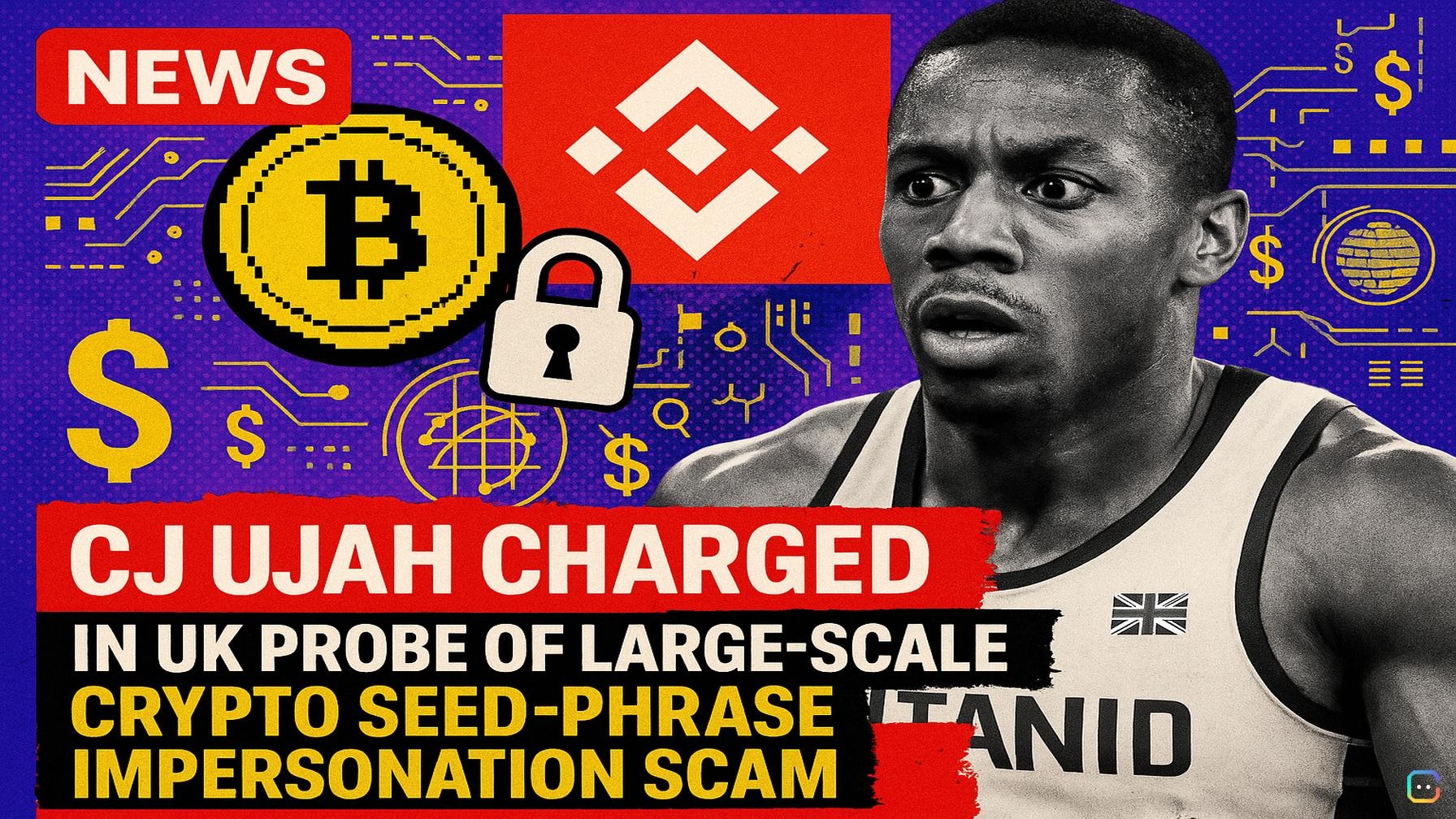
British sprinter CJ Ujah is one of 10 people charged in a U.K. criminal probe into a large-scale cryptocurrency impersonation scam, police said Thursday.
The U.K. Regional Organized Crime Units (ROCUs) announced the arrests after coordinated raids on April 29 across Kent, Essex, London and Wakefield. Authorities allege the suspects belonged to an organized crime group that used phone calls and impersonation tactics—claiming to be police officers or representatives of crypto firms—to trick victims into revealing wallet recovery information. Once the criminals had victims’ seed phrases or private recovery details, they restored wallets and transferred out the funds. Police did not list which tokens were taken, but said one victim lost more than £300,000.
Seed phrases are the master recovery keys for many wallets: anyone who knows a phrase can rebuild a wallet and move its assets. That’s why they remain a prime target in social-engineering attacks and phishing scams.
All 10 suspects appeared before court on April 30. Three people, including British athlete Brandon Mingeli, were remanded in custody until their next hearing on May 28. The remaining seven, including Ujah, were released on bail.
Ujah’s profile adds a headline-grabbing angle to the case. He helped Great Britain win the 4x100m relay gold at the 2017 World Championships in the race that marked Usain Bolt’s finale. He was later banned for 22 months after testing positive for prohibited substances at the Tokyo Olympics—a result that cost the team its relay silver; athletics authorities later attributed the positive test to contaminated supplements. Ujah returned to competition in 2024 but has not raced since April 2025.
The case underscores a broader industry trend: crypto crime is increasingly driven by social engineering rather than pure hacking. Blockchain security firm Scam Sniffer reported nearly 4,700 wallets drained by signature-phishing attacks in January alone. In response to the surge in scams, platforms such as X introduced new safety features in April aimed at curbing crypto-related fraud.
U.K. police warned the public to treat unexpected communications about crypto as a “big red flag.” “Police will never call you unexpectedly about your crypto or ask you to access your cold storage devices—this is a big red flag,” officers said. “No legitimate company or police officer will ever ask for your seed phrase.”
How crypto users can reduce risk
- Never share your seed phrase or private keys with anyone, even if they claim to be from support or law enforcement.
- Verify unsolicited contact via official channels (don’t use phone numbers or links supplied in the message).
- Use hardware wallets or cold storage and keep backups in secure, offline locations.
- Consider multi-signature wallets or custodial services for large holdings.
- Stay up to date on phishing techniques and enable platform security features where available.
This prosecution follows an uptick in impersonation and signature-phishing scams that exploit human trust rather than software vulnerabilities. The case will be closely watched by the crypto community as it moves through the U.K. courts.
Read more AI-generated news on: undefined/news