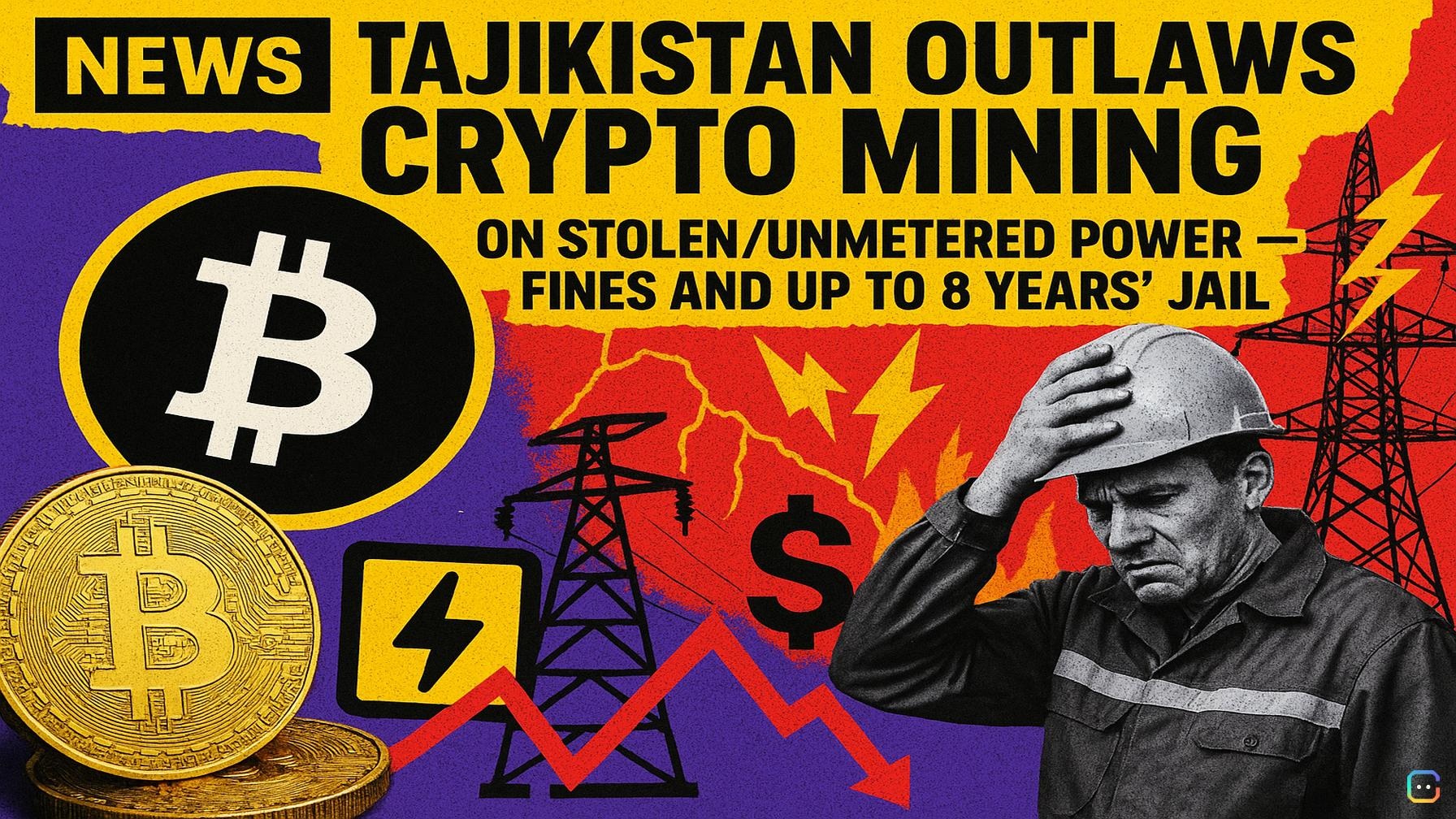
Tajikistan has made using stolen or unmetered electricity for cryptocurrency mining a criminal offense, introducing fines and prison terms as the country grapples with a severe energy crisis.
What changed
On Dec. 3, 2025, Tajikistan’s parliament approved amendments to the criminal code that add Article 253(2), “Illegal use of electricity for the production of virtual assets.” The law targets anyone who mines cryptocurrencies using electricity that is stolen or bypasses meters. Penalties are tiered:
- Basic offense: fines roughly $1,650–$4,070.
- Coordinated group: fines of $4,125–$8,250 or two to five years in prison.
- Large-scale or organized operations: up to eight years’ imprisonment.
The bill was brought to parliament by Attorney General Habibullo Vohidzoda, who told lawmakers unregulated mining had contributed to regional power outages, damaged infrastructure and produced about $3.52 million in losses. Several criminal investigations into illegal mining operations are reportedly underway. The measure will take effect once signed by President Emomali Rahmon and published in state media.
Why authorities acted
Tajikistan relies heavily on hydropower, and unusually low reservoir levels have led to sweeping winter rationing — in many areas residents are receiving just two to four hours of electricity per day. Officials say unlicensed mining farms, which often tap the grid illegally or tamper with meters, have amplified the strain on the network and accelerated wear and tear on equipment.
Members of parliament highlighted the scale of the problem: MP Shukhrat Ganizoda noted that a single ASIC miner can draw about 3.5 kW, with advanced models reaching 6 kW. Farms operating thousands of such units can impose enormous loads on local grids. Lawmakers also argued illegal mining is tied to tax evasion, untraceable flows of funds and other criminal activity, framing the new law as protection for both energy security and the national economy.
How this fits a global pattern
Tajikistan’s move mirrors a wider trend where countries facing energy shortages or grid stress are cracking down on unauthorized mining. Recent examples include:
- Malaysia: authorities uncovered thousands of illegal mining sites that allegedly siphoned over $1 billion in electricity in recent years.
- Kuwait (2025): a nationwide operation to close unauthorized farms followed worsening power shortages; one area reportedly saw electricity use drop by more than 50% after the crackdown.
- China and Kazakhstan: both have tightened rules or banned mining amid environmental and grid concerns, pushing portions of the industry to relocate.
These responses reflect a common dynamic: cheap, poorly monitored or subsidized electricity attracts miners, but when supply tightens regulators increasingly treat unauthorized mining as theft or economic sabotage.
Implications for miners and the industry
Tajikistan’s law is likely to accelerate “mining migration,” where operators move to jurisdictions with cheaper or more permissive power markets. The pattern was evident after China’s 2021 mining ban, when activity shifted to places like Kazakhstan, the U.S. and Russia — only for some host regions to later reassess mining’s impact on grids.
Analysts say the long-term direction for mining will favor access to renewables, surplus power, or more energy-efficient hardware. Networks moving from proof-of-work to proof-of-stake also reduce electricity demand and regulatory attention. For jurisdictions with fragile power systems, the combination of energy scarcity and illegal mining is especially risky: it deprives households and industry of power and imposes fiscal and maintenance burdens on state infrastructure.
Bottom line
By criminalizing mining with stolen or unmetered electricity — including prison terms up to eight years — Tajikistan is signaling that energy misuse tied to crypto activity will no longer be treated as a minor regulatory issue. The move underscores how digital-asset operations are increasingly viewed through the lens of national energy security and infrastructure resilience, and it raises the stakes for miners weighing where to operate next.
Read more AI-generated news on: undefined/news