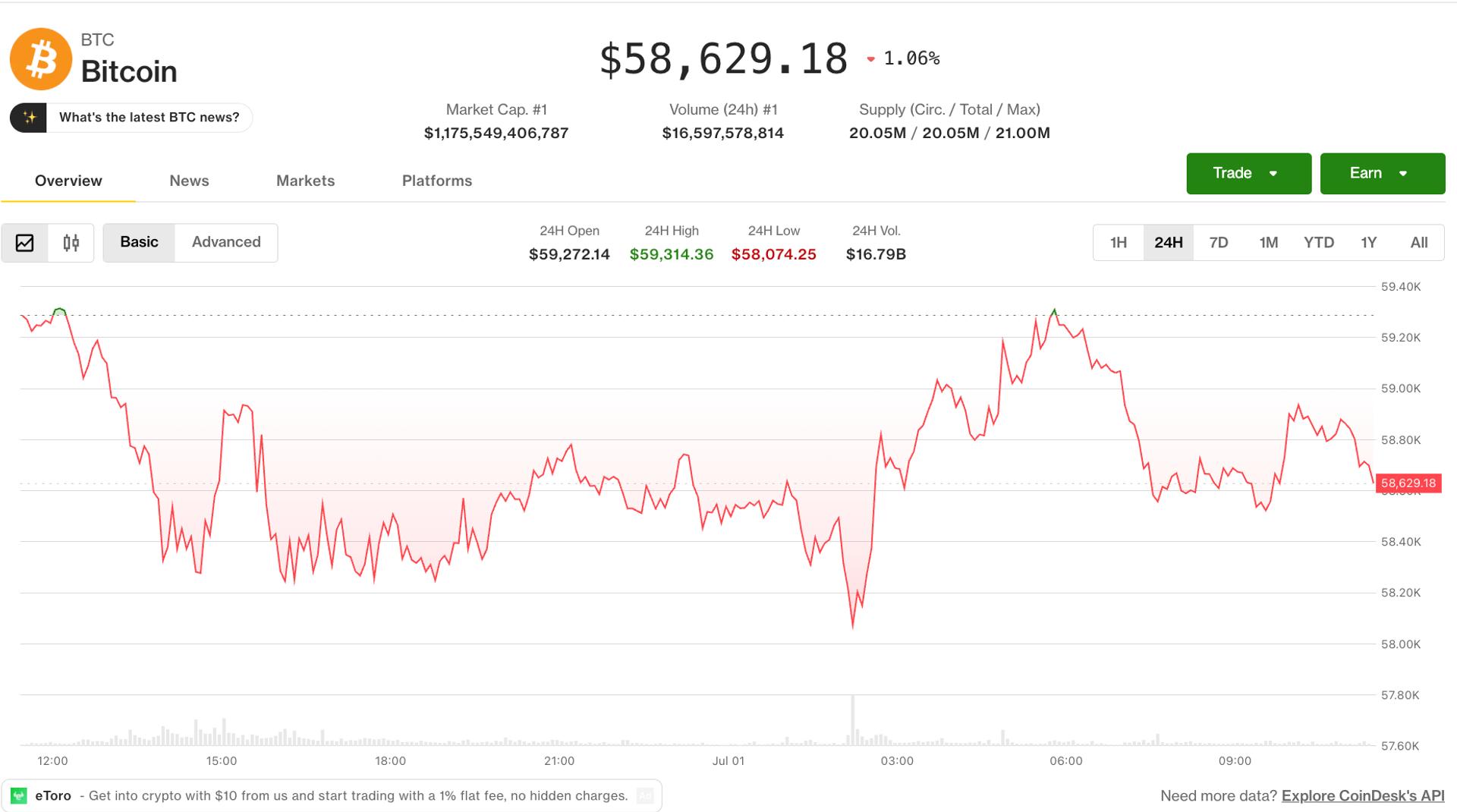
A push to lock the U.S. government’s bitcoin holdings into law is accelerating — and one visible sign is a name change. The bill that started life as the “Bitcoin Act” has been rebranded the American Reserves Modernization Act (ARMA), and officials say a major executive-branch update on the U.S. Strategic Bitcoin Reserve is imminent.
What officials say
- Patrick Witt, executive director of the President’s Council of Advisors for Digital Assets, told attendees at the Bitcoin 2026 conference in Las Vegas that the executive branch will deliver a “big step forward” on the reserve within weeks. He said officials have spent months resolving the legal and operational issues needed to secure bitcoin already on the government’s balance sheet.
- The forthcoming announcement is expected to outline how the reserve would be managed and explain how existing law supports that approach. Whether it will authorize new purchases of bitcoin, however, remains unclear.
Where the reserve stands now
- The current U.S. Strategic Bitcoin Reserve contains only seized assets — bitcoin obtained through criminal and civil forfeitures. No government purchases have been authorized to date.
- President Donald Trump signed an executive order in March 2025 that directed the government not to sell its existing bitcoin and created a separate stockpile for other digital assets. Because executive orders can be reversed by future administrations, lawmakers want to enshrine the policy in statute.
Legislation and politics
- Sen. Cynthia Lummis and Rep. Nick Begich have drafted legislation to codify the reserve. The bill — previously known as the Bitcoin Act — proposed acquiring up to 1 million BTC over five years through budget-neutral mechanisms. Begich announced the rebranding to ARMA; the full text of the reintroduced bill and any changes have not yet been disclosed.
- Witt emphasized that executive action can move first but congressional legislation will be necessary to make the reserve permanent.
Challenges and timelines
- Market predictors are skeptical about speed: Polymarket implies only a 23% chance the U.S. will formally establish the reserve before 2027.
- Broader crypto legislation such as the Clarity Act remains stalled in the Senate, raising questions about how quickly Congress can act.
- Political and ethics issues could complicate the path forward. Democrats have pushed provisions that would bar executive-branch officials, including the president, from promoting or issuing digital assets — driven in part by concerns about potential conflicts of interest tied to Trump-family crypto ventures.
What to watch next
- Expect an executive-branch announcement in the coming weeks explaining how the reserve would be run and how existing statutes apply.
- Key follow-ups will be whether the announcement authorizes additional bitcoin purchases and how quickly Congress moves to pass ARMA or related legislation to lock the policy into law.
The coming weeks should clarify whether the White House’s move is a concrete step toward a legislated Strategic Bitcoin Reserve or simply the opening salvo in a longer, politically fraught process.
Read more AI-generated news on: undefined/news