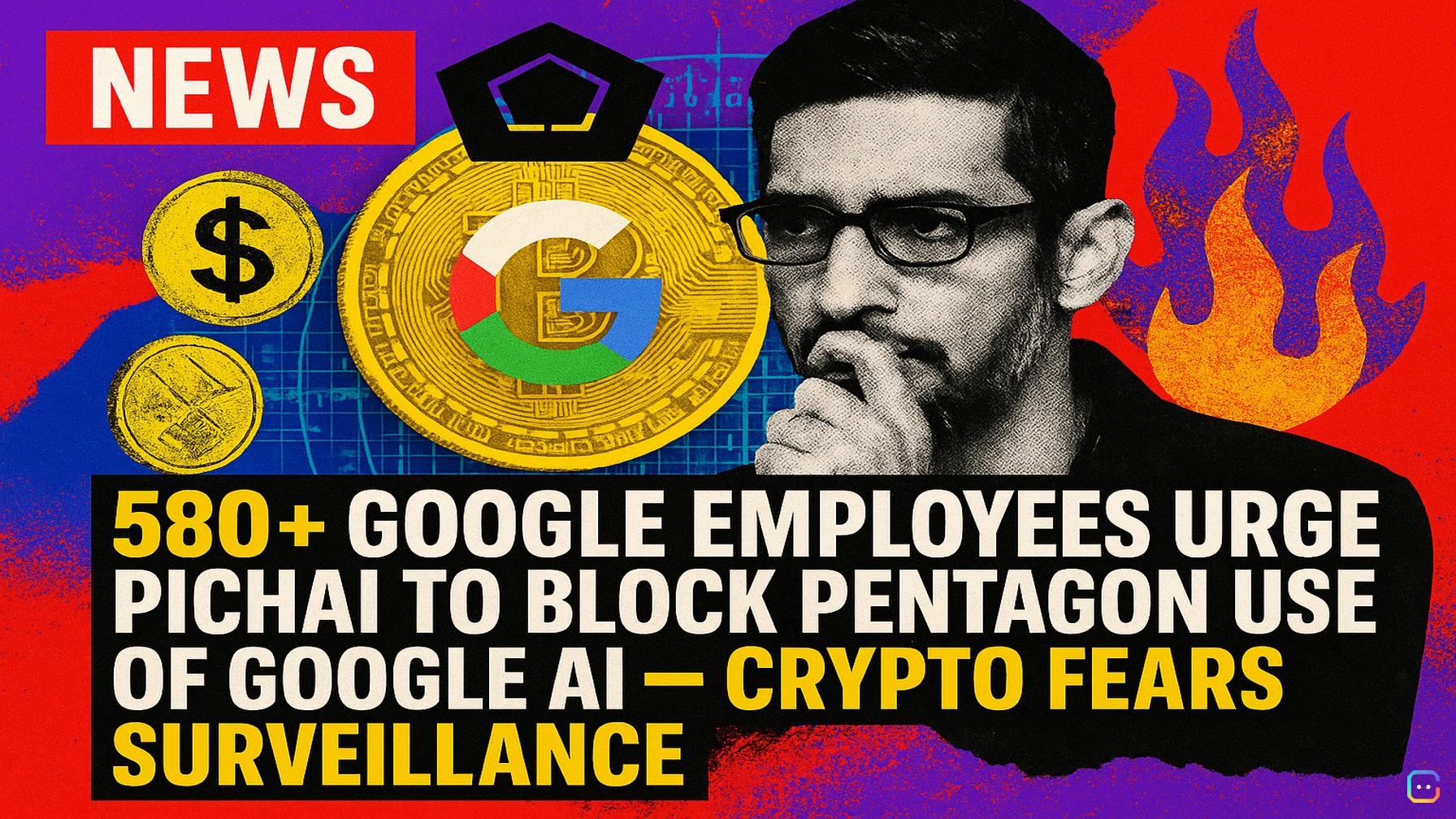
More than 580 Google employees have signed an open letter demanding CEO Sundar Pichai block the Pentagon from using the company’s artificial intelligence tools for military purposes — escalating a simmering debate within Silicon Valley about tech firms’ role in defense work.
The letter calls for an immediate moratorium on deploying Google AI for military applications, saying employees “want to see AI benefit humanity; not to see it being used in inhumane or extremely harmful ways.” Among the signatories are more than 18 senior staffers, including principals, directors and vice presidents. They singled out Google Cloud and the company’s machine learning toolset as technologies that could be repurposed to power lethal autonomous weapons, and demanded greater transparency about existing Pentagon contracts. The group also wants Google to create a permanent ethics board with employee representation to vet future military partnerships.
Employees point to Google’s 2018 withdrawal from Project Maven — the Pentagon program that used AI to analyze drone footage — as a precedent for refusing military work on ethical grounds. That episode helped establish a framework for internal pushback against defense contracts and appears to be informing today’s demands.
The action comes amid wider friction between the U.S. defense establishment and AI companies. Two months ago the Department of Defense dropped a contract with startup Anthropic after the company refused to remove restrictions on domestic surveillance and fully autonomous weapon use. The Defense Secretary later labeled Anthropic a supply-chain risk and the White House ordered federal agencies to phase out its tools; a federal judge temporarily blocked that ban in March. Despite government pressure on Anthropic, reports say the NSA has been granted access to Anthropic’s Mythos Preview model — access that the company otherwise limits to a small group of researchers and cybersecurity partners. President Donald Trump has since indicated tensions may be cooling, saying Anthropic is “shaping up.”
Pentagon leaders have signaled AI’s central role in future operations. The Chairman of the Joint Chiefs of Staff, General Dan Caine, has called autonomous weapons “a key and essential part of everything we do” going forward — comments that heighten employees’ fears about civilian AI being repurposed for warfare. The broader industry has already seen fallout from these tensions: Anthropic faced scrutiny after its tools were reportedly used in strikes in Iran, and OpenAI has defended its own Pentagon collaborations despite user concern that military ties could undermine safety guardrails.
For crypto and privacy-focused audiences, the Google letter underscores familiar themes: governance, transparency and control over digital tools that can enable surveillance or be weaponized. As major tech platforms face internal and public pressure to set boundaries, the debate over when — and whether — to partner with the military will continue to shape both AI policy and the wider conversation about who builds and governs powerful technologies.
Read more AI-generated news on: undefined/news