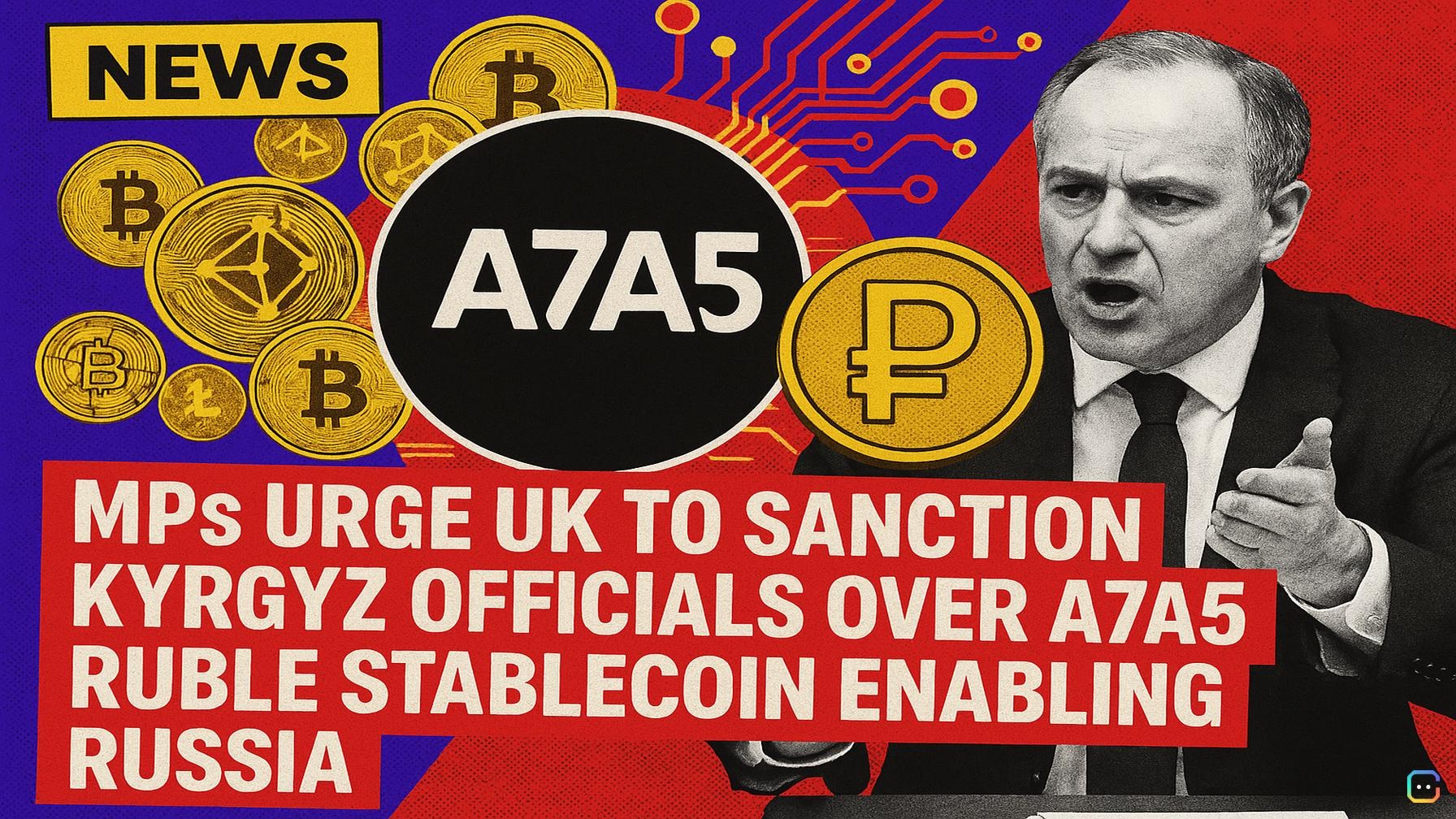
More than 20 British MPs and peers have urged the UK foreign secretary to impose targeted sanctions on senior Kyrgyz officials they say are helping Russia dodge existing sanctions by hosting infrastructure for a ruble‑pegged stablecoin known as A7A5.
What’s at issue
- The cross‑bench letter calls for personal sanctions against three senior Kyrgyz figures: Melis Turgunbaev (head of the central bank), Maksat Asanaliev (general prosecutor) and Marat Pirnazarov (head of the financial regulator). MPs and peers argue these officials have allowed Kyrgyzstan to become a haven for the infrastructure that underpins A7A5 and exchanges that trade it.
- A7A5 is a stablecoin pegged to the Russian ruble and reportedly linked to Promsvyazbank, a Russian bank already subject to UK sanctions. British, EU and US authorities have sanctioned A7A5 and restricted its purchase in the UK, US and much of Europe.
- Despite those measures, exchanges operating in Kyrgyzstan — including platforms identified as Grinex and Meer, which the UK has since sanctioned — have reportedly allowed cash purchases of A7A5, keeping the token accessible to sanctioned Russian actors.
Scale and mechanisms
- According to the letter and a recent report by crypto researcher Alexander Browder, A7A5 has facilitated more than $100 billion in transactions and is moving over $1 billion per day. Because the token can be swapped into other cryptocurrencies, holders can ultimately gain access to dollars and the wider global financial system.
- Browder describes A7A5 as “specifically designed for aiding sanctions evasion,” saying it is controlled by Russian‑backed entities and that users face little risk of prosecution or asset seizure.
- The company behind A7A5 has reportedly been pushing expansion into Africa and recruiting staff across the continent, suggesting efforts to broaden the network’s geographic footprint.
Calls for action and political reaction
- Signatories want the UK to move beyond asset and entity listings and impose personal sanctions on the named Kyrgyz officials. They argue that sanctions on exchanges and firms have not been sufficient because the operation continues with cooperation from local financial institutions and authorities that registered A7A5.
- Liberal Democrat MP Chris Coghlan, a signatory, said the government must “shut down these loopholes now,” calling stablecoin‑enabled flows “one mechanism that Russia is using to finance its brutal war of aggression in Ukraine.”
- Former Conservative leader Iain Duncan Smith added that targeted sanctions are needed to hold those “enabling Russia’s illegal war machine” to account.
- Alexander Browder urged the UK to “tighten the noose on Russia’s sanctions evasion,” linking the issue to the human cost of the conflict in Ukraine.
Background and next steps
- The UK previously sanctioned Kyrgyz entities that provided infrastructure to A7A5, including Grinex and Meer, but MPs and peers say that action has not stopped the stablecoin’s operations.
- The letter requests the foreign secretary to escalate measures by adding senior Kyrgyz officials to the sanctions list.
- The article notes that representatives of the three officials named, A7A5 itself, and the Foreign, Commonwealth and Development Office were approached for comment.
Why crypto watchers should care
- A7A5 highlights how programmable digital assets and permissive local on‑ramps can be combined to create resilient sanctions‑evading channels. For crypto platforms, regulators and compliance teams, the case underlines the importance of monitoring regional exchange behavior, stablecoin counterparty risk, and regulatory cooperation across jurisdictions.
Read more AI-generated news on: undefined/news