Headline: How a $200K FTX-era bet on AI became a $3B missed windfall after SpaceX’s $60B move for Cursor
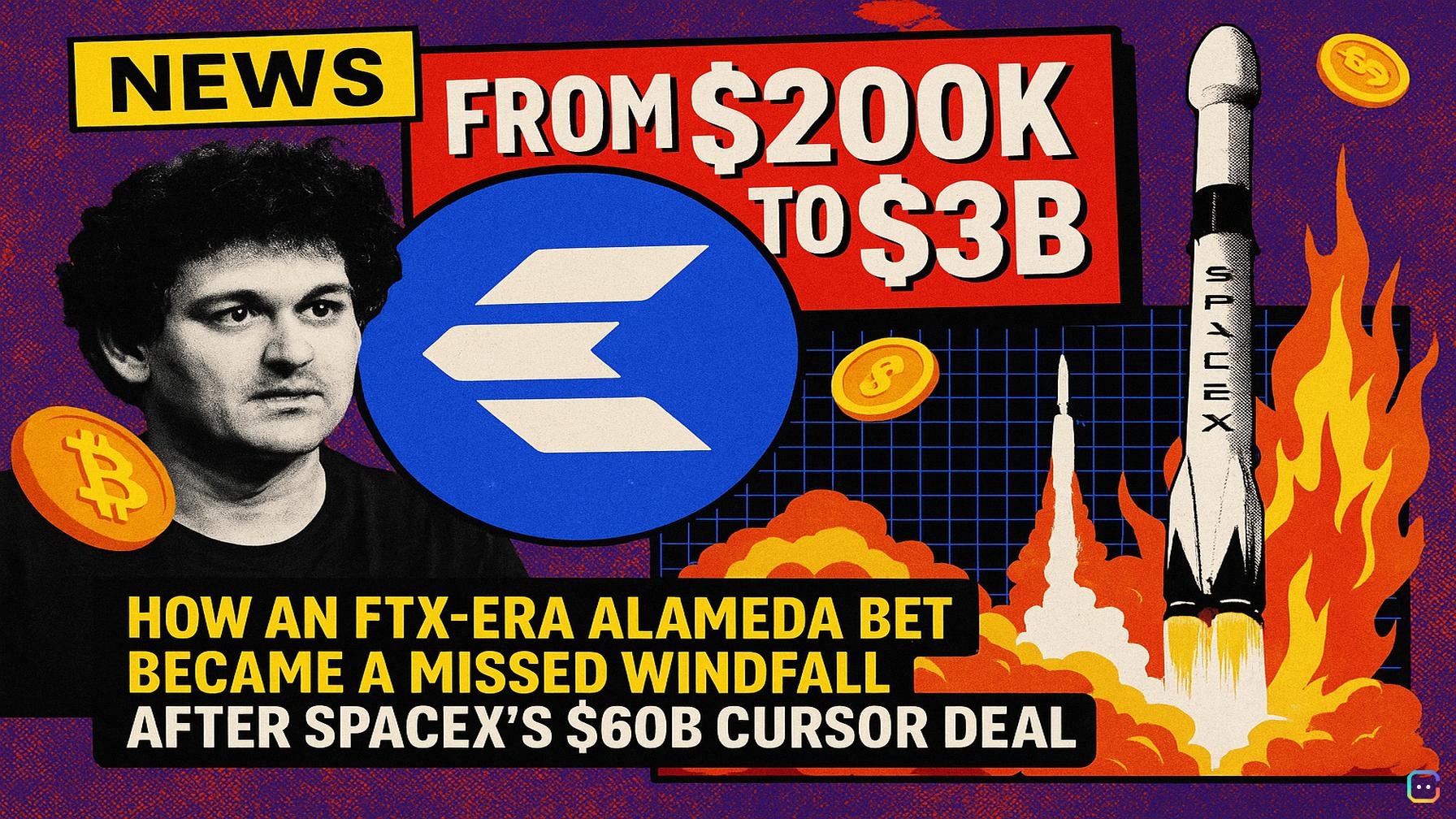
A tiny investment made by Alameda Research in 2022 — and sold by the FTX bankruptcy estate the following year for $200,000 — would be worth roughly $3 billion today after SpaceX secured rights to buy AI coding startup Cursor at a $60 billion valuation.
What happened
- In April 2022 Alameda Research, the Sam Bankman‑Fried–linked trading firm, invested $200,000 in Anysphere, the company behind Cursor. That purchase represented roughly a 5% stake at an implied $4 million valuation.
- By April 2023, after FTX’s collapse, the court‑appointed bankruptcy estate sold that Cursor stake for the same $200,000 Alameda had paid.
- This week SpaceX said it has the right to acquire Cursor later this year at a $60 billion price, or alternatively to pay $10 billion if the full acquisition does not proceed. At a $60 billion valuation, a 5% stake translates to about $3 billion — roughly a 15,000x uplift from the $200,000 sale price.
Why it matters to crypto
The sale highlights a stark irony for the FTX bankruptcy process: assets liquidated during the estate’s early wind‑down that fetched small sums then have since exploded in value. Cursor launched its AI coding product in early 2023, and its valuation trajectory over the past three years has been among the most dramatic in software startup history.
Repercussions and claims
- FTX customers have been made whole in dollar terms under the estate’s distribution plan, receiving claim values plus interest. What they did not receive was the upside that those assets later generated — in this case, about $3 billion that accrued after the estate had already sold the position.
- Sam Bankman‑Fried, now serving a 25‑year federal sentence, has argued from prison that the estate destroyed billions by selling assets too quickly and that creditors would have been better off had positions been held through the recovery. In February he released a projection suggesting FTX’s net asset value could have reached $78 billion if the estate had refrained from early liquidations.
- Bankman‑Fried’s family has pushed for a pardon, noting customers were ultimately repaid and pointing to missed upside examples such as Cursor to bolster their case. The Cursor figure is likely to become a prominent example in those efforts and in Bankman‑Fried’s own correspondence from prison.
Context on SpaceX’s move
SpaceX framed the potential purchase as a way for Elon Musk to narrow the gap with leaders in AI coding tools like OpenAI and Anthropic. The company appears to be delaying an immediate outright buy because of its plans for an IPO targeting a lofty valuation; the $10 billion alternative payment was described as a breakup fee if a full acquisition doesn’t go through.
Bottom line
What was a relatively modest, early‑stage startup stake ended up underscoring difficult tradeoffs in bankruptcy proceedings: certainty of immediate recovery versus the possibility of enormous future upside. The Cursor episode crystallizes that tension and will likely reverberate in legal and public debates over how the FTX estate handled liquidation decisions.
Read more AI-generated news on: undefined/news