Headline: Anthropic’s Claude Mythos AI Uncovers 271 Firefox Bugs — A Turning Point for Cybersecurity (and Crypto)
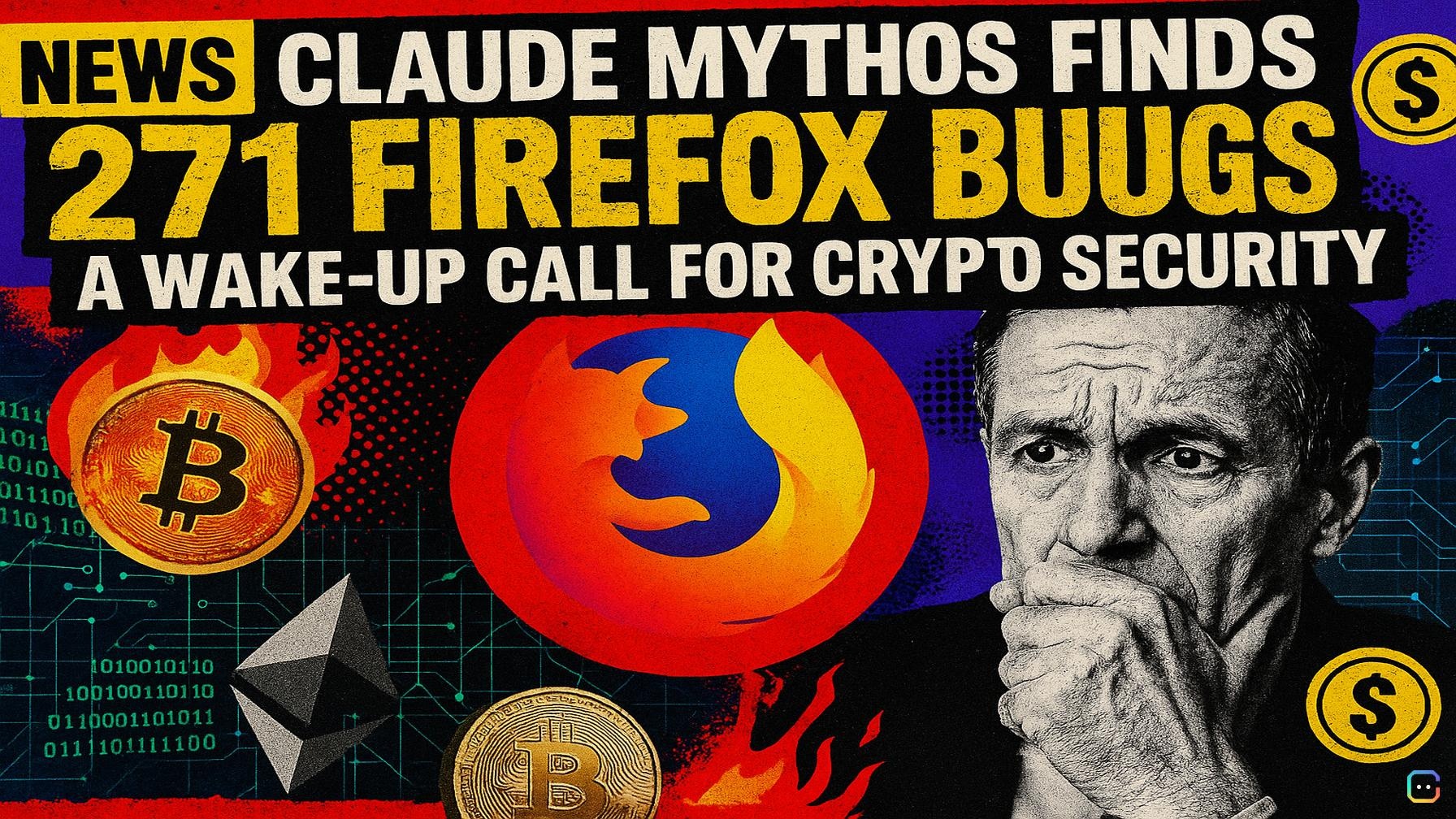
Anthropic’s new Claude Mythos model has proven alarmingly effective at finding software bugs — and that matters a lot for the crypto world. In an internal test, Mozilla reports that an early version of Mythos helped identify 271 vulnerabilities in Firefox, all of which were patched this week. That’s a dramatic jump from an earlier Anthropic model that flagged 22 security-sensitive issues in a prior release.
Why this matters
- Large-scale code analysis: The findings show modern AI can scan huge codebases and surface weaknesses much faster than traditional manual review. Mozilla noted that a single bug of the type Mythos found “would have been red-alert in 2025,” and discovering so many at once raises questions about whether humans can keep pace.
- Real-world impact for crypto: Browser safety directly affects crypto users — browser-based wallets, browser extensions (e.g., MetaMask), Web3 wallets, and dApp interactions all rely on secure browsers. More broadly, AI that hunts vulnerabilities can be applied to blockchain node software, light clients, wallets, smart-contract platforms, and exchange infrastructure, helping to head off exploits before attackers find them.
- Dual-use risk: The same capability that helps defenders could be weaponized. Security researchers warn that scalable, automated discovery could expedite the identification of exploitable bugs across widely used software — including software that underpins crypto systems.
What Mythos is and who’s using it
- Mythos launched in March and is Anthropic’s most advanced model for reasoning, coding, and cybersecurity tasks, described internally as a new tier beyond the company’s Opus series.
- Anthropic has restricted access to Mythos through “Project Glasswing,” a limited program that gives select tech firms — reportedly including Amazon, Apple, and Microsoft — the ability to scan software for weaknesses.
- Mythos has attracted attention from governments and security agencies. Independent testing by the U.K.’s AI Security Institute showed Mythos could autonomously execute complex cyber operations in simulation. Sources also say the NSA is running Claude Mythos Preview on classified networks, even as the U.S. administration has raised political concerns about Anthropic’s technology and its potential uses.
Industry reaction and limits
- Mozilla praised its security team’s response and said the company was reassured that the bugs uncovered weren’t beyond the comprehension of an “elite human researcher,” countering some commentary that future AIs will discover entirely new, unknowable classes of vulnerabilities.
- At the same time, Anthropic has acknowledged its latest models outpace several existing cybersecurity benchmarks, exposing shortcomings in how AI security tools are evaluated today.
- The broader industry has long treated complete elimination of software exploits as unrealistic. But Mozilla suggested Mythos-level tools could shift the balance, giving defenders a chance to get ahead rather than merely stalemating attackers.
What this means for crypto teams
- Opportunitites: Crypto projects, exchanges, and wallet providers should consider integrating advanced AI-assisted code scanning into development, audits, and continuous monitoring to catch vulnerabilities earlier and at scale.
- Caution: Access controls, governance, and responsible disclosure pathways are crucial. Restricted programs like Project Glasswing show one approach, but broad availability of powerful code-analysis models raises clear abuse risks for attackers targeting blockchain systems.
- Complementary measures: AI-assisted scanning should be paired with manual audits, formal verification of critical contracts, secure key handling, and defense-in-depth — especially for high-value targets like custody solutions and smart contracts that manage funds.
Final takeaway
Claude Mythos isn’t a silver bullet, but its Firefox results are a wake-up call. Advanced AI can dramatically broaden defenders’ capabilities — if properly governed and adopted — while also creating new attack surfaces if misused. For crypto, where the attack surface includes browsers, wallets, node software, and smart contracts, Mythos-style tools could both tighten security and raise the stakes for responsible deployment and oversight.
Read more AI-generated news on: undefined/news