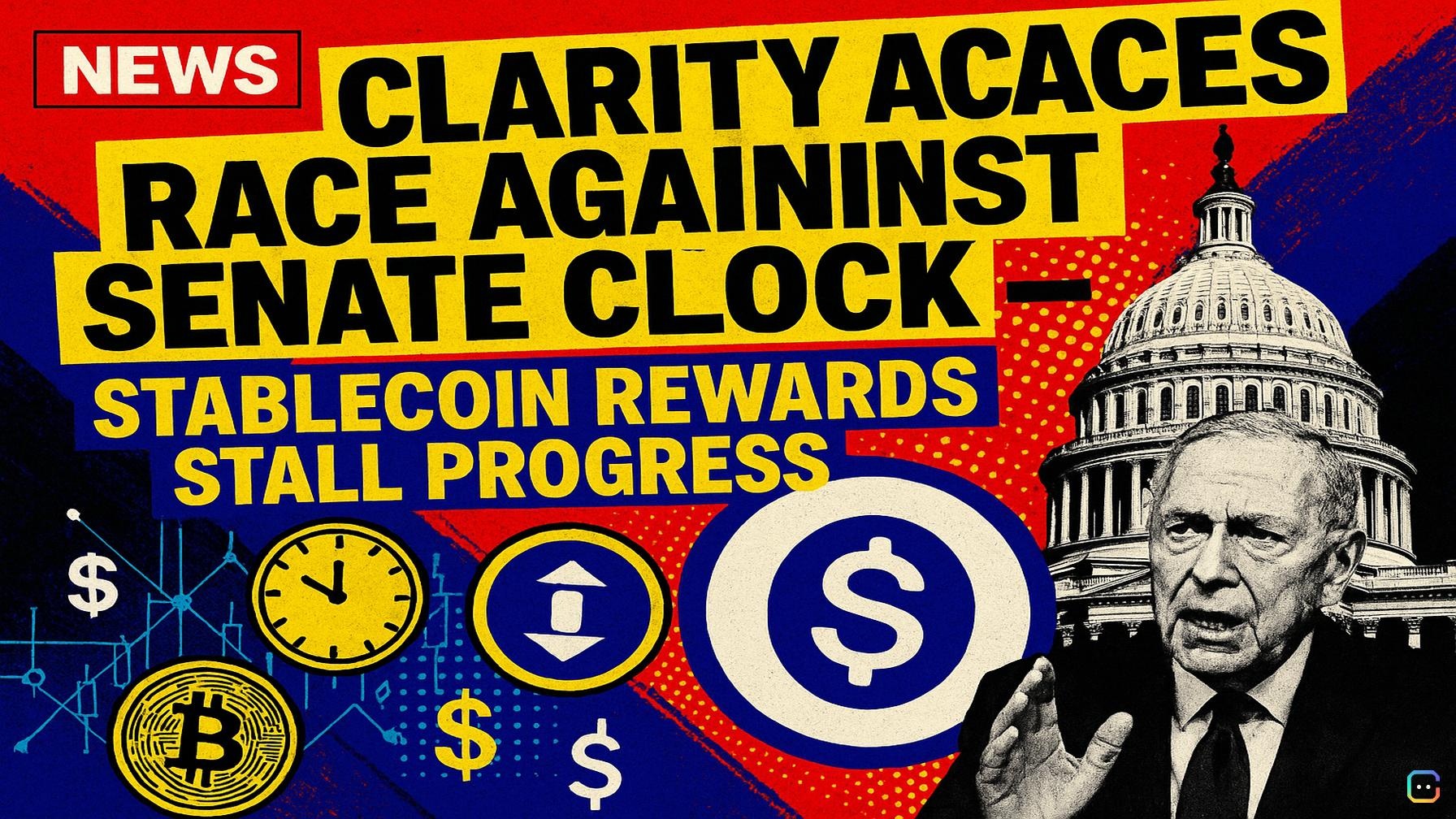
Headline: Senate’s Clarity Act still alive — but shrinking calendar makes passage a long shot
The Digital Asset Market Clarity Act, a major market-structure bill crypto advocates have pinned hopes on, has a narrow path to becoming law. April is effectively gone for progress, but a Senate Banking Committee hearing in May could keep the effort alive — provided negotiators can secure a full Senate vote by July, lobbyists and a Senate aide told CoinDesk.
Why time is tight
The Senate’s legislative calendar is compressed. After July, lawmakers will largely leave Washington for the August recess and shift into campaign mode ahead of the November midterms. That leaves roughly a dozen weeks of work before Election Day, during which Congress must wrestle with high-priority fights — funding the Department of Homeland Security, disputes over U.S. policy on the Iran war, a voter ID debate, and confirmations including President Trump’s Fed nominee Kevin Warsh.
Even if the Banking Committee signs off, the bill will need to be reconciled with a separate version that already passed the Senate Agriculture Committee. That “merge” is the time cushion current delays are eating into, the aide said. Additional negotiations are expected on an ethics provision that would limit senior officials (targeted at President Trump by some Democrats) from profiting off crypto interests; that language won’t appear in the banking panel’s markup but would be folded in later. Another outstanding issue is a demand to appoint a full slate of market-regulator commissioners — a condition that could be pivotal for winning Democratic votes.
The core standoff: stablecoin yields
What has stalled the Clarity Act is not its DeFi protections — negotiators consider those largely resolved — but a showdown over whether certain stablecoin rewards look enough like bank deposit yield to threaten banks’ business models. Bank lobbyists have rallied senators around that concern since the start of the year, and negotiations between Republican Senator Thom Tillis and banking representatives have pushed the schedule back.
The White House has signaled it is open to permitting some rewards that do not resemble interest on core bank deposits. Insiders say the working compromise would bar payments that operate like deposit insurance-style yield, while allowing platforms to design rewards that function more like credit-card incentives. But negotiators have been reluctant to release text while giving both banking and crypto stakeholders time to review.
Industry reaction and pressure
Crypto companies and allies are vocally pushing to preserve rewards programs. Coinbase — likely to be materially affected if rewards are curtailed — has been prominent in that push. Paul Grewal, Coinbase’s chief legal officer, wrote on X that “You can’t be for CLARITY and against rewards,” urging lawmakers to make a binary choice.
Former Trump White House crypto adviser Patrick Witt criticized continued bank lobbying on X as “motivated by anything other than greed or ignorance,” and industry groups are stepping up urgency. “We’re too close to let this effort fail,” Cody Carbone, CEO of the Digital Chamber, told CoinDesk. “A markup must happen to move this forward.”
Odds and next steps
Market watchers see the window narrowing. A May markup would buy time, but the bill still must pass the Banking Committee, be reconciled with the Agriculture version, clear the full Senate (ideally by July), win House approval again — since the current Senate text differs from the version the House advanced last year — and receive the president’s signature. House passage is expected to be relatively quick if Senate leaders avoid new disagreements; the White House signaled support for some rewards, but President Trump in March said he would not sign any bill until voter-ID legislation was approved, adding a layer of political uncertainty.
Crypto investment firm Galaxy put the chances of the Clarity Act becoming law in 2026 at roughly 50-50, possibly lower, citing the sheer number of unresolved issues that must be settled in sequence under severe time pressure. If the bill stalls this year, insiders see a long-shot fallback: a lame-duck opportunity after the November elections when Congress can still act.
What victory would mean
If enacted, the Clarity Act would become the second major federal crypto law, joining last year’s GENIUS Act. Its passage would bring clearer market structure rules for digital assets and could resolve long-standing jurisdictional questions. The industry is already preparing politically and financially for the long haul: crypto PACs — including Fairshake — have poured millions into building bipartisan congressional support. Looking ahead, other priorities for the sector could include tax changes and proposals ranging as far as a federal bitcoin stockpile.
Price context: bitcoin was trading around $78,013.12 at the time of reporting.
Bottom line: There’s still a path for the Clarity Act, but lawmakers face a compressed timeline and several politically sensitive trade-offs — especially over stablecoin rewards — that could derail the effort unless negotiators lock a deal and the Senate acts quickly.
Read more AI-generated news on: undefined/news