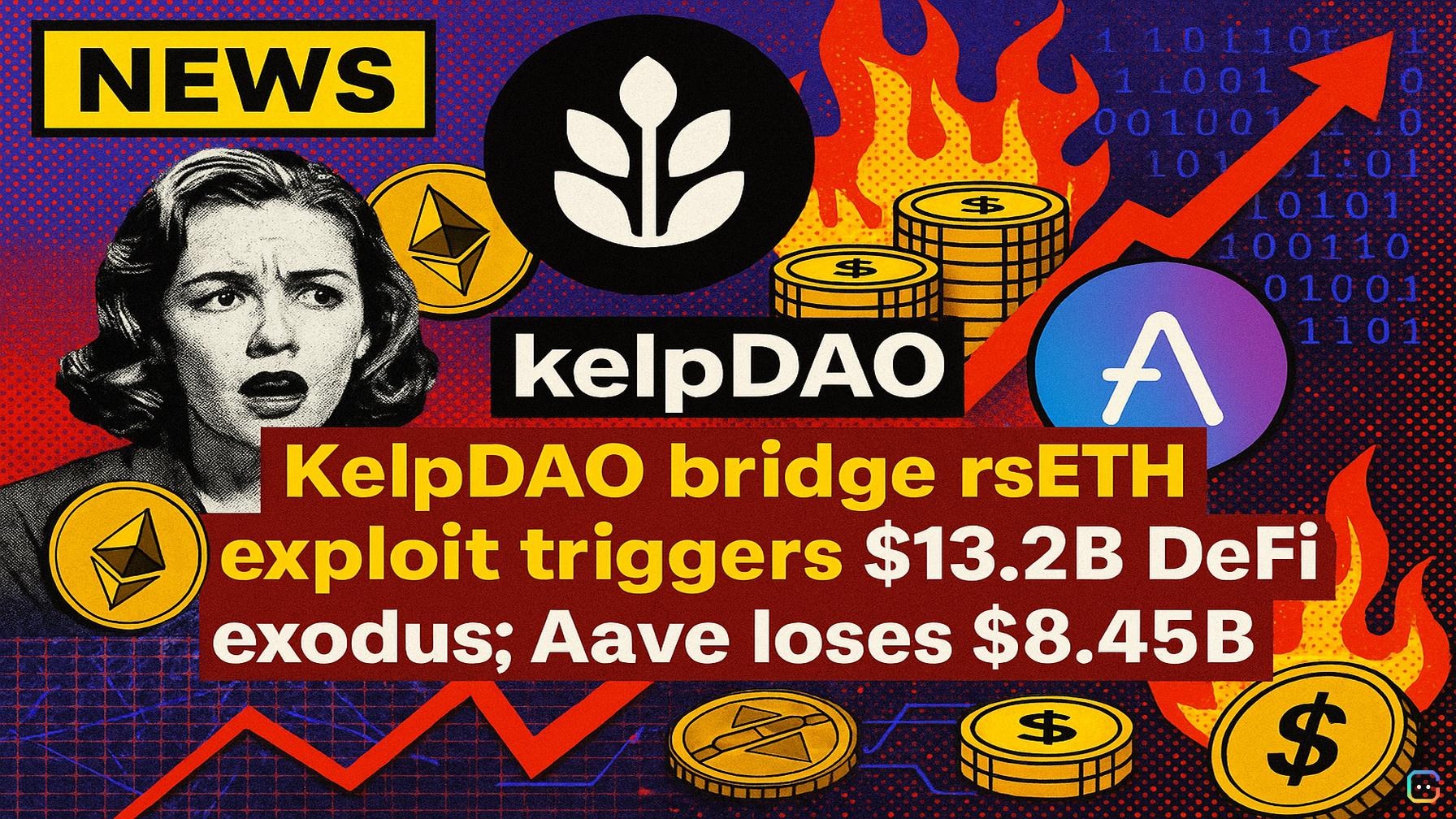
Headline: KelpDAO bridge exploit triggers $13.2B DeFi outflow in 48 hours
A weekend exploit tied to the KelpDAO bridge set off a wave of withdrawals across decentralized finance, knocking roughly $13.21 billion off total value locked (TVL) in just two days and exposing fragilities in cross‑chain infrastructure.
According to DeFiLlama, TVL across DeFi fell from $99.497 billion to $86.286 billion over the 48‑hour span. The biggest single hit landed on Aave: the lending protocol saw about $8.45 billion pulled from deposits, bringing its TVL down to $17.947 billion. Other protocols, including Euler and Sentora, recorded double‑digit percentage drops, with losses concentrated in lending markets, restaking products, and yield strategies that relied on the compromised collateral.
What happened
Attackers exploited a vulnerability in Kelp’s bridge to steal roughly $292 million worth of rsETH — a liquid re‑staking token commonly used as collateral across DeFi. The attackers then used the stolen rsETH as collateral to borrow funds on lending platforms. Because those rsETH balances were illegitimate, loans taken against them created exposure for lenders much like accepting counterfeit cash as deposit collateral and issuing loans against it.
Protocols reacted by freezing affected markets. That, combined with panicked withdrawals, cascaded into the rapid TVL decline even at platforms that didn’t hold the stolen tokens directly.
Market impact and token prices
Despite the outflows, token markets moved more mutedly than deposits. CoinDesk market data shows the AAVE token falling about 2.5% over 24 hours, while UNI and LINK slipped less than 1% in the same period.
Expert take and technical clues
Peter Chung, head of research at Presto Research, said the incident underscores the risks in cross‑chain systems — particularly the verification layers bridges rely on. Early forensic work suggests the problem may have originated in a bridge verification layer rather than in the smart contracts of the lending protocols themselves. Chung also warned the episode illustrates how tightly interconnected DeFi can transmit shocks beyond the initial point of compromise, with withdrawals and market freezes spreading to platforms that had no direct exposure.
What’s next
Investigations and audits are likely to focus on the bridge’s verification mechanisms and the pathways that allowed stolen liquid‑staking tokens to be recognized as legitimate collateral. The incident is a reminder that increasing composability in DeFi amplifies systemic risk: a single bridge failure can ripple through lending, restaking, and yield strategies across the ecosystem.
Read more AI-generated news on: undefined/news