Sam Altman’s World unveils major World ID upgrade to combat deepfakes, bots and fake accounts
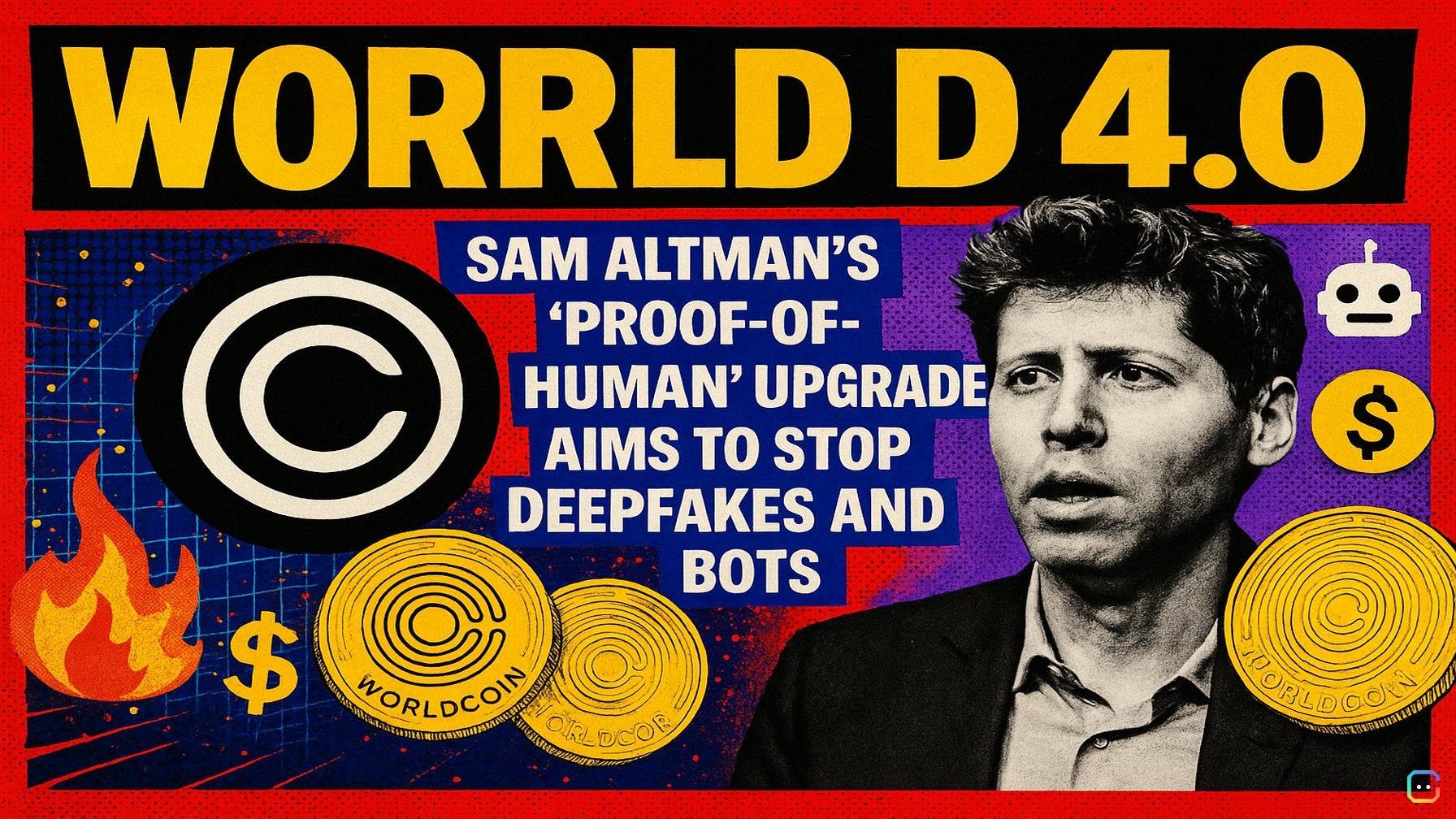
Sam Altman-backed World announced Friday what it calls the most significant upgrade yet to World ID, positioning the project as “full-stack proof of human” infrastructure for consumers, enterprises and AI agents. The overhaul, revealed at an event in San Francisco, comes as platforms race to stop bots, deepfakes and AI agents from impersonating people online — a core target for World as it pushes into authentication, payments and web services.
How World ID works
- World’s identity model uses purpose-built “Orb” devices. To get a World ID, a person visits an Orb in person; the device scans the face and iris, creating a unique cryptographic code that represents that individual.
- According to the company, images are deleted after processing and only anonymized fragments of the cryptographic code are shared across a distributed network to check that the person hasn’t already registered. The resulting credential is intended to prove uniqueness (a real human) without exposing identity or personal data.
- The biometric scanning element has drawn criticism from some privacy advocates, who view the use of face/iris scans as controversial.
What’s new in World 4.0
World’s core redesign focuses on privacy, security and usability with features aimed at bringing large-scale security capabilities to typical users:
- Account-based identity, multi-key support and recovery mechanisms to mirror enterprise-grade identity hygiene.
- A dedicated World ID app (currently in beta) to manage credentials and authenticate across services, aiming for a seamless experience akin to logging into social apps.
“World 4.0 is powerful, scalable and open,” said senior executive Daniel Shorr at the event. “In the age of AI, being human will be incredibly valuable and the internet will want to know you're human.”
Ecosystem integrations: consumer, gaming and enterprise
Alongside the protocol update, World outlined a slate of integrations to embed its identity layer across consumer and enterprise platforms:
- Consumer: Partnerships with apps like Tinder will let verified humans display a “verified human” badge. Concert Kit is being rolled out to help artists reserve tickets for verified individuals to fight scalper bots.
- Gaming and communities: Deals with Razer and Mythical Games, and interest from Reddit in exploring similar tools for bot detection.
- Enterprise: Work with Zoom on a “Deep Face” feature to verify that meeting participants are real people rather than deepfakes, and collaboration with DocuSign to add proof-of-human checks into digital agreements.
AgentKit and developer tooling
World also introduced developer tooling, including AgentKit, to let developers attach human-proof credentials to software agents. This aims to make certain actions — especially sensitive or commerce-enabled operations — require verification that a real person is present or responsible. World says it is working with identity and infra firms such as Okta, Vercel and Browserbase to build a trust layer for automated workflows that minimizes the need for sharing personal data.
Why it matters for crypto and the wider internet
For crypto-native applications — DAOs, token gated services, and on-chain governance — reliable “proof of human” systems can reduce Sybil attacks and improve trust for token distributions, voting and scarce digital goods. World frames its upgrade as the infrastructure for a web where being human is a verifiable credential rather than an assumption.
The broader picture
Sam Altman, who co-founded World and is also the figure behind OpenAI, said at the announcement: “World ID is on the way to being a real human network for the internet.” As AI-generated content and impersonation risks grow, projects like World aim to bake human verification into the plumbing of the internet. Whether the trade-offs around biometric enrollment are acceptable will be central to adoption and regulatory scrutiny going forward.
Read more AI-generated news on: undefined/news