Headline: Ripple rolls out first native digital-asset Treasury Management System as policy and industry voices reshape XRP’s outlook
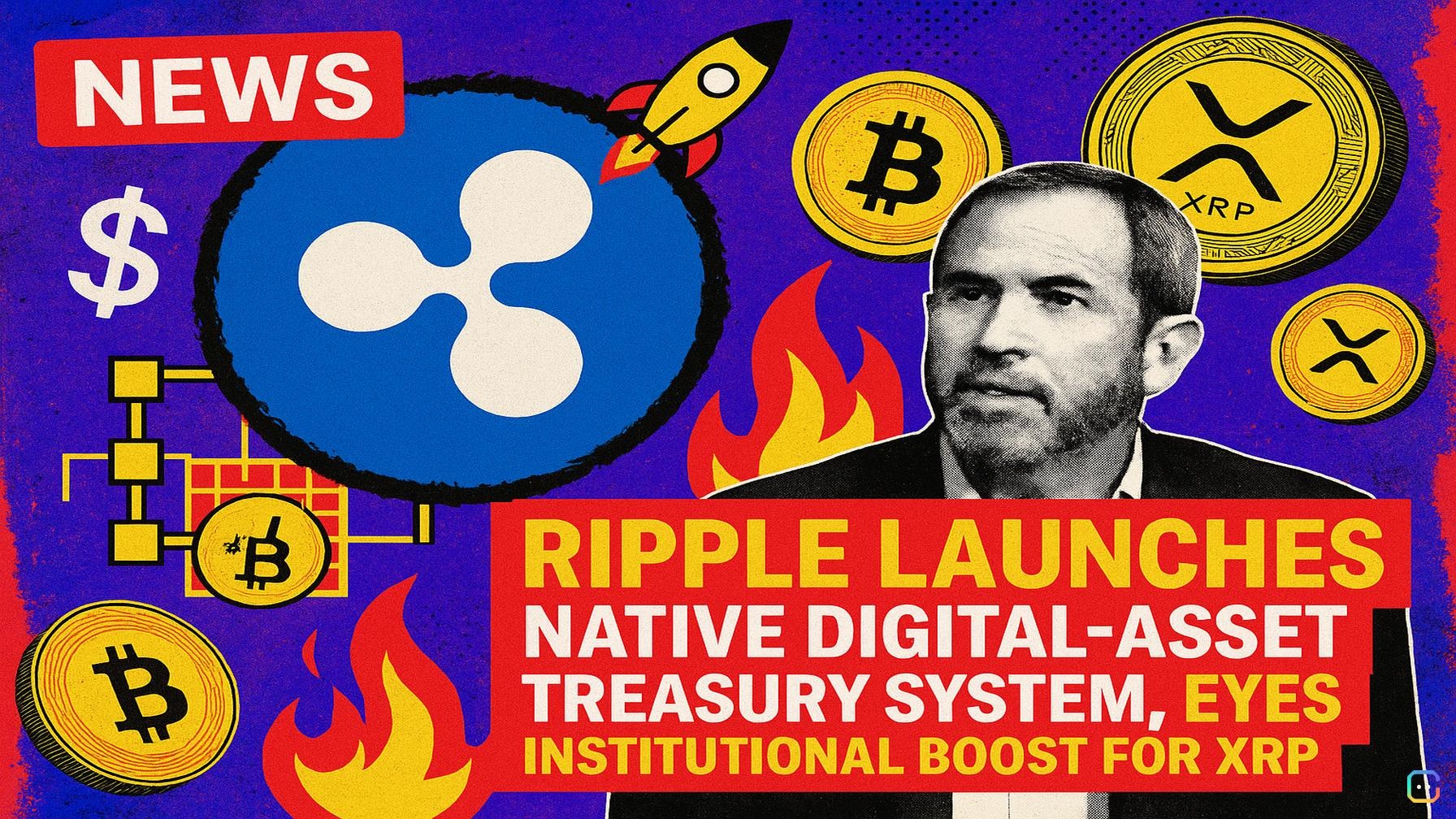
Ripple has taken a major step toward embedding itself in institutional finance: this April the company launched what it calls the first Treasury Management System (TMS) with native digital-asset capabilities. The product is part of a rebranded Ripple Treasury built on the company’s acquisition of GTreasury, and it introduces Digital Asset Accounts and a Unified Treasury that bring fiat and crypto liquidity into a single platform.
What the new TMS does
- CFOs and treasury teams can now view, hold, receive and manage fiat and digital assets across banks and custody providers from one interface.
- Ripple says this eliminates the need to hop between platforms, manually reconcile records, or stitch data together.
- According to Ripple, no other treasury system currently offers this level of native digital-asset and multi-provider consolidation—potentially giving Ripple Treasury an edge with enterprise clients.
Why it matters for Ripple and XRP
A treasury tool that simplifies institutional handling of both fiat and digital liquidity strengthens Ripple’s positioning in real-world financial infrastructure. Broader enterprise adoption of Ripple Treasury could increase confidence in Ripple’s technology and create stronger institutional relationships. Even if XRP isn’t used directly in every function of the new system, greater demand for Ripple’s products and services could indirectly support XRP’s use in payments and improve market sentiment—factors that may exert upward pressure on price over time.
Industry chatter and community reaction
The news comes as high-profile industry commentary adds fuel to debate over market leadership. Cardano founder Charles Hoskinson stirred controversy with comments about Bitcoin and XRP’s 2018 legal challenges with the SEC. In a post amplified by market analyst Xaif Crypto, Hoskinson suggested that Bitcoin’s dominance could be vulnerable if another asset surpasses it in market cap, and argued that projects like Ethereum and XRP offer stronger technical capabilities and utility. He also claimed that XRP faced targeted legal attacks after briefly overtaking Ethereum in 2018—remarks that have found a receptive audience among many XRP supporters.
Regulatory tailwinds: progress on the CLARITY Act
Policy developments may be reinforcing a more favorable backdrop. On April 8, the White House published a report that downplayed banks’ concerns about stablecoin yields—an issue that had slowed movement on the CLARITY Act. The analysis concluded that banning stablecoin yields would only marginally increase bank lending (an estimated 0.02%, roughly $2.1 billion), implying that fears about a material negative impact on banks may be overstated. That shift in tone toward stablecoins could ease regulatory friction for stablecoin products—including Ripple’s RLUSD—and help support the broader crypto market.
Bottom line
Ripple’s new Treasury Management System is a strategic product play that deepens its enterprise offering and could boost institutional interest in Ripple’s ecosystem. Combined with vocal industry debate and potentially friendlier regulatory signals on stablecoins, these developments create a more constructive narrative around Ripple and XRP—though any direct price impact will depend on adoption, product integration, and how regulatory frameworks ultimately land.
Read more AI-generated news on: undefined/news