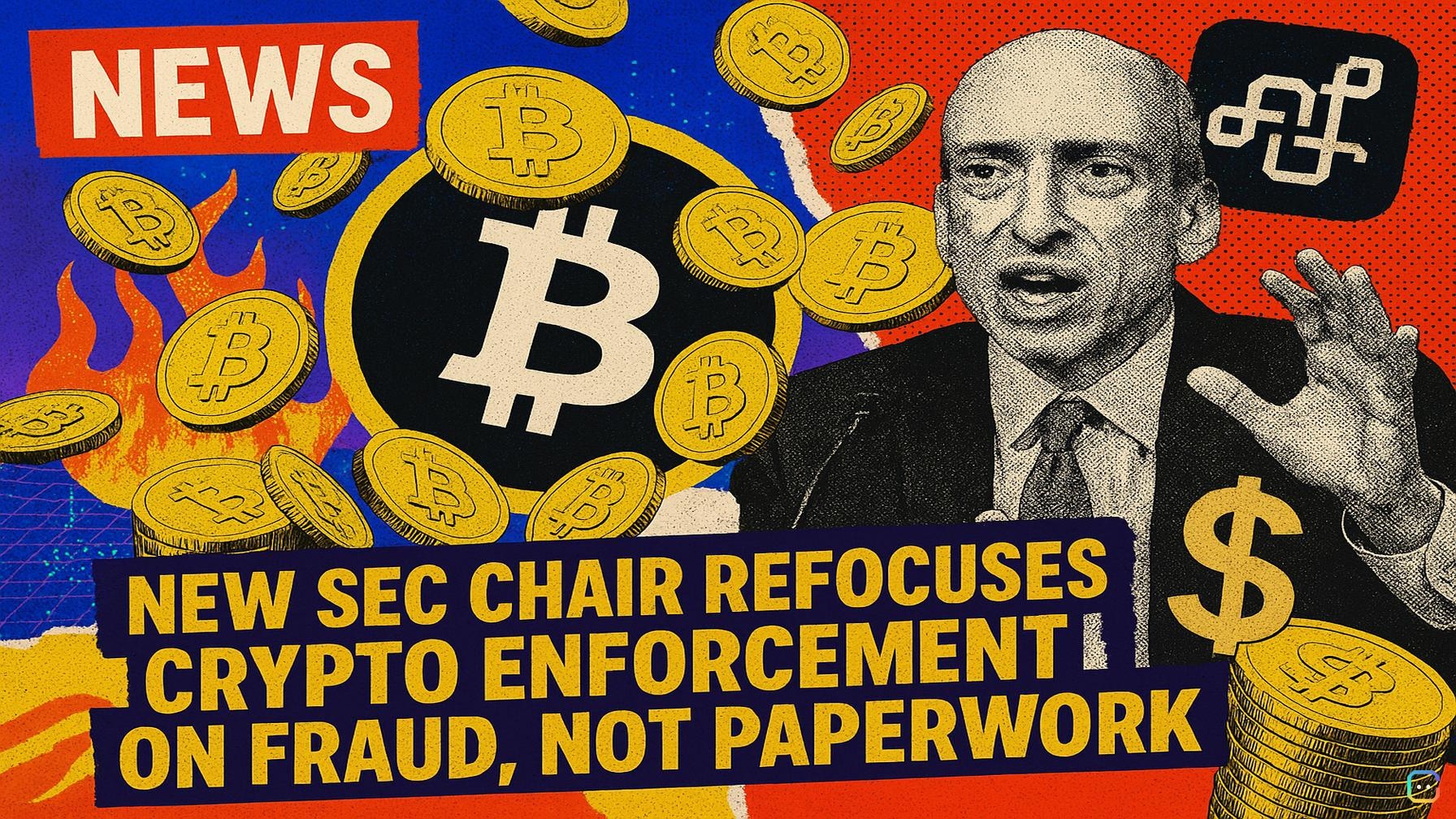
Headline: SEC pivots from paperwork prosecutions to classic fraud cases as new chair reshapes crypto enforcement
The U.S. Securities and Exchange Commission says it will refocus its crypto enforcement priorities on the kinds of scams that most directly hurt investors — think $200 million Ponzi schemes and $100 million fake token sales — rather than the large docket of technical and registration cases it now admits produced little investor benefit.
Buried in the SEC’s 2025 enforcement report released Tuesday was a blunt self-assessment: dozens of past actions, and billions in penalties, swept up violations that “identified no direct investor harm.” Specifically, the agency said 95 enforcement actions tied to record‑keeping violations since fiscal 2022 — carrying $2.3 billion in penalties — fell into that category. It also flagged seven cases about crypto firm registrations and six over the legal definition of a dealer as similarly offering no clear investor protection.
The agency framed those prior pursuits as the product of a bias toward “racking up numbers” rather than fulfilling its investor‑protection mandate — language that amounts to a clear rebuke of the enforcement-first posture taken under former Chair Gary Gensler. The report even described the late‑term push to file cases in the weeks before President Trump’s January 2025 inauguration as an “unprecedented rush.”
Since Paul Atkins took the helm in April 2025, the SEC says it has shifted gears. Atkins moved quickly to prioritize enforcement against fraud, market manipulation and breaches of trust — the misconduct categories the agency now says cause the clearest harm to ordinary investors. Atkins criticized the prior model for emphasizing “volume and record‑setting penalties” over actual protection.
The shift is already visible in the numbers. Data cited from Cornerstone Research show that SEC enforcement actions against public companies, including crypto firms, dropped by roughly 30% in fiscal 2025 compared with the prior year — a sign the agency is trimming cases it views as low‑impact and concentrating resources on high‑harm scams.
What this means for the crypto industry: expect more investigations and prosecutions focused on classic investor frauds — token rug pulls, Ponzi schemes, market manipulation — and fewer cases pursuing record‑keeping or technical registration theories that don’t directly tie to investor losses. For companies and projects, the message from the SEC’s new leadership is straightforward: stop the frauds, and the agency will stop chasing paper.
Read more AI-generated news on: undefined/news