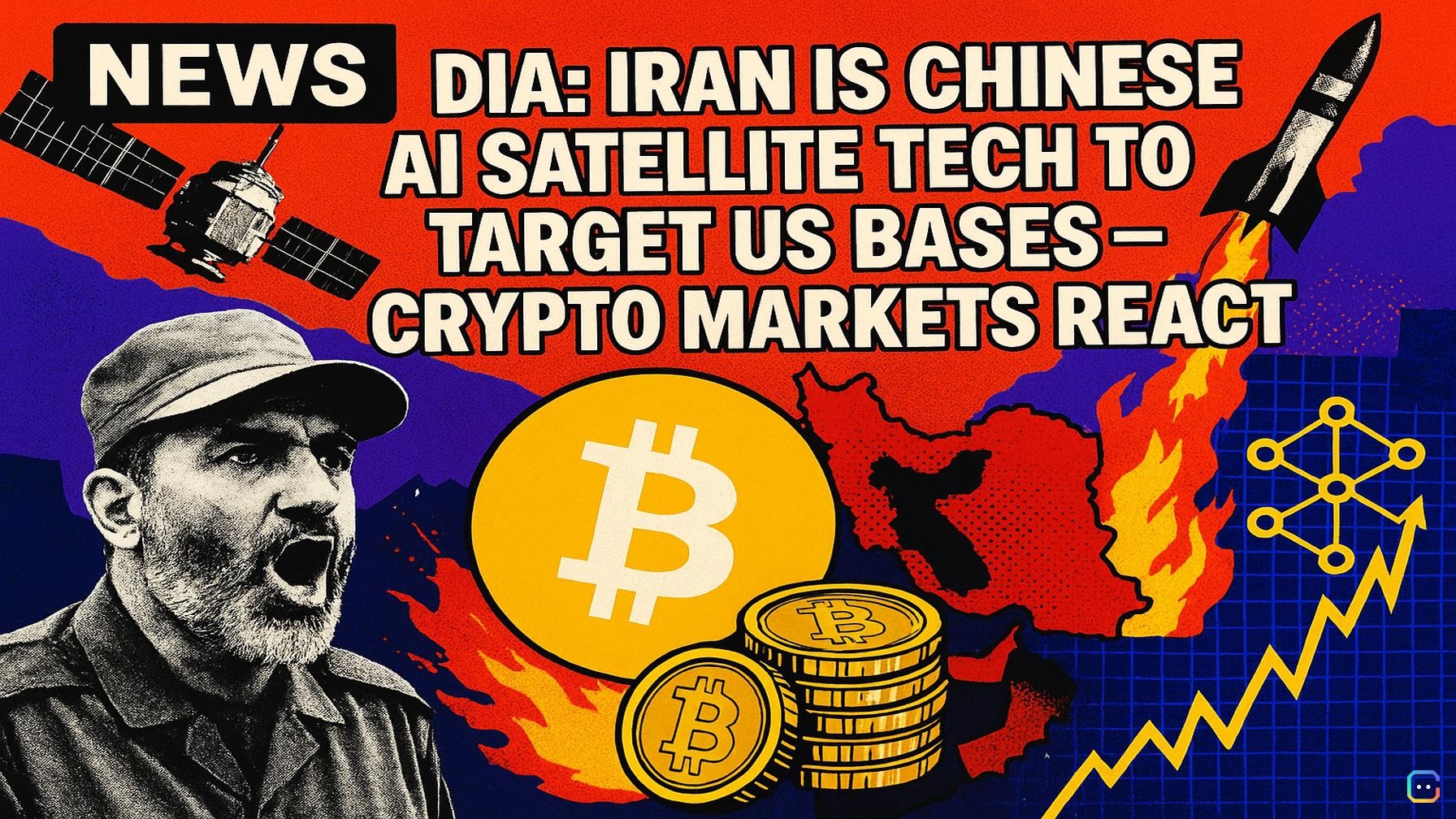
Headline: DIA Confirms Iran Is Using Chinese AI Satellite Tech to Hunt U.S. Bases — and Crypto Markets Are Paying Attention
A fresh ABC News exclusive on April 5 revealed a worrying new dimension to the Iran conflict: the U.S. Defense Intelligence Agency has concluded that Iran’s Islamic Revolutionary Guard Corps is using AI-enhanced satellite imagery from Chinese geospatial firm MizarVision to identify, prioritize, and target U.S. military sites across the Middle East.
What the tech does
MizarVision’s platform applies machine learning to commercial satellite imagery to automatically classify military objects—aircraft, radar arrays, hardened shelters, fuel depots, command centers, and naval vessels—using shape, thermal signatures and contextual cues. The system adds geospatial metadata tags formatted to be ingested by targeting and command-and-control systems. The company says its mission is to “democratize and universalize geospatial intelligence”; U.S. officials say Iran has operationalized that democratization for warfare. Analysts also flag that roughly 5.5% of MizarVision is owned by the Chinese government.
Why it matters
Traditional targeting intelligence cycles can take days. According to the DIA, MizarVision’s AI shortens that timeline to minutes by producing tagged, geolocated “target packages” from commercially available imagery—giving actors without classified satellite constellations an asymmetric ability to find and strike high-value nodes. U.S. officials say Iran has used these datasets not only to locate targets but to perform pattern-of-life analysis—tracking routines and windows of vulnerability—enabling a shift from broad, saturation attacks to precision strikes on critical assets like air-defense radars, maintenance shelters, and fuel storage.
On-the-ground consequences
The reporting highlights Prince Sultan Air Base in Saudi Arabia as a concrete example: MizarVision posts mapped Patriot battery locations on Feb. 24 and aircraft parking on Feb. 27; imagery on March 1 showed smoke at the base after an Iranian strike. U.S. intelligence later confirmed a service member was seriously wounded and died. The firm has also published imagery of Diego Garcia, Israeli positions, Australian naval movements, and even Taiwan’s TSMC plant construction—raising alarms that the technology extends beyond battlefield reconnaissance to strategic industrial surveillance.
Geopolitics and plausible deniability
Beijing has publicly maintained a neutral stance on the Iran conflict. Still, analysts say companies like MizarVision operating inside China’s state-linked tech ecosystem can offer their government “plausible deniability” while delivering capabilities regional partners can exploit. That ambiguity complicates diplomatic responses and sanctions targeting.
Why crypto traders should care
Crypto.news has tracked how each confirmed escalation in the conflict has triggered immediate sell-offs across crypto markets. The addition of fast, AI-enabled targeting raises the stakes: it shortens decision cycles, increases unpredictability around escalation and de-escalation, and adds a new variable to risk-on/risk-off moves. “Future wars will be shaped as much by who can interpret and weaponize data fastest as by who fields the most advanced missiles, aircraft, or air defense systems,” a GDC analyst told reporters—a dynamic that now has direct implications for geopolitical risk premia pricing in crypto and broader markets.
Bottom line
The DIA confirmation marks a turning point: commercially available geospatial AI is no longer just a tool for mapping and business analytics—it has been operationalized in ways that alter battlefield calculus and market volatility. For crypto investors, that means monitoring geopolitical signals has become even more important as a driver of short-term market moves.
Read more AI-generated news on: undefined/news