US strikes Kharg Island as oil spikes — what it means for markets and crypto
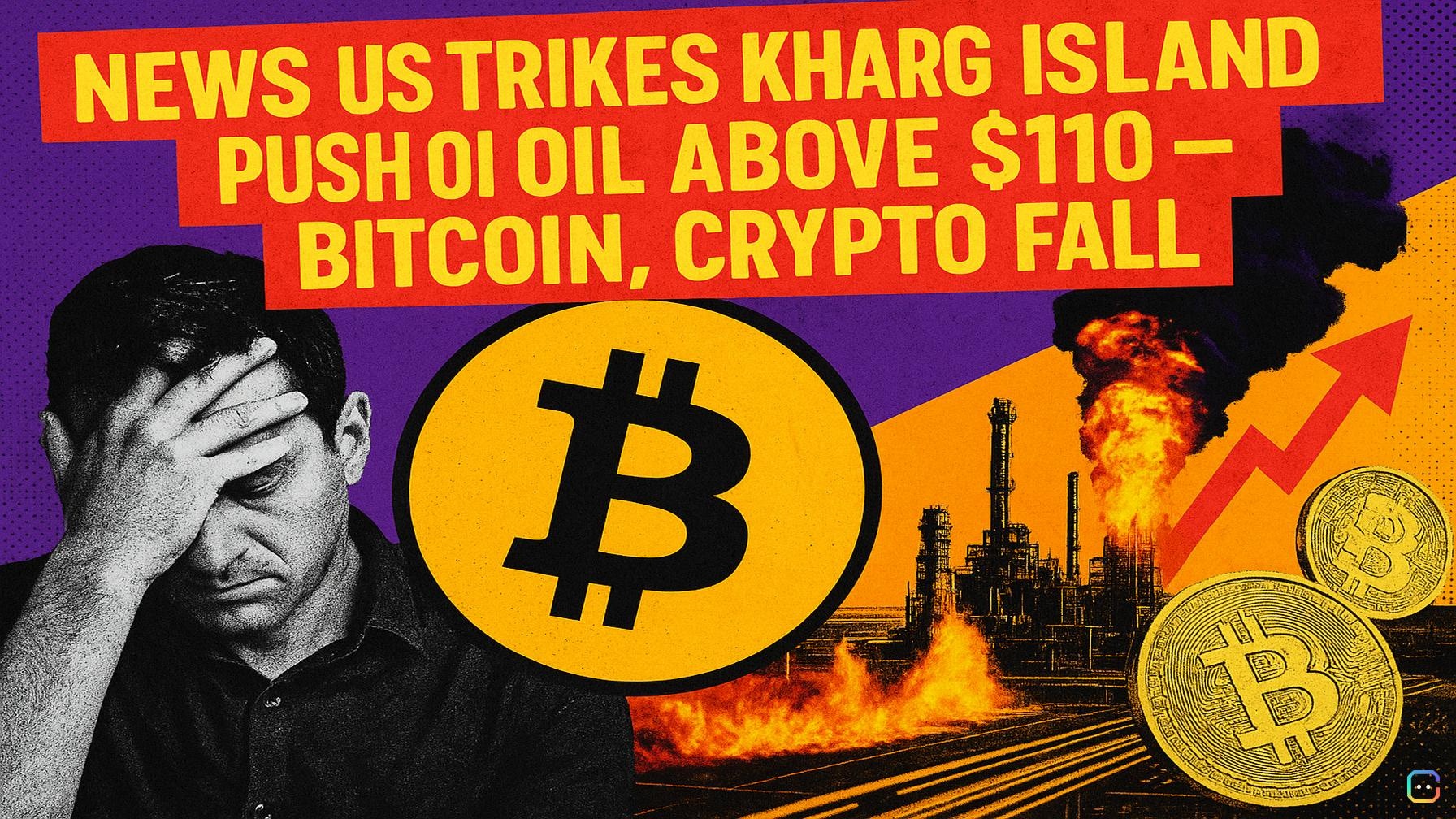
U.S. forces struck more than 50 military targets on Kharg Island on Tuesday, sending a fresh shock through oil markets and sparking renewed volatility for cryptocurrencies. Reports of explosions on Iran’s largest oil export hub began as early as 1:30 p.m. Tehran time, and U.S. crude jumped more than 3% within minutes to nearly $116 per barrel; Brent crossed $110.
What happened
- U.S. officials say the strikes were “re-strikes” on previously targeted sites and stopped short of hitting oil-loading terminals. Vice President JD Vance, speaking in Budapest, described the action as follow-up strikes that did not touch oil infrastructure and said they did not change the administration’s strategy ahead of an 8 p.m. ET deadline set by the president.
- This is the second time Kharg has been hit since the conflict began on Feb. 28. A mid-March strike destroyed naval mine storage, missile bunkers and air-defense systems while—officials said—preserving the oil facilities. U.S. sources say some of the same sites were hit again on Tuesday.
- Iranian state-linked media reported multiple explosions on the island, which handles roughly 90% of Iran’s crude exports. Kharg’s theoretical loading capacity is about 7 million barrels per day, though Iran’s actual exports are closer to roughly 1.5 million barrels per day. Iran earns an estimated $53 billion in net oil export revenue annually—around 11% of GDP—most of which flows through Kharg’s pipelines and terminals.
Why markets care
- Analysts warn that a direct hit to Kharg’s export facilities would have immediate and lasting consequences. JPMorgan data cited by CNBC showed that destroying the terminal could instantly cut most of Iran’s ~1.5 million bpd of crude exports, and rebuilding major oil infrastructure would take years.
- The attack pushed oil higher in real time because Kharg is a chokepoint for Tehran’s energy revenue and for regional flows.
Regional retaliation risk
- The IRGC threatened retaliation, saying it would “deprive the U.S. and its allies of the region’s oil and gas for years” if civilian infrastructure is struck, and warned that previous restraint toward Gulf states hosting U.S. forces has been lifted—an explicit threat to Saudi, Kuwaiti and UAE facilities. Markets are pricing in the risk that hostilities could expand to other energy nodes across the Gulf.
Crypto implications
- Each escalation so far has lifted oil prices and weighed on risk assets, including major cryptocurrencies. Crypto.news has recorded bitcoin and other large tokens falling roughly 3–5% during earlier escalation phases as higher oil feeds into inflation expectations and reduces risk appetite. The prolonged closure threats in the Strait of Hormuz have already helped keep crude above $100 a barrel and constrained the Federal Reserve’s room for easier policy.
- Traders will be watching the 8 p.m. ET deadline—and any further strikes or Iranian responses—as a key inflection point for both energy and crypto markets.
Bottom line: Tuesday’s strikes on Kharg raise the stakes for global energy flows and investor risk appetite. If the U.S. continues to avoid the oil-export infrastructure, the market impact may be contained; a direct hit or broader regional retaliation would be far more disruptive and could drive sustained moves in oil and crypto markets alike.
Read more AI-generated news on: undefined/news