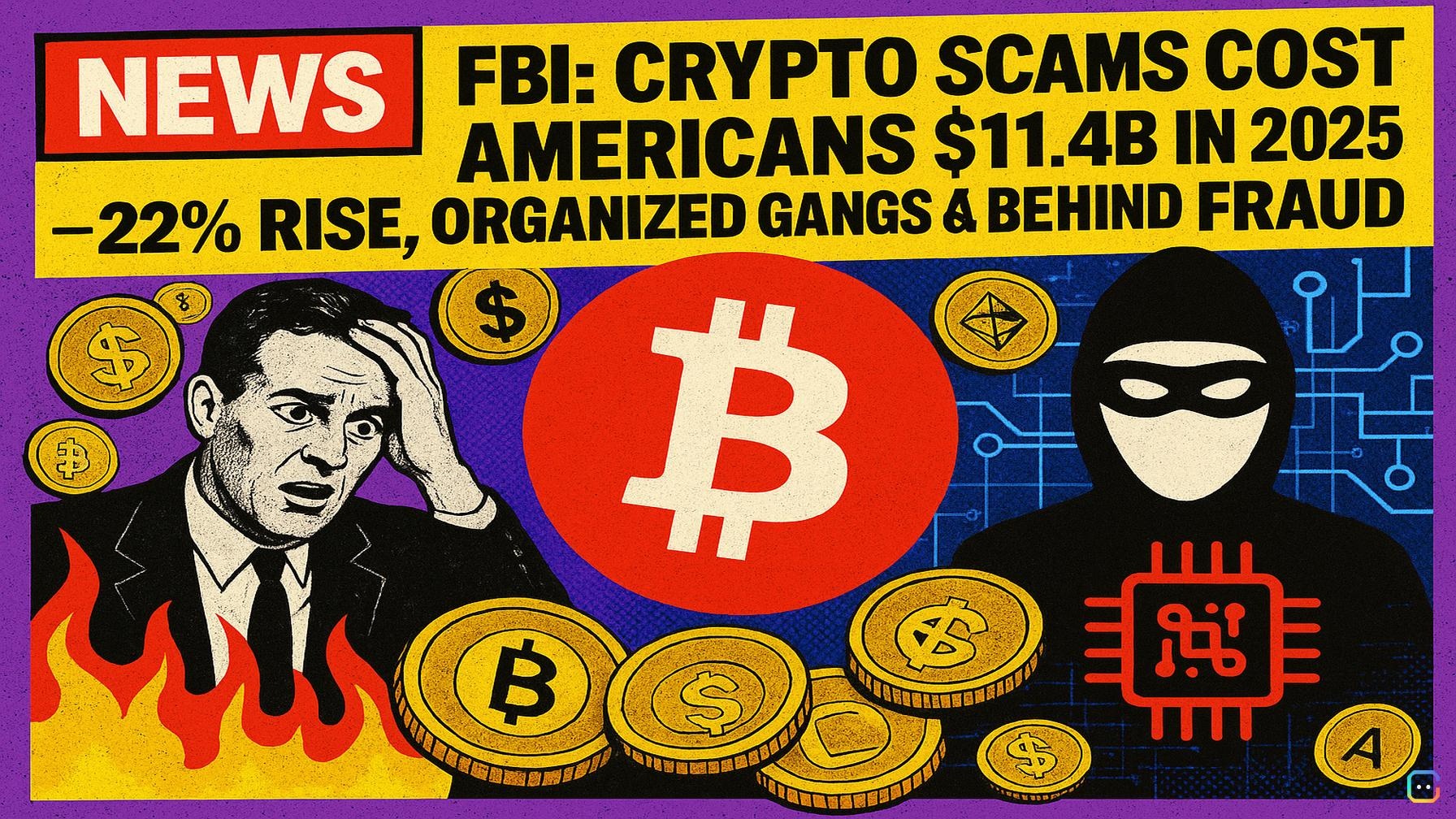
Americans reported $11.4 billion in losses to cryptocurrency scams in 2025 — a 22% increase from 2024, the FBI said Tuesday, underscoring the rapidly growing scale and sophistication of digital-asset fraud.
“Cryptocurrency investment scams are sophisticated long-term scams using psychological manipulation, the appearance of legitimacy, and exploitation of cryptocurrencies to deceive victims into investing large sums of money,” the bureau wrote. The FBI added that many of these schemes are run by organized criminal groups based in Southeast Asia that use victims of human trafficking as forced labor to operate their scam networks.
The U.S. figures sit alongside global estimates showing even bigger damage: crypto analytics firm Chainalysis reported in January that up to $17 billion in cryptocurrency was lost worldwide to scams and fraud in 2025. Its Crypto Crime Report found that impersonation schemes, fake crypto-exchange impostors and AI-generated scams against individuals were increasingly eclipsing traditional cyber-attacks as the main ways criminals steal digital assets.
The human toll is stark. The FBI recorded 181,565 cryptocurrency-related complaints in 2025, a 21% rise year-over-year. Average losses per case were $62,604, and nearly 18,600 complainants each lost more than $100,000 — losses large enough to wipe out savings and retirement funds for many victims.
Crypto fraud is also at the center of a broader surge in online crime: Americans filed more than 1 million cybercrime complaints in 2025, with total losses exceeding $20.8 billion, the FBI said. Fraud and scams accounted for the overwhelming share of those losses, highlighting a rapidly evolving threat landscape that combines technological tools like AI with well-established social-engineering tactics.
The numbers make clear that criminals are shifting to more convincing, high-value tactics that target individuals and investors. For market participants and policymakers, the data underline the urgency of better defenses, improved public education and international cooperation to disrupt cross-border scam networks.
Read more AI-generated news on: undefined/news