Jamie Dimon tells JPMorgan to speed up as tokenization remakes finance
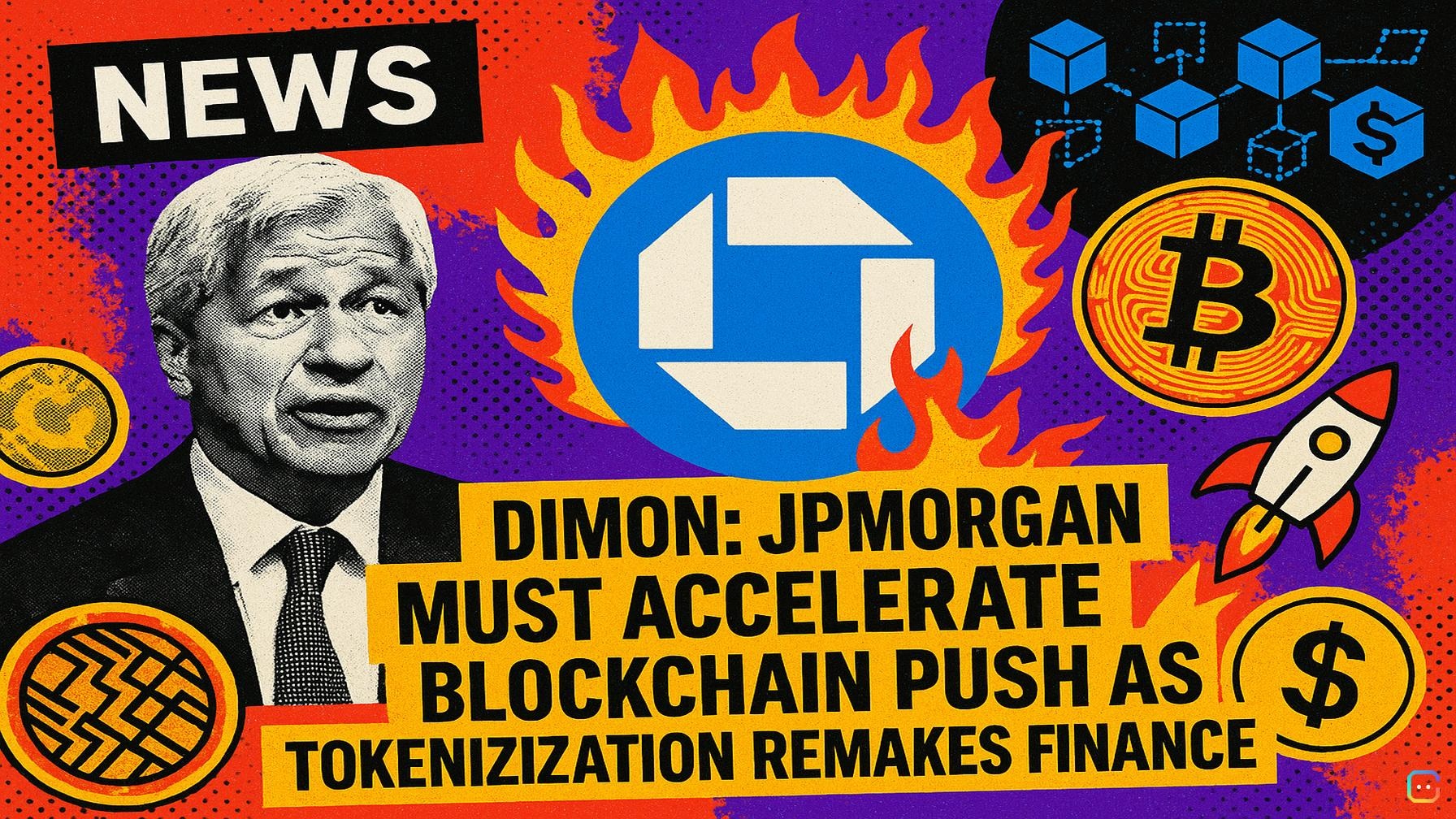
JPMorgan CEO Jamie Dimon warned in his annual shareholder letter that tokenization and other blockchain-based technologies are forcing the bank to move faster. Dimon called out a “whole new set of competitors” — from stablecoins and smart contracts to other forms of tokenization — that could reshape core banking functions like payments, trading and asset management.
What Dimon said
- Blockchain-native products and fintech rivals “may change the fundamental nature of how all this is done,” he wrote, framing tokenization as a direct competitive threat to traditional banking.
- JPMorgan’s response is not denial but acceleration: “We need to roll out our own blockchain technology and continually focus on what our customers want,” he said.
- He stopped short of endorsing crypto assets such as bitcoin, focusing instead on the infrastructure and rising client demand for guidance on “digital assets.”
Why this matters
- Tokenization converts traditional instruments — money market funds, bonds, real estate — into blockchain-based tokens that can settle almost instantly and move directly between users.
- Faster settlement and continuous on-chain markets can compress fees tied to payments and trading and change how collateral and liquidity are managed.
- Stablecoins, acting as digital dollars, could pose a challenge to bank deposits and existing payment rails.
How JPMorgan is responding
- JPMorgan has been building blockchain plumbing through its Onyx unit (branded Kinexys), developing products to mirror core banking functions on new rails.
- Its JPM Coin — a bank-issued stablecoin — lets institutional clients move funds instantly, replacing slower internal transfers.
- The bank has run pilots tokenizing government bonds and money market funds, enabling near-real-time transfers and use of tokenized assets as collateral.
Industry context
- Tokenized funds and products are no longer niche: BlackRock, Franklin Templeton and Goldman Sachs have launched or tested tokenized funds, while crypto-native firms offer blockchain versions of traditional products with continuous markets and near-instant settlement.
- That competition is prompting incumbent banks to retool infrastructure to retain client flows and relevance.
Macro caveats
- Dimon also sounded cautious about the macro outlook, flagging geopolitical risks — including Middle East conflicts — that could lead to oil and commodity shocks, “stickier inflation,” and higher interest rates than markets expect.
- He warned that high asset valuations and global debt levels raise the risk of underestimated market volatility.
Bottom line
Dimon’s letter frames tokenization as a structural shift rather than a passing trend. JPMorgan is accelerating its blockchain efforts to compete with both traditional asset managers and crypto-native players, while remaining cautious on crypto assets themselves and watchful of broader economic risks.
Read more AI-generated news on: undefined/news