Headline: Bitcoin’s Decentralization Under Scrutiny as Mining Power and Market Moves Concentrate Influence
Bitcoin’s reputation as a globally decentralized network is being challenged by fresh analysis showing much of the mining power — and therefore practical influence — is clustered in a handful of players and regions.
Mining: technically permissionless, practically concentrated
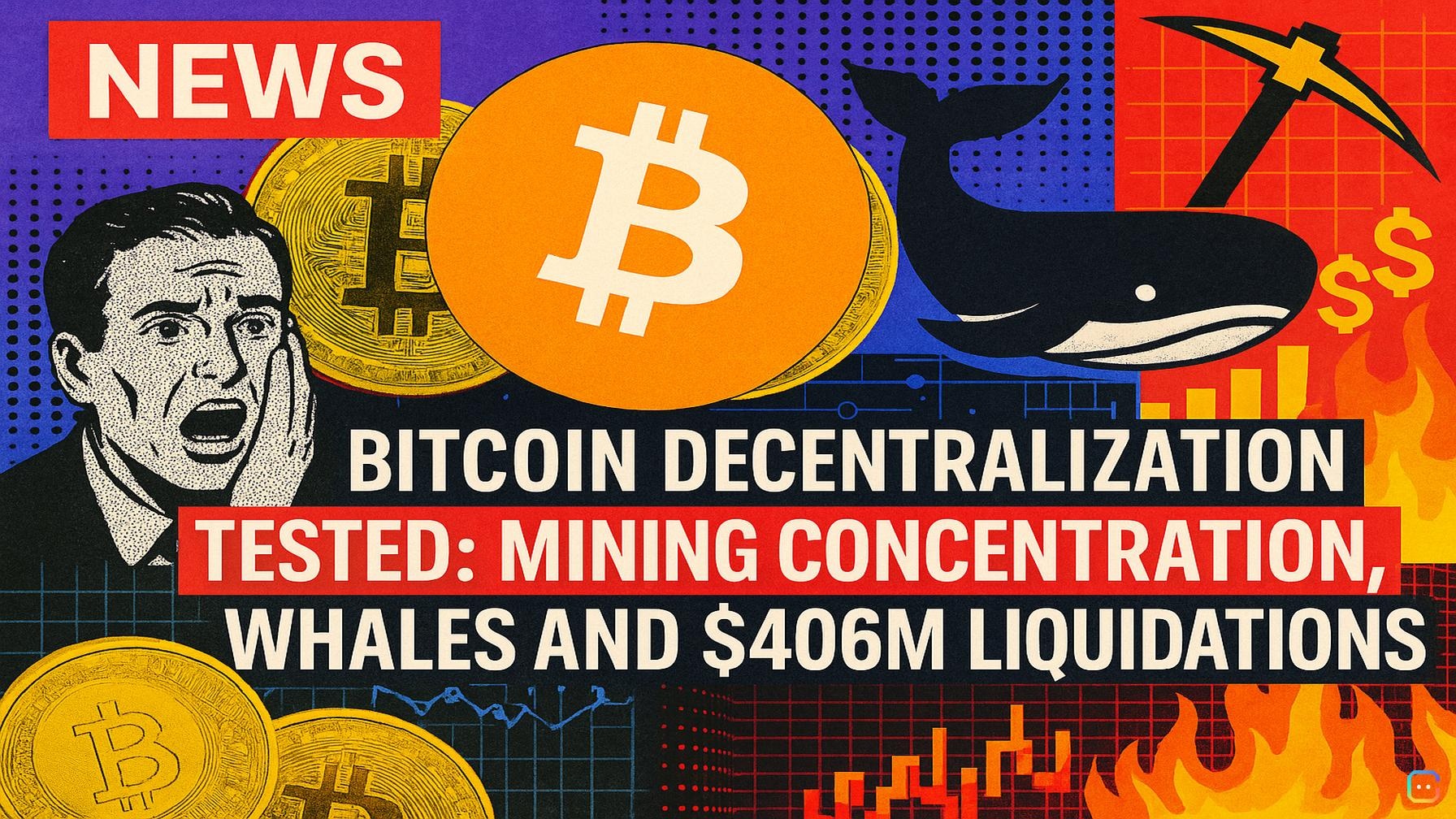
Analyst Lucky highlighted on X that while Bitcoin remains permissionless in theory, a large share of hashpower is concentrated in just a few places. Current estimates put roughly 68% of Bitcoin’s mining power within three countries: the United States, China and Russia.
That concentration is driven by real-world advantages: infrastructure, access to cheap energy and regulatory conditions. The U.S. has surged ahead thanks to institutional-scale miners, deep capital markets and clearer state-level regulatory frameworks in hubs like Texas. China, despite an official mining ban, still contributes via relocated or underground operations that exploit low-cost hydro and coal power. Russia’s appeal lies in abundant, cheap electricity and cold climates that reduce cooling costs for data centers.
The takeaway: decentralization on paper is not the same as distributed economic power. Tracking who controls hashpower offers a clearer view of where network influence actually resides.
Tariffs, geopolitical risk and market behavior
Political and geopolitical events continue to influence crypto markets. Former U.S. President Donald Trump has proposed a 25% tariff on the full value of goods that use imported steel and aluminum — a move market observers worry could ripple across risk assets. Sjuul AltCryptoGems noted on X that prior tariff announcements coincided with sharp drops in Bitcoin and broader crypto markets, and warned that if tensions escalate into larger conflicts, volatility could spike further.
At the same time, on-chain and order-book activity suggests large holders were actively steering price action. Crypto Seth reported that Bitcoin “whales” appeared to set resistance as the U.S. trading session progressed, preventing a breakout above $70,000. When news of heightened tensions involving Iran broke, those whales reportedly used the event to push prices lower and trigger a wave of liquidations — not random volatility but, according to Crypto Seth, a calculated move targeting highly leveraged positions.
Liquidation impact and leverage dynamics
Data shows 185,806 traders were liquidated in the recent episode, with aggregate losses around $406.52 million. Many of those caught offside were ultra-high-leverage 100x “degen” longs. Heatmap activity also indicates growing short leverage above the $69,000 level, suggesting the market may be bracing for further downside or range-bound behavior until macro uncertainty eases.
Why it matters
Both the concentration of mining power and the interplay of politics, leverage and large-holder behavior underline that Bitcoin’s technical decentralization coexists with centralizing economic and geopolitical pressures. For investors and builders, tracking hashpower distribution, on-chain flows and leverage hotspots remains essential to understanding where influence — and vulnerability — lies within the network.
Read more AI-generated news on: undefined/news