Quantum threat focus falls on XRP Ledger as Google spotlights post-quantum efforts
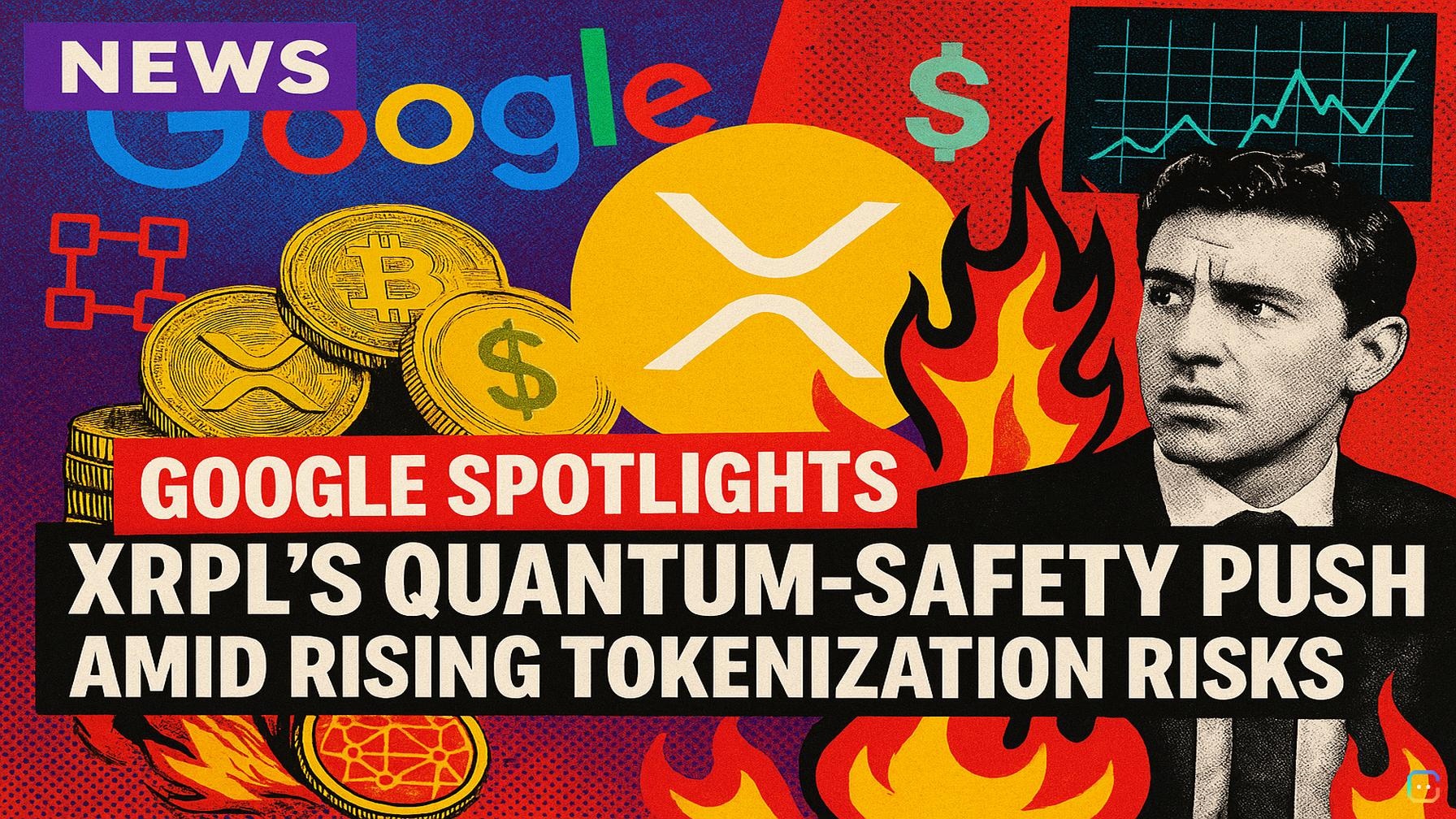
Google’s recent research into quantum computing singled out the XRP Ledger (XRPL) for its proactive work on post-quantum defenses, a move highlighted by crypto commentator Cryptoinsight in an X post. The paper discusses how networks that support real-world asset (RWA) tokenization—like XRPL—face unique quantum-era risks, and it notes XRPL’s experimental deployments of post-quantum cryptography (PQC).
Key technical moves and standing
- Google’s report calls out XRPL among the blockchains running test and experimental deployments of PQC. XRPL recently implemented post-quantum ML-DSA signatures on its testnet, a concrete step toward hardening transaction signatures against future quantum attacks.
- The report also emphasizes XRPL’s role in tokenizing real-world assets. RWA.xyz data places the XRPL 8th by tokenized value, with roughly $1.9 billion in tokenized assets and 289 RWA projects recorded—figures Google cites when assessing XRPL’s exposure and importance.
- Cryptoinsight noted Google’s additional claim that about two-thirds of short-dated U.S. Treasury bills reside on the XRPL, with much of the rest on Ethereum, underscoring how significant financial instruments are increasingly being represented on programmable ledgers.
Why tokenization raises quantum stakes
Google warns that protocol-level support for tokenization and account-based models introduce attack surfaces that Bitcoin-style UTXO designs do not have. Smart contracts and long-lived public keys—common in RWA and stablecoin workflows—can increase the period during which quantum-capable adversaries might exploit vulnerable signatures. The report anticipates this risk will grow as fiat-backed stablecoins and broader RWA tokenization expand the volume of assets controlled by smart contracts through 2030.
Mitigations and practical realities
Not all chains are equally exposed. Google highlights that XRPL, along with Algorand and TRON, already support native protocol-level key rotation, a practical defense that reduces the window of vulnerability for long-lived keys. Modern Ethereum, Solana, and Rootstock accounts—when operated via smart wallets—also can support key rotation, but legacy account implementations remain a lingering weakness.
The path to quantum-safe crypto won’t be quick
Google cautions that migrating blockchains to post-quantum signature schemes involves both technical and social hurdles and will likely take years. Still, the firm argues this work can’t wait until the precise timeline for building Cryptographically Relevant Quantum Computers (CRQCs) is settled. Encouragingly, Google praises “notable progress” from networks like XRPL, Algorand and Solana toward real-world PQC adoption, and notes additional measures—XRPL has recently experimented with AI-assisted vulnerability detection in its development cycle.
Market snapshot
XRP traded around $1.31 at the time of reporting, up on the day, according to CoinMarketCap.
Bottom line: Google’s report frames XRPL as both strategically important and appropriately cautious—deeply involved in asset tokenization (which increases quantum-risk exposure) but also experimenting with PQC and key-rotation mechanisms that could blunt future quantum threats.
Read more AI-generated news on: undefined/news