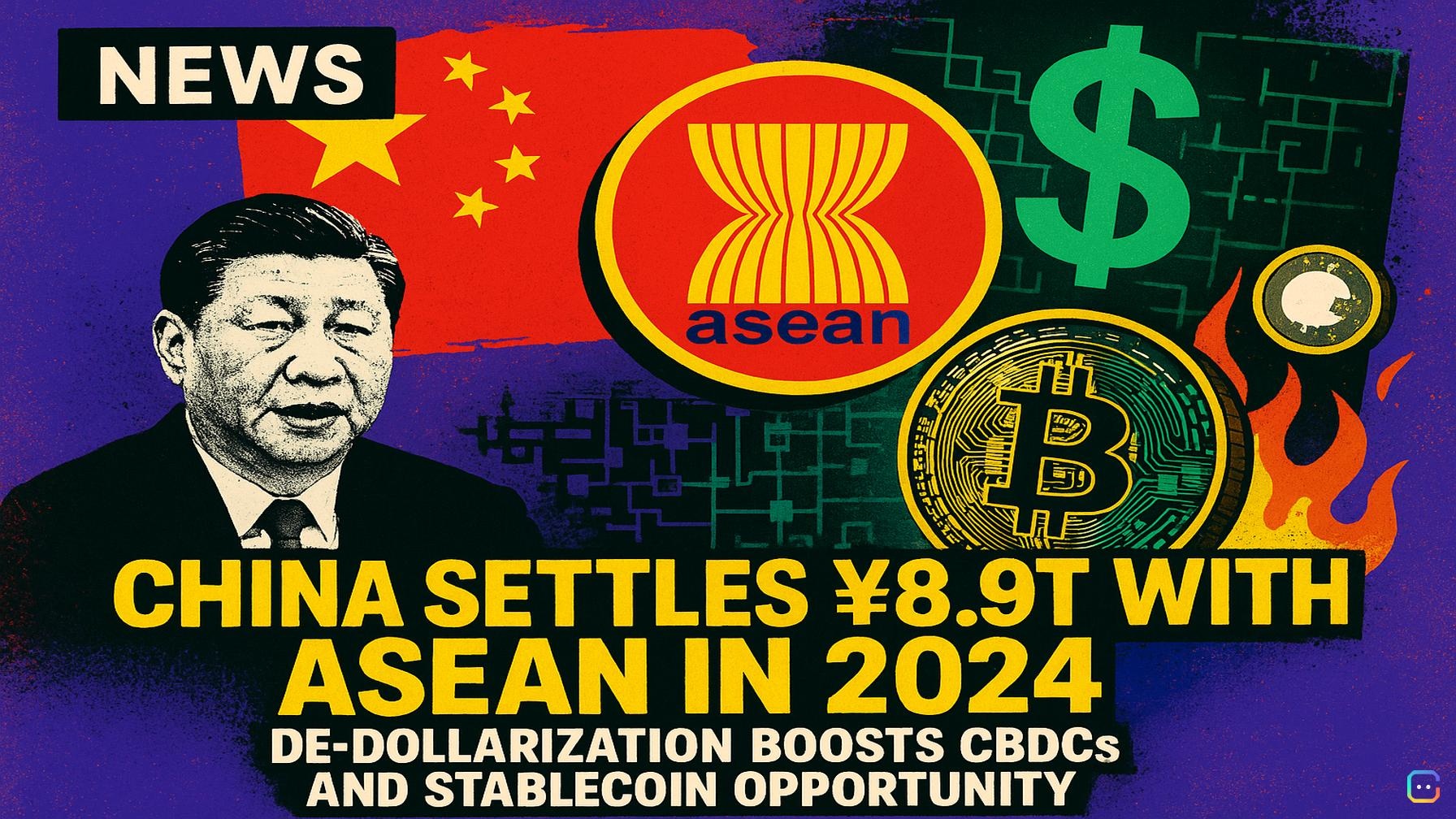
China says it settled 8.9 trillion yuan (roughly $1.3 trillion) in cross-border payments with ASEAN partners in 2024 — a surge of more than 50% year‑on‑year that underscores a clear regional pivot away from the US dollar.
“Our cross‑border renminbi transactions in ASEAN reached 8.9 trillion yuan in 2024,” Liu Jun, counsellor at China’s Mission to ASEAN, told the Jakarta Globe. He added that “the renminbi is celebrating its role as a key regional currency. It contributes significantly to the financial stability of this region,” reflecting Beijing’s push to normalize yuan use across Southeast Asia.
What’s changing
- The yuan is now the preferred settlement currency between China and many ASEAN countries.
- Indonesia’s rupiah is the second‑most used local currency in China‑ASEAN trade flows.
- Other BRICS currencies — notably the Russian ruble, Indian rupee and South African rand — are also growing in usage for regional deals.
Why it matters
This expansion of local‑currency settlements is part of a broader de‑dollarization trend among BRICS and ASEAN members. Moving trillions of dollars in trade into local currencies chips away at the dollar’s dominance, creating long‑term implications for foreign‑exchange markets and global liquidity patterns. If the trend continues, analysts warn the US dollar could face increasing pressure, with potential knock‑on effects for exporters, financial institutions and dollar‑denominated markets.
Crypto and digital payments angle
For a crypto and fintech audience, the shift opens opportunities and risks. Greater reliance on local currencies may accelerate demand for central bank digital currencies (including China’s digital yuan), cross‑border stablecoins, and tokenized settlement rails that can handle multilateral, multi‑currency transactions more efficiently. Firms building liquidity and settlement solutions in non‑dollar corridors could find new business, while dollar‑centric payment networks may see reduced share in some trade lanes.
Bottom line
China’s 8.9 trillion‑yuan figure is a concrete sign that regional trade is rapidly diversifying away from the dollar. That evolution will be watched closely by policymakers, banks and digital‑asset firms as the architecture of cross‑border payments adapts to a more multipolar currency landscape.
Read more AI-generated news on: undefined/news