Nearly half of traders on Solana memecoin launchpad Pump.fun finished March in the red, new on‑chain analysis shows — and almost none captured meaningful gains from the month’s frenzied activity.
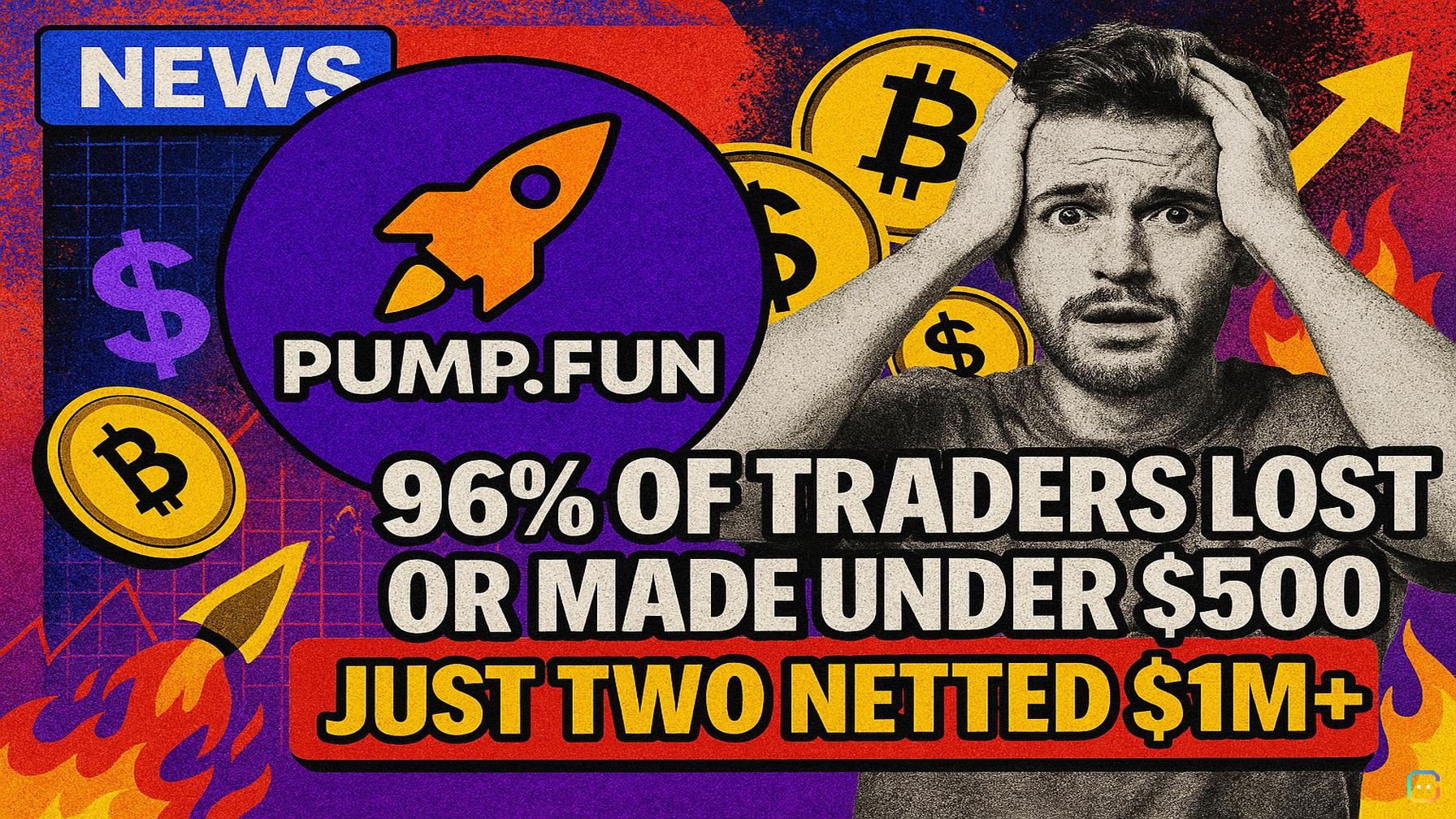
A viral Dune Analytics dashboard compiled by pseudonymous analyst @oladee and shared on X tracked roughly 1.4 million wallets that traded Pump.fun‑issued tokens. The snapshot found that about 49%–50.6% of those wallets lost money over March, while roughly 45.4%–45.6% recorded profits capped at about $500. That leaves only around 4% of participants with gains above $500. Combined, about 96% of wallets either finished the month down or made under $500 — underlining how few retail traders actually benefited from the memecoin rally.
The distribution of outcomes was extreme: just two wallets realized more than $1 million in profit during the month, while a small cluster of addresses posted six‑figure losses. The results reinforce the “lottery ticket” nature of Pump.fun trading, where a tiny minority reap large rewards and the vast majority see minimal returns or losses.
Critics quickly seized on the numbers to renew scrutiny of Pump.fun’s fee economics. The platform routes a significant share of fees to token creators and to itself, even as most traders lose money. In response to concerns about abuse and fee manipulation, Pump.fun announced on March 24 that it would lock creator fee settings after allowing a single post‑launch redirect of fee flows. Co‑founder Alon Cohen said the change is intended to curb “griefing” and other tactics where creators quietly change who receives fees once a token gains traction.
The policy shift comes as Pump.fun has emerged as one of Solana’s busiest venues. Daily volumes at times topped $2 billion during the early‑2026 memecoin resurgence. The platform has also been broadening beyond pure meme tokens, adding in‑app trading for assets such as WBTC, USDC and Ethereum via Wormhole and launching a “Trader Cashback” program designed to return more fee revenue to active users.
Still, the Dune dashboard’s findings have become a widely shared cautionary tale about retail memecoin speculation on Pump.fun and across DeFi: massive volume and headline profits do not translate into broad-based retail gains. Earlier coverage noted Pump.fun’s expansion and cashback initiatives as attempts to nudge incentives toward more sustainable on‑chain activity — but the March figures make clear how lopsided outcomes can remain during periods of extreme volatility.
Read more AI-generated news on: undefined/news