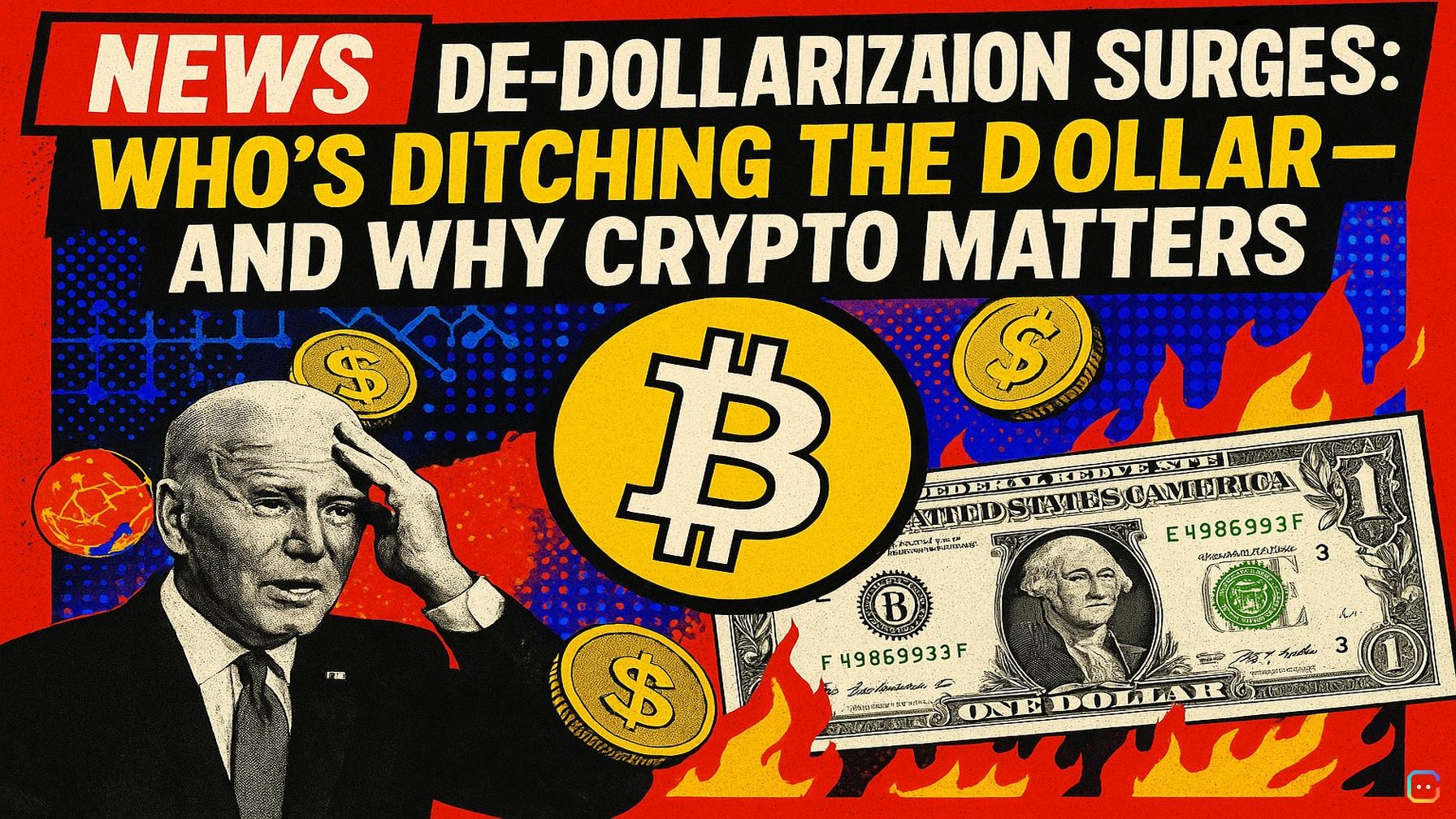
Headline: De-dollarization Picks Up Pace — Who’s Moving Away from the US Dollar and Why it Matters
A growing group of countries is quietly diversifying central bank reserves and trade settlement away from the US dollar. Fueled in part by concerns over the US’s roughly $39 trillion national debt and the systemic risk a major financial shock could pose to emerging economies, de-dollarization is being framed less as a geopolitical slap at Washington and more as an insurance policy against a potential monetary crisis.
Below are the key players pushing this shift—and what they’re doing.
- Russia: Since freezing overseas assets, Moscow has aggressively shifted toward the Chinese yuan and gold. Ruble-yuan trade volumes have surged, and Russia has been one of the most vocal proponents of de-dollarization since 2022.
- China: Beijing is actively internationalizing the yuan. China has set up non-dollar clearing houses across the globe and has completed major commodity transactions—oil and gas among them—in yuan with several partners. Beijing is effectively leading the institutional push away from dollar dominance.
- Iran: Cut off from much of the global banking system by sanctions, Iran has long relied on local currencies, barter arrangements, and gold to settle trade—especially with Russia and China. The country has barely used the US dollar since around 2010, making it a de facto pioneer in alternative settlement mechanisms.
- India: Officially, New Delhi’s Ministry of External Affairs says de-dollarization is “not part of its financial agenda.” Still, India is promoting rupee internationalization through local currency settlement (LCS) agreements with the UAE, Russia, and several neighbors to reduce reliance on dollar-denominated trade.
- Brazil: Under President Luiz Inácio Lula da Silva, Brazil has pushed for more bilateral trade in local currencies. Several agricultural and industrial transactions with China have bypassed the dollar, reflecting a broader policy tilt toward currency diversification.
Why it matters for crypto: As states diversify away from the dollar, demand for alternative assets—ranging from gold and other sovereign currencies to digital currencies and central bank digital currencies (CBDCs)—could rise. For crypto markets, de-dollarization trends may create both opportunities and new regulatory and geopolitical dynamics to watch.
Bottom line: De-dollarization isn’t a single, coordinated campaign to dethrone the dollar so much as a precautionary strategy by countries seeking greater financial resilience. The result could reshape international trade, reserve holdings, and the contours of global financial diplomacy.
Read more AI-generated news on: undefined/news