Kalshi, the event-based prediction market operator, is facing fresh legal pressure from U.S. states as regulators intensify scrutiny over whether its contracts amount to unlicensed gambling.
What happened
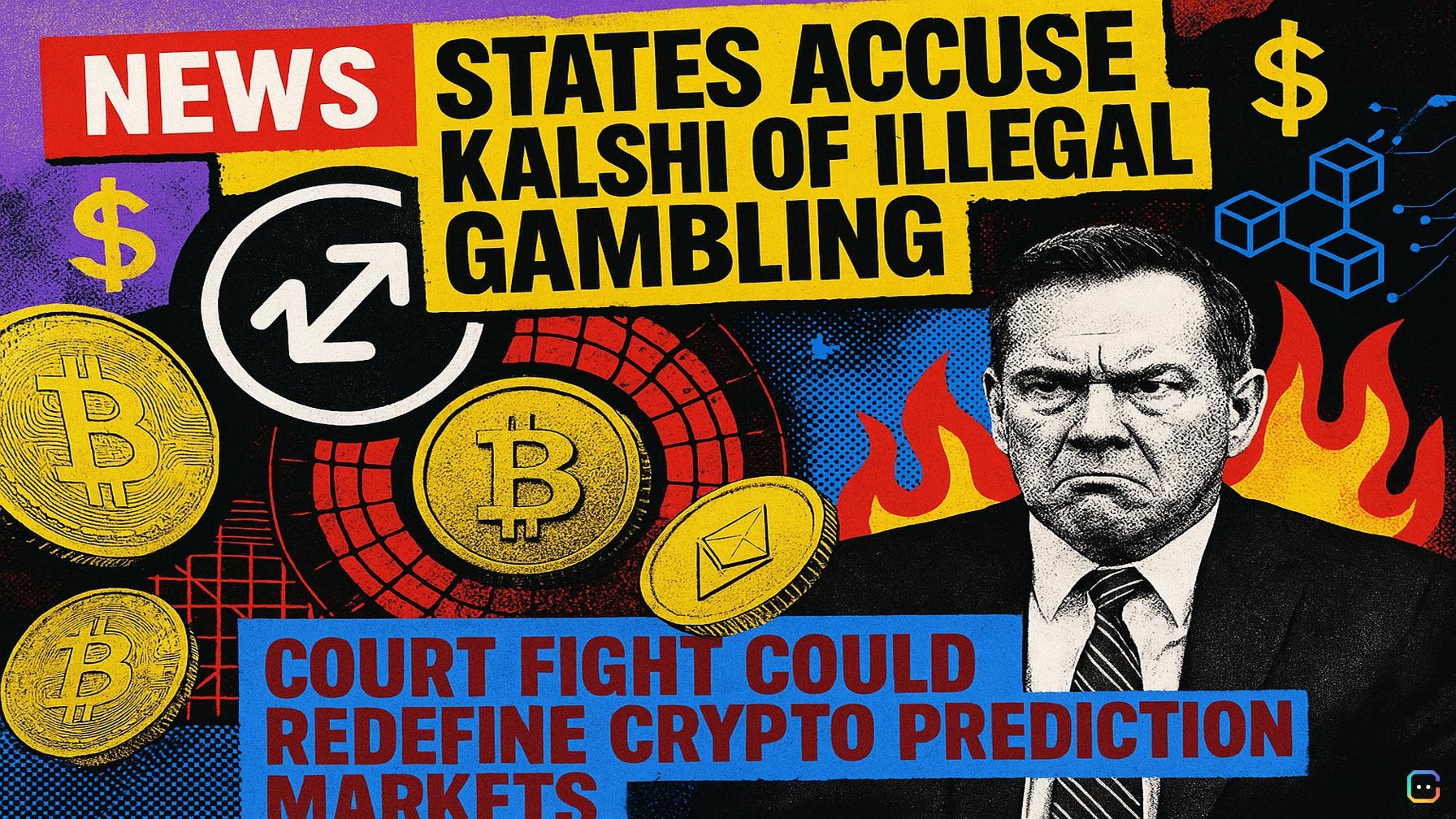
- Washington Attorney General Nick Brown filed a complaint on Friday accusing Kalshi of violating the Washington Consumer Protection Act, the Gambling Act, and the Recovery of Money Lost at Gambling Act. The office says Kalshi’s website and app let users put money on future events, show odds, and pay out winners — activity Washington argues fits the state’s definition of gambling.
- Washington’s complaint frames Kalshi’s platform as functioning like a sportsbook, saying each contract involves money, chance, and a payout, and that labeling the service a “prediction market” does not change its legal character under state law.
- Kalshi asked to move the case to federal court, arguing the issues are already being litigated in other federal cases and that Washington initiated suit without prior warning or dialogue.
Where this fits into a growing regulatory fight
- The Washington filing adds to a string of recent state actions. Earlier this month a Nevada judge temporarily barred Kalshi from operating in that state after finding regulators were likely to succeed in their case. Days before that, Arizona Attorney General Kris Mayes brought charges alleging Kalshi ran an illegal gambling operation in the state and offered unlawful election wagering.
- Kalshi contends that the U.S. Commodity Futures Trading Commission (CFTC) has exclusive jurisdiction over its event contracts — a federal preemption argument that the company is pressing as states push back.
Why crypto and markets should care
- Kalshi’s contracts resemble derivatives and outcome-based contracts that attract crypto traders and prediction-market enthusiasts. The clash between state gambling laws and federal oversight claims could set precedent for how similar products — including tokenized prediction markets and certain DeFi derivatives — are regulated.
- Key things to watch: whether federal courts accept Kalshi’s preemption arguments, how state courts interpret “gambling” in the context of modern prediction platforms, and whether regulators pursue broader restrictions on event-based trading products.
Bottom line
Kalshi’s legal troubles are escalating from state to federal venues, and the outcomes could reshape the regulatory landscape for prediction markets and related crypto-native products across the U.S.
Read more AI-generated news on: undefined/news