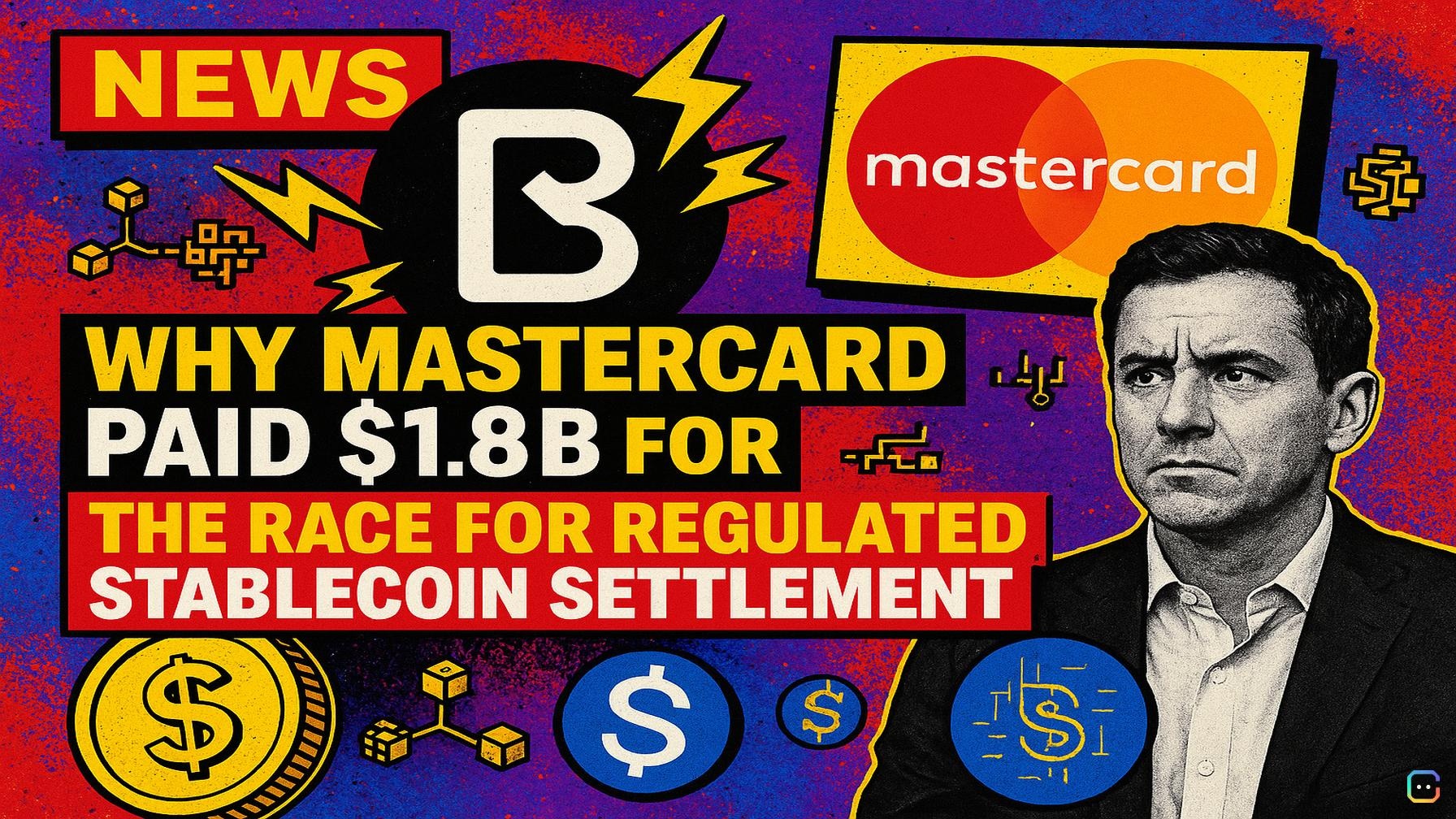
When Mastercard agreed to pay $1.8 billion for BVNK — more than double the company’s $750 million Series B valuation just over a year ago — the deal signaled something bigger than a headline acquisition. It’s a clear statement about where the payments industry believes settlement must go, and how urgently incumbents feel they need to get there.
Why pay such a premium? On paper Mastercard could have built its own stablecoin settlement layer, partnered with BVNK, taken a minority stake, or bought a smaller player. Instead it paid a 140% premium. That’s because the hard part in this market isn’t code; it’s licenses and trust. BVNK spent years negotiating regulatory approvals across more than 130 jurisdictions and assembling enterprise-grade stablecoin rails — work that takes time and patience. For a major card network racing to secure the future of settlement, buying that regulatory footprint outright was worth the price.
This is the largest stablecoin infrastructure deal to date, eclipsing Stripe’s $1.1 billion purchase of Bridge. It underscores how seriously incumbents now view stablecoin-based settlement as a replacement for the antiquated correspondent banking system that still handles more than $190 trillion in cross-border flows annually. Those rails work, but like a fax machine, they’re slow, costly and opaque — routing through layers of intermediaries that add fees and delays.
The consequences are real for everyday people. Remittance corridors to Africa and Southeast Asia still carry fees averaging 6–8%. A worker in Dubai sending $500 home to the Philippines can lose $30–$40 per transfer. Across the roughly $685 billion that flows annually to low- and middle-income countries, those fees represent a massive, recurring transfer of value away from those who can least afford it.
Stablecoin-native settlement can materially change that math. By removing the chain of correspondent banks and the intermediaries that inflate costs, settlement fees can structurally fall into the 1–2% range — not as a temporary promotion but as the true cost of modern plumbing. Mastercard now owns a critical piece of that plumbing. Combined with its merchant network and footprint in emerging markets, the acquisition could meaningfully lower costs and widen access for the roughly 1.3 billion adults still outside the formal banking system.
The strategic logic is less about technology and more about timing and regulatory reach. Mastercard didn’t buy BVNK for its code; it bought years of regulatory work and immediate global capability. That’s the asset other acquirers will hunt for: firms that prioritized licensing and compliance as core infrastructure, not an afterthought.
This shift is already reshaping the competitive landscape. Stripe bought Bridge; Mastercard bought BVNK; Visa is reportedly considering moves of its own. Expect every major card network to have a stablecoin settlement strategy within the next 12–18 months, or to be forced to explain why not.
The bigger tension in payments isn’t “traditional finance vs. crypto” anymore. It’s regulated stablecoin rails versus unregulated alternatives operating in corridors where compliant options are missing. The unregulated routes can move fast because they skip licensing work — but speed without regulatory legitimacy is fragile and risky, as past collapses have shown. Each month regulated infrastructure is absent in a market, shadow systems can entrench themselves. Mastercard’s buy compresses that timeline by pairing BVNK’s licenses with Mastercard’s distribution.
In short, the premium Mastercard paid wasn’t for technology; it was for time and regulatory access. That lesson is now obvious to the rest of the industry: the window for building a compliant global footprint is closing, and the window for buying it is getting pricier by the quarter. With this acquisition, stablecoin infrastructure has moved from the periphery to the center of global payments — and every legacy player will soon be forced to act.
Read more AI-generated news on: undefined/news