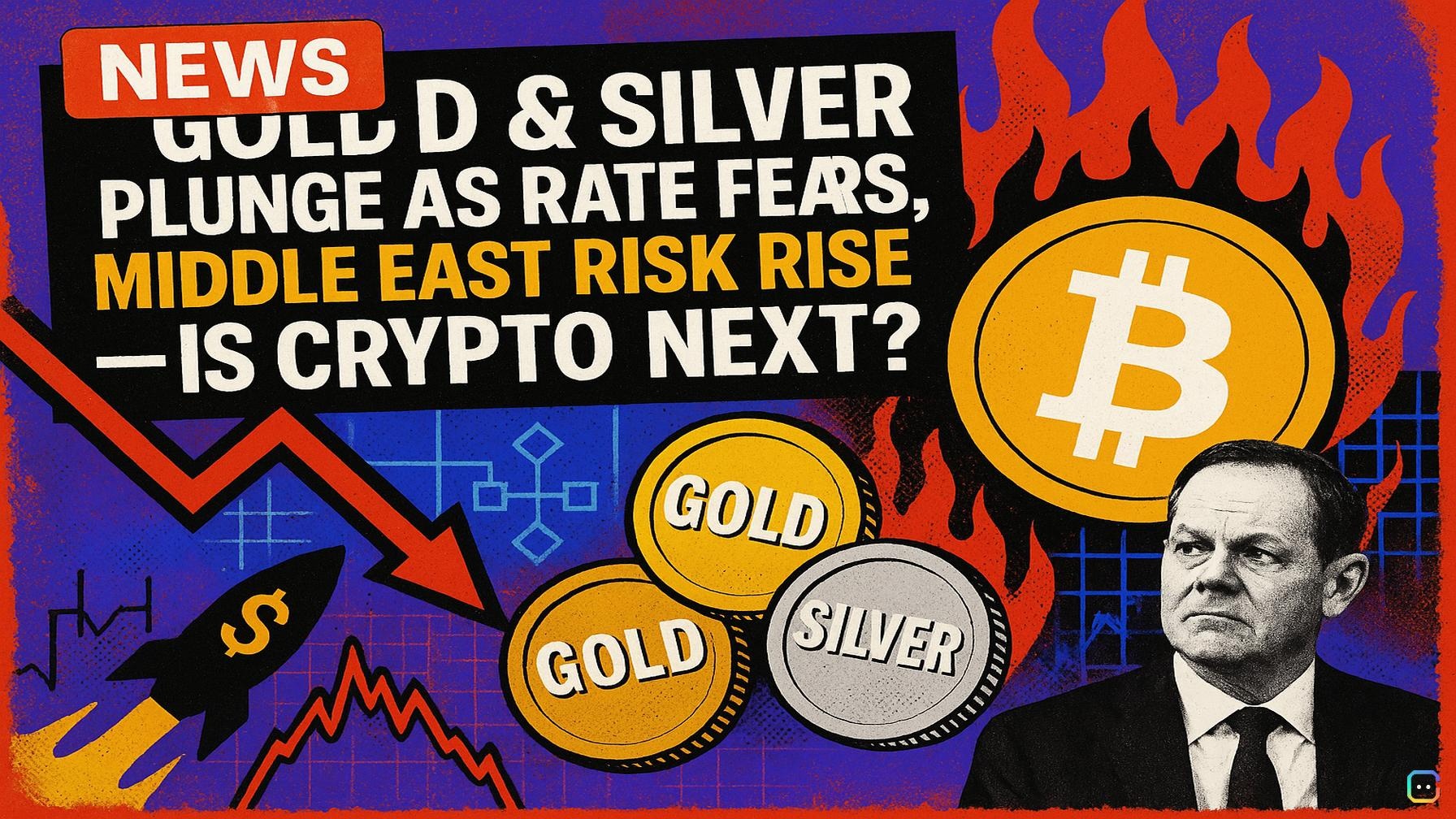
Headline: Gold and silver collapse as rate fears and Middle East risk sap safe-haven demand — what crypto traders should watch
Precious metals have plunged over the last two months, with a sharp acceleration in the past week that has erased much of the gains seen earlier this year.
Key moves
- Gold fell for the sixth time in seven trading days, sliding 5.9% (about $289.20 an ounce) on Thursday.
- Silver futures dropped 8.2% on Thursday, taking its loss over a seven-session stretch to roughly 20%. On Friday silver plunged another ~5% to trade under $70 an ounce.
- Less-liquid precious metals have also tumbled this month: platinum is down about 17% and palladium about 15%.
- Industrial metals such as copper and aluminum have turned lower as well.
- After peaking at a record $5,318.40 a troy ounce in late January, gold has now slid more than 13% from that high.
Why prices are falling
- Inflation fight and rates: The biggest pressure is coming from monetary policy: hopes that central banks would soon cut interest rates — a driver of metals’ late‑2023 rally — have faded. U.S. and European central banks signaled this week that rate cuts may not arrive as quickly as markets had priced, reducing the appeal of non‑yielding assets like gold and silver.
- Geopolitical uncertainty and energy: The war in the Middle East and an ensuing energy shock have complicated inflation and growth outlooks, creating mixed signals for safe-haven demand.
- Cooling ETF flows: Retail and ETF investor enthusiasm has cooled after heavy inflows into bullion funds last year. Data from VandaTrack show individual investors sold SPDR Gold Shares (the largest gold ETF) for the sixth straight day through midday Thursday, totaling roughly $10.5 million in net outflows over that span — small versus peak buying last year, when inflows hit as high as $36.8 million in a single day.
What crypto-focused readers should note
- Precious metals are a traditional hedge; shifts in metals flows can reflect changing risk‑sentiment that also affects crypto markets. When investors pare back gold and silver bets amid a rising-rate backdrop, capital can rotate into risk assets — including equities and, in some cases, cryptocurrencies — or into cash and short-duration bonds.
- Conversely, if inflation fears flare or geopolitical risk spikes, both bullion and some cryptocurrencies (notably Bitcoin, often dubbed “digital gold”) can see renewed demand as alternative hedges. The current sell-off highlights how quickly safe-haven narratives can shift when central-bank guidance changes.
Outlook — what to watch next
- Central bank commentary and economic data for signs of rate-cut timing.
- Geopolitical developments in the Middle East and energy price moves that could revive safe-haven demand.
- ETF flows into/out of major gold and silver funds as a gauge of retail sentiment.
- Relative performance of metals versus crypto and risk assets to spot rotation patterns.
If inflation finally eases and geopolitical tensions cool, precious metals could regain lost ground. Until then, traders — both metals and crypto — should prepare for volatility as markets reassess the timing of rate cuts and the economic impact of the conflict in the Middle East.
Read more AI-generated news on: undefined/news